
Understanding Vietnamese Funeral Traditions: A Guide For Travellers to Customs & Rituals
Rituals and Customs in Vietnamese Funerals
Vietnamese funerals are rich in traditions & customs, each step carrying significant meaning to honor the dead’s soul. These Vietnamese funeral rituals reflect Vietnamese spiritual beliefs and their cultural practices, guiding the family and community through a series of respectful steps that we will share you in details on this personal blog – great for any travellers to enrich themselves more about Vietnamese cultures.
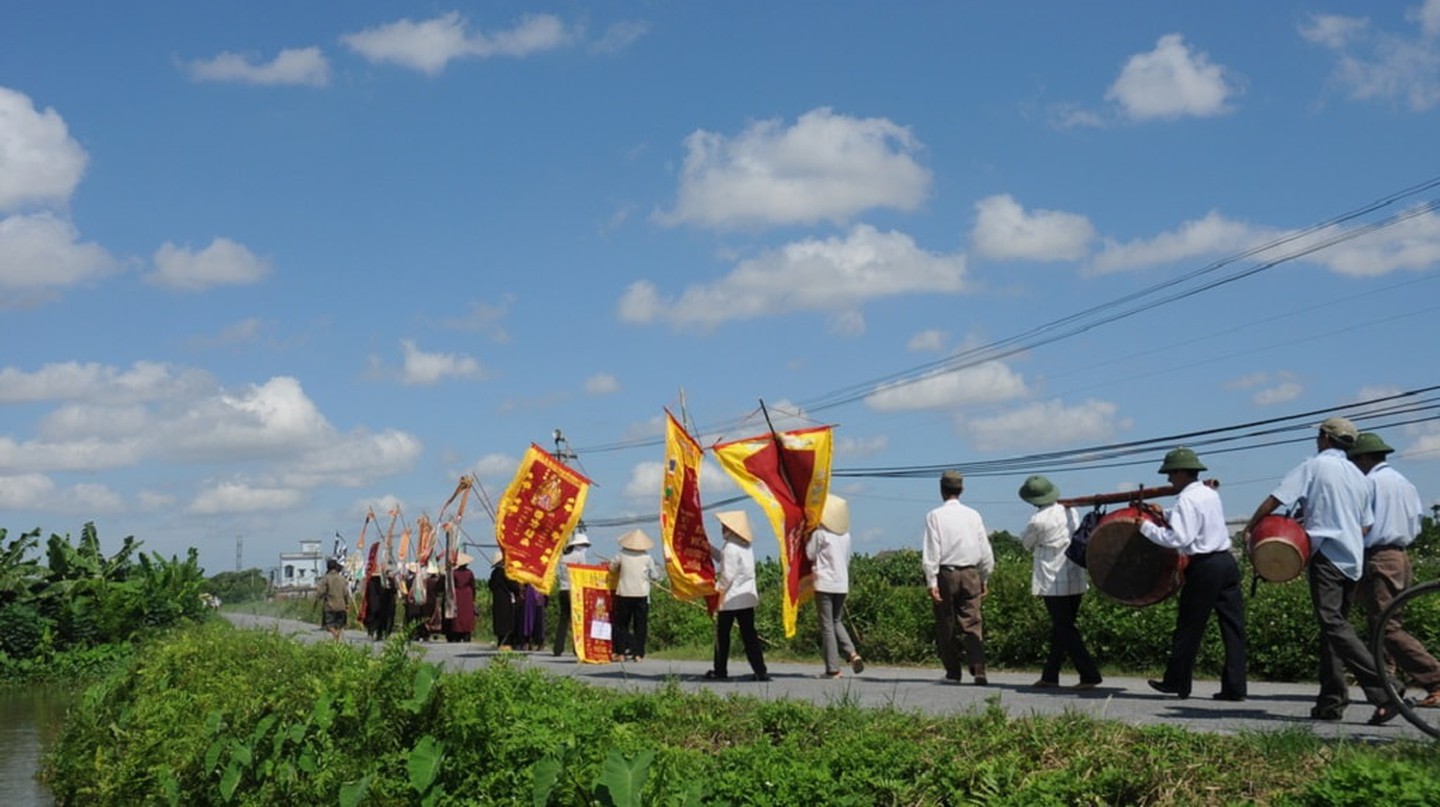
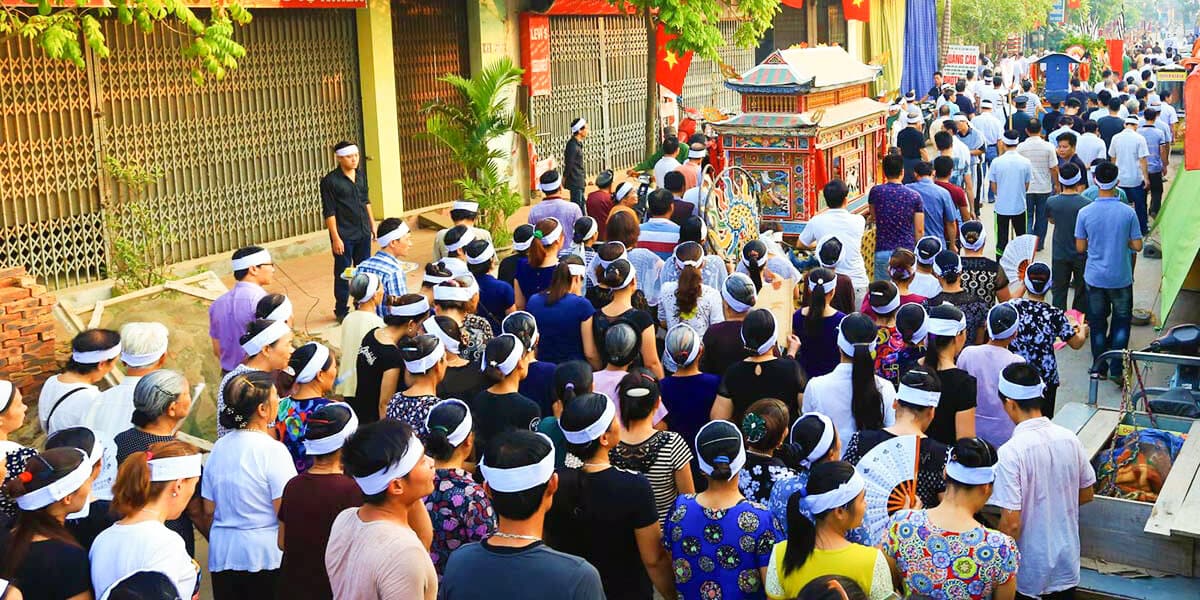
Procession to take the dead to the burial site in Vietnamese funerals.
The Cleansing Ritual
When the family is certain that their loved one is no more alive, a cleansing ritual will be done by the family’s members. The deceased’s body is tenderly washed with fragrant water from leaves and rice wine, and dressed in new white clothes. After that, the family will cover the departed’s face with a white sheet and light up candles next to where he or she rests.The dead’s belongings are burnt, allowing the departed to utilize them in the afterlife.At the same time, family members announce the death of their loved one to relatives, friends & the public.
Setting Up the Altar
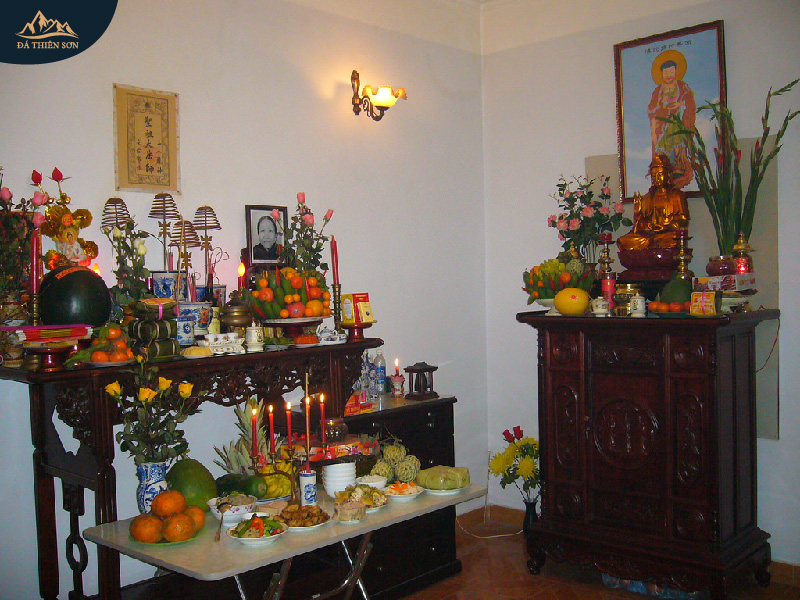
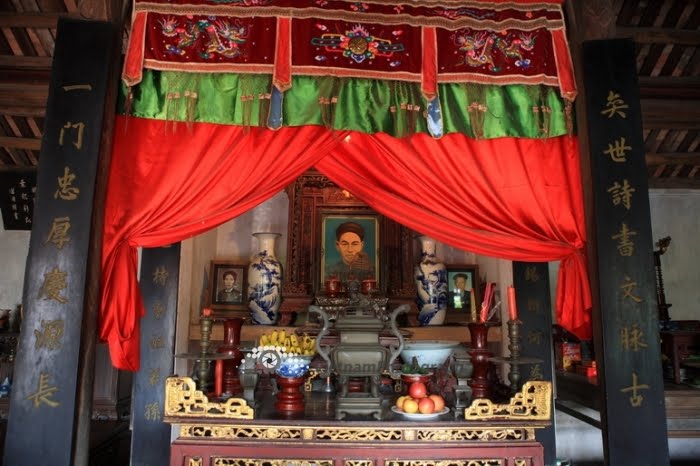
Typically, when determining the good time to bury a loved one, families often seek guidance from a fortune teller or a monk. This guidance is based on various factors, including the age of the deceased & the time when he/she passed away, aiming to ensure the diceased an easy journey to eternity and to prevent the dead from coming back to haunt the living.While awaiting further instructions or information, families create an altar adorned with customary offerings such as fruits and a photograph of the departed. This altar serves as a main point for prayers and reverence, honoring the memory of the dead’s soul.
Music Band and Funeral Melodies
During the process of setting the altar, a family member will take care of hiring a music band to play at the funeral. This gesture aims to bring solace to the departed, believing that music can offer comfort on his/her journey. Moreover, the somber melodies reminds the family about the passing of their loved one. A customary funeral music band often comprises a trumpet, drum, and the melancholic resonance of a Vietnamese two-chord fiddle.
Putting The Departed Into The Coffin
After conveying with the sharman & agreement among the family about the good time to bury the dead, the right moment to put the dead into the coffin is also chosen carefully to make sure that any members of family are living away from their home could come back on time to take a last look at the dead.
The somber melodies of the music band signal the commencement of the funeral rites. The family gently places their loved one into the coffin, carefully adding tea bags to preserve against odors and moisture.
With reverence, a monk or shaman leads the gathered family in prayers, invoking blessings for the departed. Meanwhile, a family member will block off evil spirits by marking each corner of the coffin with a knife
Summoning the Deceased’s Soul
Summoning the departed soul is a revered practice in Vietnamese funeral. After a person passes away, it’s believed that their soul roams. To guide it back to its final resting place, a monk or shaman will ritually sway the deceased’s shirt in all four directions. As they do so, they say alound “ba hon bay via” for males or “ba hon chin via” for females. Finally, the shirt is carefully returned to the coffin, completing this sacred ritual.
The Funeral Attires for the Deceased’s Family Members
Following the summoning ceremony, the oldest child in the family distributes funeral attire to family members & relatives. Because this is a type of attire that clearly distinguishes the roles within a deceased person’s family. Therefore, depending on the hierarchy within the family, you will wear the corresponding attire.
For close family members of the departed, their children will often wear a special outfit, typically known as a “mourning garment,” made of coarse fabric that may appear rather unattractive at first glance. The distinct feature of this attire is that it’s loosely tailored, with natural, unrefined seams, reaching knee length, wide, and with loose sleeves.
- If the wearer is a son, he must wear a straw hat and tie a string around his waist to signify the humility and sorrow of the children.
- If the wearer is a daughter or daughter-in-law in the family, she only needs to let her hair down and not wear shoes.
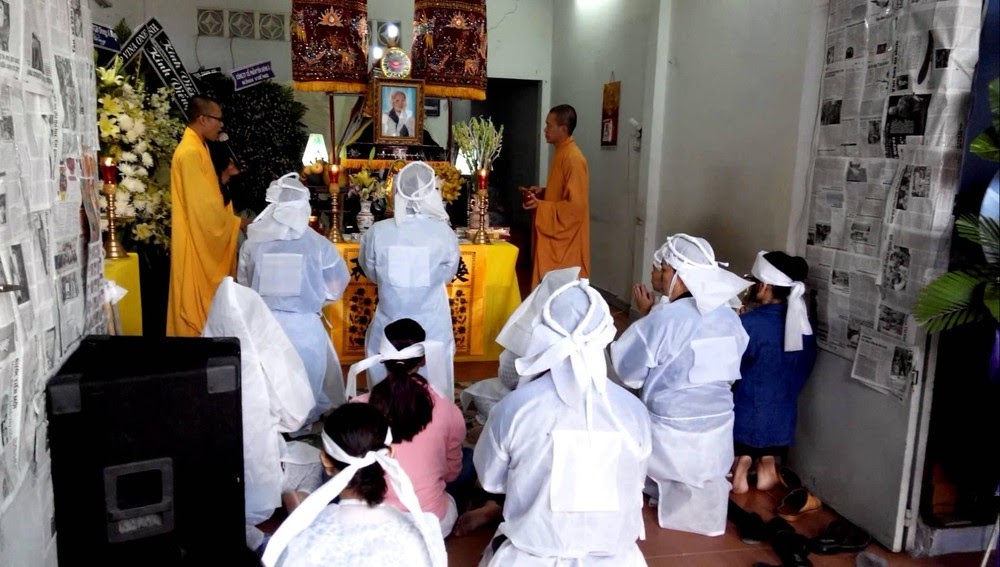
Funeral attires among Vietnamese family
For the descendants’ role in the family, wearing a white mourning headband is sufficient. However, for the close relatives within 4 generations, they wear yellow headbands, while those in the 5th generation use red mourning headbands. Additionally, in some places, all descendants wear white mourning headbands with red or yellow dots, depending on their hierarchical level.
For blood-related siblings and relatives, they only need to wear white mourning headbands, symbolizing mourning for the departed and expressing condolences.
Moreover, for friends, neighbors attending a funeral, there’s no need to dress as formally as the immediate family of the deceased. Instead, opting for modest and simple attire (in black) that suits the case. Especially for funerals, an event that demands reverence and solemnity, choosing dark-colored clothing such as a black dress shirt, black or dark-colored trousers is the safest and most appropriate choice.
Offering Condolence Gifts
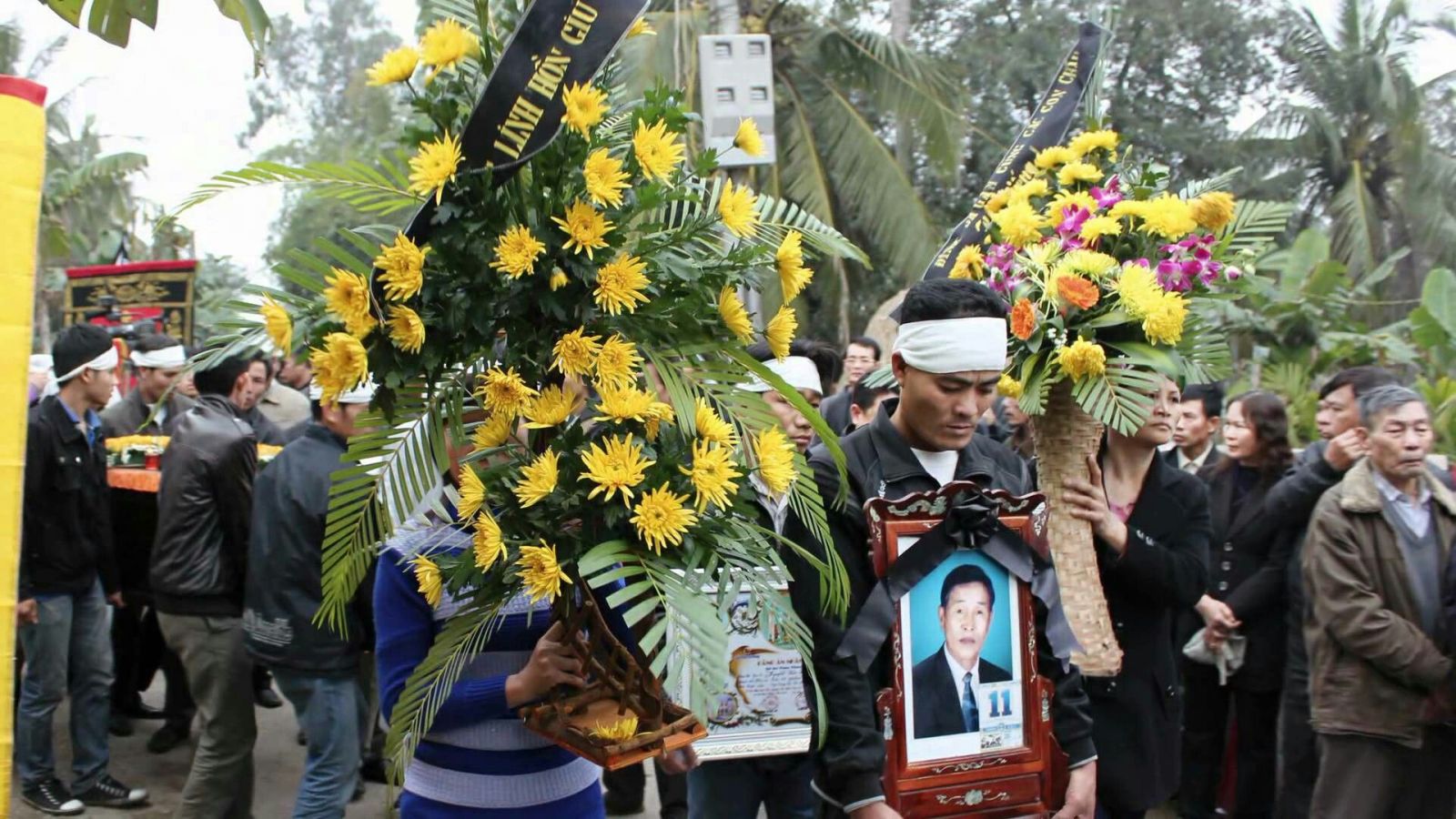
Dinner For The Departed’s Soul
In the evening, after the visitors had left, the family conducted a memorial service. The relatives prepared a full meal with wine and meat to offer at the memorial altar. Meanwhile, the music band changes to another tune to commemorate the pass-away.
Turning The Coffin
At midnight, a ritual of turning the coffin is performed, rotating the coffin horizontally within the house, with its head facing the altar and its feet towards the door – ready for the procession to the burial site of the dead in coming day.
The Final Farewell Feast
As dawn breaks, the procession begins. Initially, the family presents a humble meal at the altar of the departed. A bowl of rice, a boiled egg, a small plate of salt, and a tiny cup filled with water constitute the offerings. Somber melodies resound once more to mark the deceased’s final moments with family at home.
The Funeral Procession
A chosen family member delivers a heartfelt eulogy, bidding farewell to the departed before the coffin is gently closed. Subsequently, the family head expresses gratitude to attendees and invites them to accompany the procession to the ultimate resting site ( burial place)
Leading the convoy is a vehicle adorned with funeral flags and delicate floral displays. Following behind, a somber ensemble of funeral musicians sets the tone with poignant melodies, followed by the family and guests. Along the path, a family member scatters paper effigies, symbolically represented by paper gold bars, guiding the departed soul on its journey. According to local beliefs, the soul may get lost without this trace.
=====> It will be great for you to know more about : The Essence of Vietnamese Culture: Ancestor Worshipping Beliefs
The Burial Ritual
The burial ritual is conducted to lower the deceased’s body into the grave. This ritual begins when the deceased’s body is brought to the burial site. It marks the final stage of the funeral when the family lays their loved one to rest in the earth.
Selecting a favorable and beautiful burial site is crucial when someone passes away. The land chosen for the deceased’s burial significantly affects their rest and the well-being, fortune, and health of the living. It’s important to choose a good, clean location, and the grave should be dug according to the guidelines of Feng Shui to harmonize the energies.
The timing of the burial is also very important, and it’s essential to consider avoiding unfavorable hours to prevent negative consequences. Consulting a Feng Shui master for the best timing provides peace of mind.
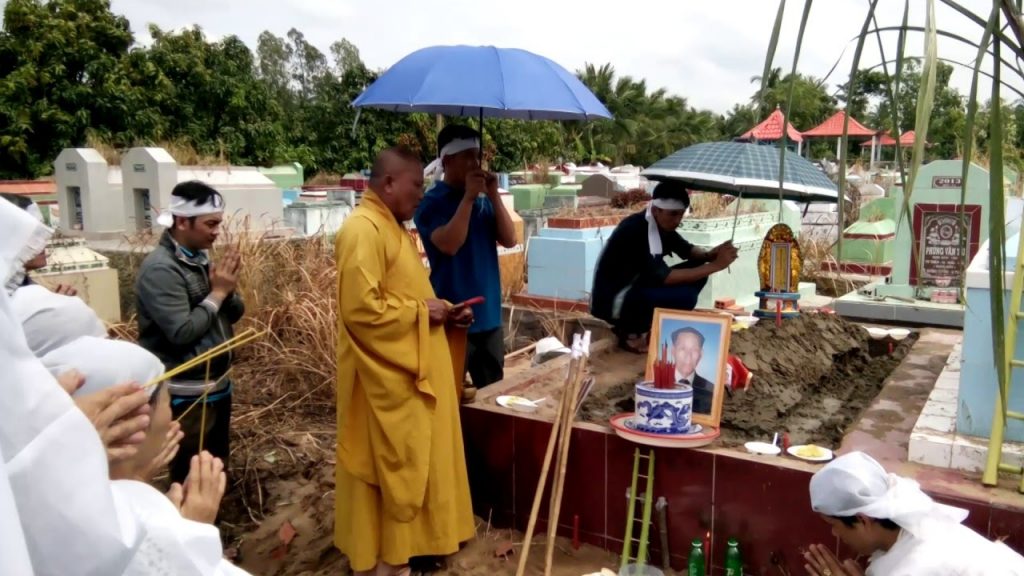
Before conducting the burial ceremony, there is a ritual to pay homage and seek permission from the Earth deity for the deceased’s interment. This ritual involves offerings such as betel leaves, alcohol, gold, incense, a plate of sticky rice, a pig’s head or trotters, chicken, or at the very least, betel and alcohol
Once the Earth deity ritual is completed, the body is lowered into the grave at the right time and in the right direction.The son will fill the first mound of dirt, followed by each of the grandchildren filling a mound, symbolizing their affection and meaningful act of burying their parents.People attending the funeral collectively hold soil and drop it into the grave to wish the deceased peace.
After the grave is filled and turned into a tomb, fresh flowers are left on the tomb, while other offerings are taken to be hung around the ancestral altar. Family members, on their way back with the departed’s altar, are not to look back.It’s believed that walking straight back home without turning around will prevent lingering attachment.
Taking the mourning photo home to worship
After the burial, the photo of the deceased is brought back home to be placed on the mourning altar. The altar always has the scent of incense, with daily candlelight & offerings for whatever the household consumes.
Offering the Food to Guests
After the procession, the family extends an invitation to guests for lunch or dinner to show the family’s gratitude. While in the past, family members would personally prepare the meals, it’s common nowadays for people to enlist the help of a service to assist with this preparation.
Post-Funeral Rituals
After the funeral, family and friends continue to gather, offering support, sharing stories of the departed, and participating in rituals to honor their memory.The family will maintain daily incense offerings at the altar and follow through with three additional rituals:
- Over the initial seven days, a vegetarian food offering will be made each day.
- On the 49th day, there will be a commemoration with a food offering and a modest gathering among the family members, relatives & neighbours
- For the 100th day, a food offering and a small celebration will mark the anniversary of the passing.
Do’s & Dont’s in Vietnamese Funerals
In Vietnamese culture, funerals are deeply rooted in tradition and carry significant importance. Here are some dos and don’ts to keep in mind:
Dos:
- Show Respect: Respect for the deceased and their family is crucial. Express condolences and sympathy in a respectful manner.
- Wearing Appropriate Attire: Dress conservatively and in dark colors. Men typically wear suits or dark clothing, while women wear conservative dresses or dark-colored clothing. Avoid bright colors or flashy attire.
- Bringing Offerings: It’s customary to bring offerings like flowers, fruits, or incense. White flowers, chrysanthemums, or lotus blossoms are commonly used.
- Greeting the Family: Greet the family members and offer condolences. Bow slightly while offering sympathies to show respect.
- Giving Condolence Money: Monetary contributions in envelopes are common to help cover funeral expenses. The amount can vary depending on your relationship with the deceased or family.
- Following Customs: Funerals often involve several rituals, including prayers, chants, and offerings to honor the deceased. Guests may be expected to participate respectfully.
- Ask Permission: If you wish to observe or participate in funeral customs, it’s polite to ask for permission or guidance from the family or a local guide to avoid any inadvertent offense
Don’ts:
- Avoid Bright Colors: Refrain from wearing bright or flashy colors as they are associated with celebration rather than mourning.
- Inappropriate Behavior: Avoid behaviors considered disrespectful, such as loud laughter, inappropriate conversations, or any actions that may disturb the solemn atmosphere.
- Photography/Videography: In many cases, taking photos or videos may be seen as disrespectful. Always ask for permission before capturing any moments.
- Bringing Inappropriate Gifts: Avoid bringing gifts that are unrelated to the occasion or that may not align with the solemnity of the funeral.
- Making Noise: Maintain a respectful and quiet demeanor throughout the funeral. Loud talking or disruptive behavior is considered highly inappropriate.
Understanding and respecting these dos and don’ts can help you navigate Vietnamese funeral customs respectfully and honor the deceased and their family appropriately.It’s essential for travelers to approach these rituals with respect, modesty, and sensitivity towards the grieving families. If invited, participating in a funeral is a way to honor Vietnamese culture, but ensure you follow customs and etiquettes as guided by hosts or locals.

We trust that this glimpse into Vietnamese funeral customs has enriched your understanding of Vietnam’s rich traditions and culture. If you’re planning a trip to Vietnam and require any travel assistance, please don’t hesitate to reach out to us. You can contact us via WhatsApp at +84.988451530 or email us at [email protected]. It would be our pleasure to assist you during your travels
Frequently Asked Questions
If you see a funeral procession on the street, the most respectful action is to slow down or stop briefly. If you are driving, pull over to the side to let the procession pass. It is important to maintain a quiet and somber demeanor; avoid loud talking, laughing, or playing loud music. Taking photos or videos of the grieving family or the casket is considered highly disrespectful and should be avoided.
For guests and travelers, the most appropriate colors are dark, muted tones such as black, navy blue, or dark grey. Avoid wearing bright colors, especially red, as red is a symbol of luck and happiness in Vietnamese culture and is strictly forbidden at funerals. While family members wear white headbands and robes, guests should stick to simple, conservative formal wear.
Generally, Vietnamese funerals are communal events, and neighbors or acquaintances often stop by to pay respects. However, as a traveler, you should only attend if you have a personal connection to the deceased or are invited by a local. If you do attend, follow the lead of others—usually involving a small bow in front of the altar—and ensure your clothing covers your shoulders and knees.
You will often hear the sound of traditional trumpets, drums, and flutes, which are meant to escort the soul. You will also see yellow and white flowers, incense, and “hell money” (votive paper) being burned. Large wreaths with banners are common; these usually bear messages of condolence from friends, colleagues, or local organizations.
In Vietnam, traditional beliefs emphasize the importance of the soul departing from the family home to ensure peace in the afterlife. The house becomes a gathering place for the community to share grief and support the family. For travelers passing through residential areas, seeing a large colorful tent set up on the sidewalk with music playing usually indicates a funeral or a wedding is taking place
As a licensed tour operator in Vietnam, Golden Holiday Travel provides expert guides who act as cultural bridges. Whether you are exploring rural villages in Northern Vietnam or the bustling streets of Hanoi, our guides provide real-time advice on local customs and etiquette, ensuring you have a respectful and deeply meaningful travel experience.
Meet Our Experts

Suggested
Featured article







Related Articles


Write Comment