
Long Bien Bridge : An Iconic Landmark of Hanoi Culture & Beauty
Discovering the Historical Legacy of Long Bien Bridge in Hanoi
1. Long Bien Bridge History : A Symbol of Hanoi’s Resilience
Constructed between 1899 and 1902 by French colonialists, Long Bien Bridge was originally named after Paul Doumer, the Governor of French in Indochina. Designed by the French company Daydé & Pillé, the bridge was the first steel bridge in Hanoi and an engineering marvel of its time, once considered the second longest bridge in the world (after the Brooklyn Bridge in the US). Its 2,290-meter length was built with advanced technology, integrating modern and artistic elements to create a structure that is both functional and beautiful.
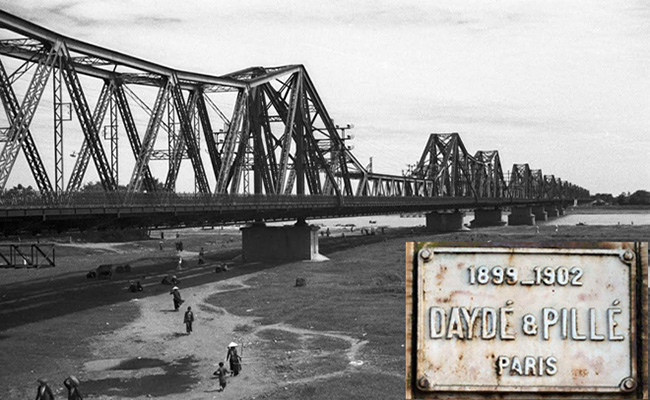
2. Architectural Beauty of Long Bien Bridge
The bridge’s design showcases the elegance of French engineering with a tight, all-steel structure that has aged gracefully, displaying rustic railings and narrow lanes that capture the essence of early 20th-century architecture. Though now showing signs of time with rust and wear, the bridge is still an important route for pedestrians, cyclists, motorcyclists, and trains, giving visitors a glimpse into daily life in Hanoi.
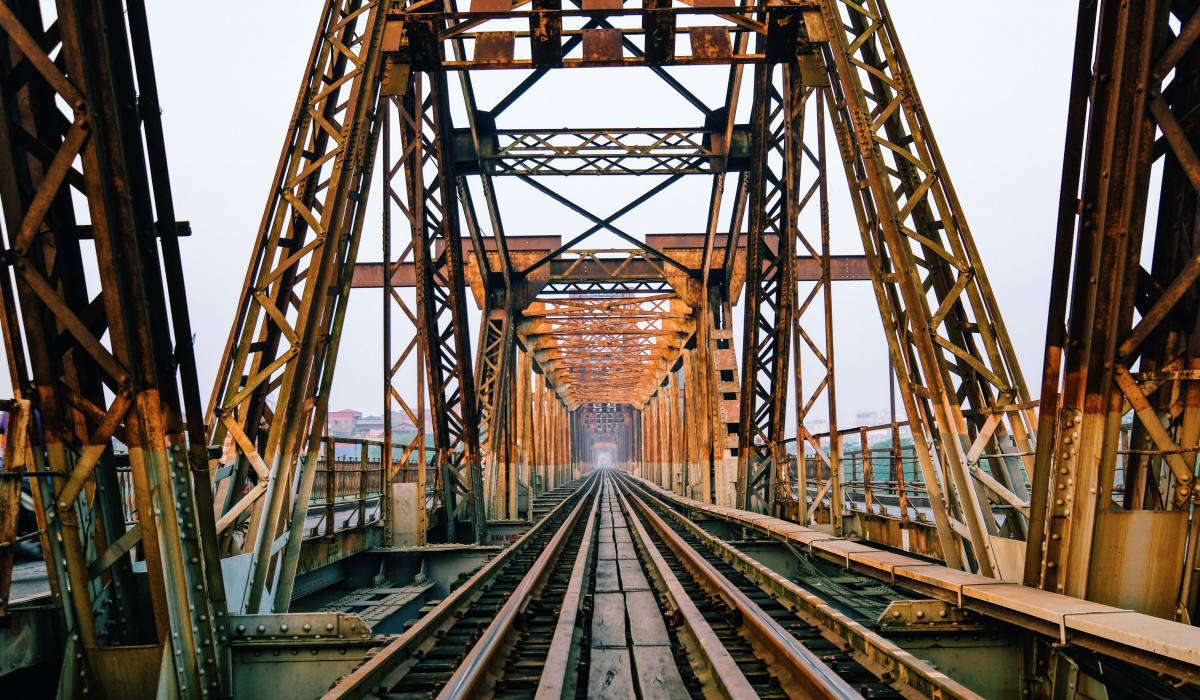
Railway on the bridge
3. Top Things to Do on Your Trip to Long Bien Bridge Hanoi
There are plenty of unique experiences to enjoy when visiting this historic bridge. Here’s a quick guide on things to do on your trip to Hanoi
3.1. Take a Leisurely Walk and Soak in the Atmosphere
Long Bien Bridge offers an ideal escape from the hustle and bustle of central Hanoi. Stroll across the bridge to feel the light breeze and watch the city unfold around you. The bridge provides a peaceful atmosphere where you can relax, enjoy the view of the Red River, and marvel at Hanoi’s skyline.
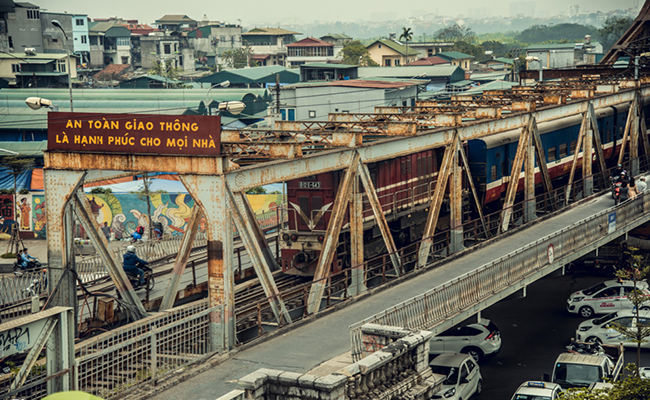
3.2. Capture Iconic Photos of the Bridge
The bridge’s vintage appeal has made it a popular photo spot for visitors and locals alike. The contrast between the bridge’s rustic charm and Hanoi’s modern vibe creates a unique background for photos. Many visitors, from newlyweds to young travelers, come to capture memorable moments at this historic location.
3.3. Experience Sunrise and Sunset Views
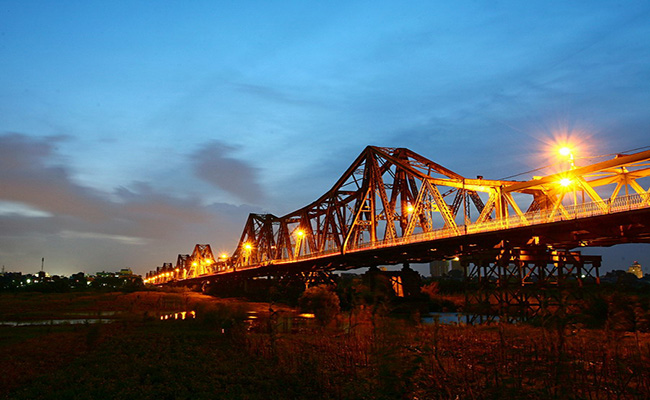
Long Bien Bridge is one of Hanoi’s prime spots to witness breathtaking sunrises and sunsets. As the sun rises or sets over the Red River, it casts a warm glow on the bridge, creating a magical view that’s perfect for photography and quiet reflection.
3.4. Reflect on History
This historical bridge is a living testament to Vietnam’s history. Older generations visit the bridge to recall memories of wartime, while younger people come to appreciate the resilience of the city’s past.
4. Practical Travel Tips for Visiting Long Bien Bridge
4.1. Ideal Time to Visit : For the best experience, you can visit this iconic bridge early in the morning or late in the afternoon to enjoy the beautiful sunrise or sunset views over the Red River. The soft light during these times is perfect for photography & avoidable to the midday heat.
4.2. How to Get There : The bridge is located about one kilometer from Hanoi’s city center. You can easily walk, bike, or take a motorbike to reach the bridge. Alternatively, public buses like numbers 01, 14, 15, 18, 22, 34, 41, 47, 50, 55B, and 36CT stop at Long Bien Bus Station nearby – making it straightforward to reach from most parts of the city
4.3. Mind the Traffic Flow While Doing Your Visit: The walking paths are small & busy with motorbikes and bicycles so be careful while doing your walk there.
4.4. Respect the Environment: Help preserve this historic site by avoiding littering or marking on the bridge’s historic rails.
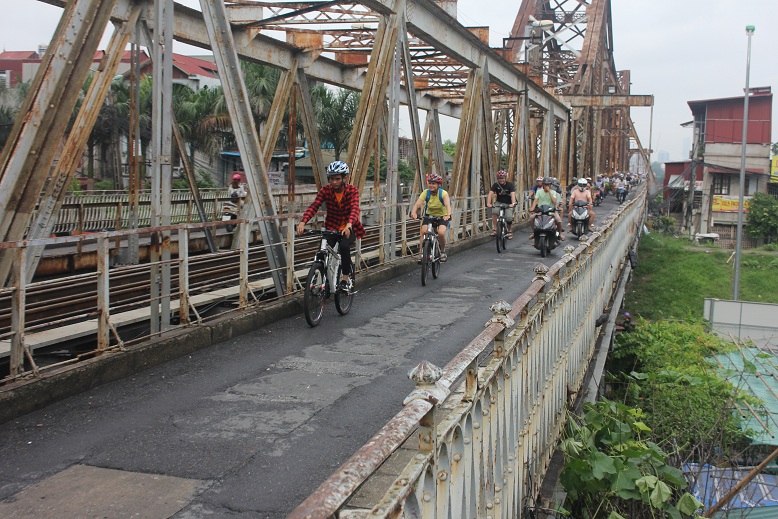
Biking along the bridge
4.5. Connected Your Visit to Nearby Attractions: Consider visiting nearby attractions such as Banana Island, Long Bien Vegetable Market, which is perfect for a leisurely stroll .Other sites like Hoan Kiem Lake, Hanoi Old Quarter and Opera House are also within easy reach for your good insight into the city’s history and culture.
4.6. Combine with a Hanoi Walking/ Biking Tour: Consider joining a guided Hanoi walking/ biking tour that includes this French bridge, Banana islands & other attractions. This way, you can learn more about its history and significance from knowledgeable guides.

Customized form to plan your visit to Hanoi
In brief, Long Bien Bridge is more than a route across the Red River; it’s a symbol of Hanoi’s resilience, connecting travelers to the city’s storied past and tranquil beauty. If you’re planning a trip to Hanoi or exploring various Hanoi tour packages, don’t miss the opportunity to visit this bridge. With its dramatic history, stunning views, and unique experiences, this destination is sure to be a memorable part of your Hanoi travel journey.
Frequently Asked Questions
Long Bien Bridge is more than just a crossing; it is a “living history museum” and a symbol of Hanoi’s resilience. Built by the French between 1898 and 1902, it was the first steel bridge across the Red River. Today, it offers a unique glimpse into the past with its original cantilever architecture and provides one of the most authentic, soulful views of Hanoi’s daily life and sunset.
The best time to visit is during sunrise or sunset. At sunrise, you can witness the bustling local trade as vendors transport fresh produce from the city’s outskirts. Sunset offers a more romantic atmosphere, with the golden light reflecting off the Red River and the rusted iron spans of the bridge. It is also an ideal time for photography enthusiasts.
Yes, walking and cycling are the best ways to experience the bridge. There are dedicated pedestrian and bicycle paths on both sides of the central railway track. Walking across allows you to take in the details of the French-designed steel structure, watch the trains pass by, and observe the lush banana plantations on the “middle island” below.
The bridge was designed and built by the famous French firm Daydé & Pillé. While it is often mistakenly attributed to Gustave Eiffel due to its structural similarity to the Eiffel Tower, the architectural credit belongs to Daydé & Pillé, who created this iconic “horizontal Eiffel Tower” that has connected Hanoi’s Hoan Kiem and Long Bien districts for over a century.
Long Bien Bridge is very accessible from the Hanoi Old Quarter. You can easily reach it on foot (about a 10-15 minute walk from Dong Xuan Market), by bicycle, or by taking a quick ride in a taxi or motorbike. For a more personalized experience, Golden Holiday Travel offers guided city tours that include the bridge, providing deep historical context and the best photo spots.
While the bridge is over 120 years old and shows its age with a charmingly weathered appearance, it remains a functional part of Hanoi’s infrastructure. It is safe for pedestrians, cyclists, and motorbikes. However, visitors should stay within the designated paths and be mindful of the uneven surface and the active trains that still cross the bridge daily













Write Comment