
Vietnam Northern Loop: Top 7 Mountain Destinations You Can Not Miss
My Lifetime Adventure to 7 Breathtaking Mountain Destinations Along Northern Vietnam Loop
Most travelers to Vietnam typically follow the same travel route that covers five popular destinations: Hanoi, Halong Bay, Hue, Hoi An, and Saigon. These spots are renowned worldwide and connected by short, convenient flights. However, Vietnam offers much more beyond these hotspots, from pristine beaches to mist-covered mountain peaks, surely elevating your Vietnam adventure to next levels.
While beaches offer convenient travel options with a wide selection of accommodations ranging from budget-friendly hotels to luxurious resorts, the mountains hold their own charm, appealing to both leisure seekers and adventure enthusiasts alike. With fewer crowds, ancient cultural sites, scenic trails, breathtaking vistas, crisp mountain air, and abundant outdoor activities, northern Vietnam Loop rival its other famous destinations. Even if you’re a first-time visitor, consider adding one or more mountain destinations for your Vietnam Vacation of a lifetime experience.
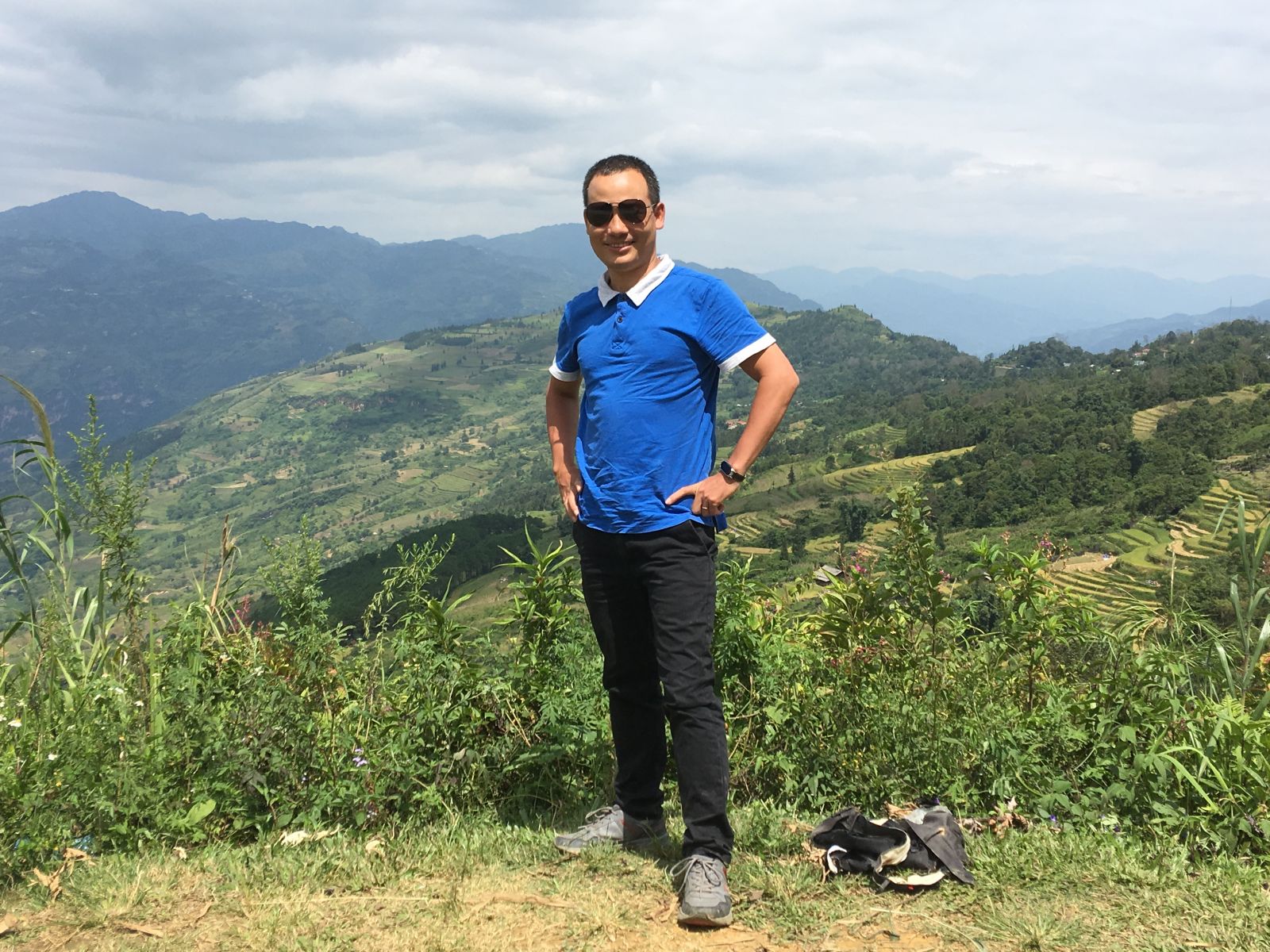
In this blog, I will share my reflections and memories from a recent mountain journey through Vietnam’s northern loop, covering seven stunning destinations. You’ll discover not just awe-inspiring landscapes at their peak and the simplicity of the local daily life, but also moving stories gathered along the way. I also recommend the finest accommodations at each location and memorable experiences to undertake. There were beautiful days and rainy days during the journey, but after all, this mountain adventure was the trip of my lifetime experience.
01. Tu Le : Tranquil Landscapes with Natural Hot Springs
Located approximately 250 kilometers from Hanoi along National Highway 32 toward Mu Cang Chai, Tu Le nestles in a remote valley embraced by three towering mountains: Khau Song, Khau Than, and Khau Pha. Renowned for its picturesque landscapes and natural hot mineral springs, Tu Le captivates visitors with its serene beauty.
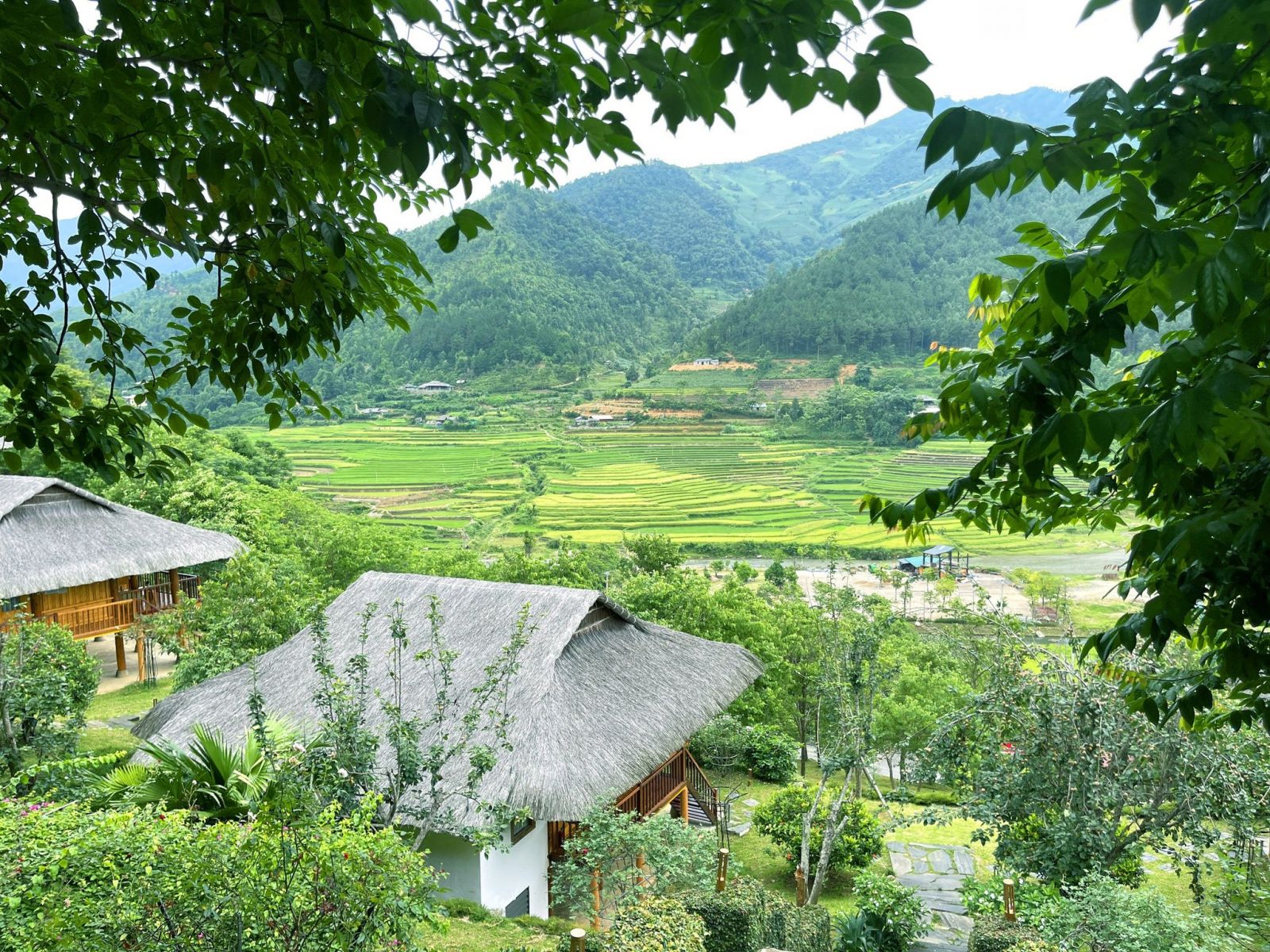
Arriving at Tu Le in late morning, I found rice terraces already ripening for harvest, contrasting with the still verdant fields of other northern mountain regions. The aroma of freshly grown rice accompanied me as I strolled through the village. Streams crisscross Tu Le, enhancing its scenic charm while providing vital irrigation for its fertile fields.
In Lim Mong village, villagers still practised the traditional way of rice harvesting, using sickles to cut rice plants, which were then laid out to dry naturally in the sun before threshing. The dried rice straw would later serve as winter fodder for cattle. Witnessing these agricultural practices took me back more than two decades to my father’s homeland.
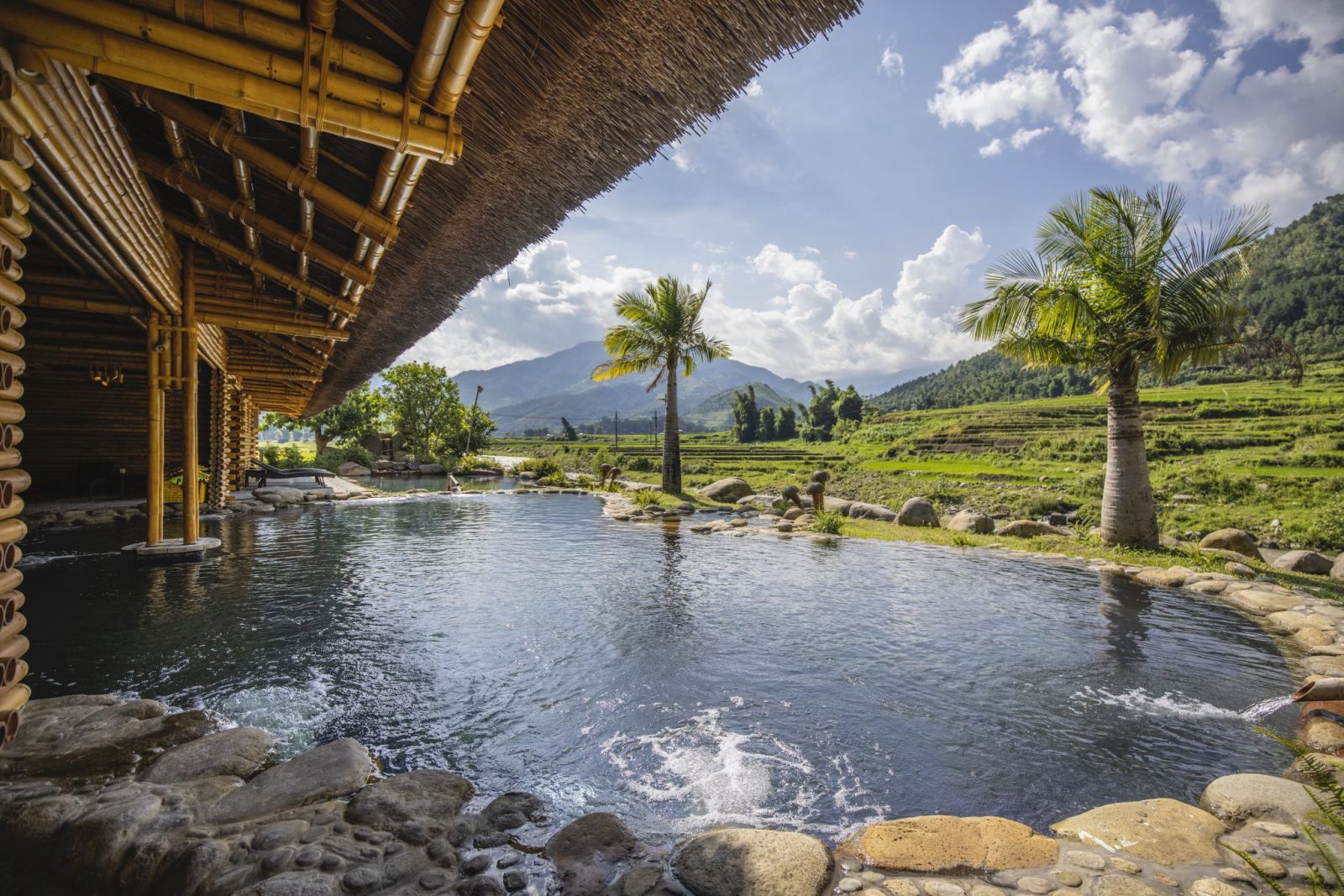
Nature has blessed Tu Le with plentiful hot springs, renowned both locally and afar as a typical attraction here. These springs are so abundant that villagers often have their own private pools. Thai people believe in the therapeutic properties of mineral spring water, which they credit with healing various diseases and making Thai women’s skin naturally soft & youthful.
– Recommended Accommodation
Le Champ Resort Tu Le
Established in 2019, Le Champ stands as Tu Le’s premier luxury resort. Nestled on a gentle slope, it features ninety-six rooms and bungalows distinguished by elegant designs and panoramic views of the charming town, surrounding mountains, and expansive valley.

Guests can indulge in a natural hot mineral swimming pool, conveniently set up for observing local farmers tending their fields just steps away.
For families with children, the resort offers a variety of adventurous activities including ziplining, zorbing, bouldering, and high rope courses.
02. Mu Cang Chai: Vietnam’s Stunning Terraced Landscapes
From Tu Le, I ventured up & along Khau Pha Pass towards my next stop, Mu Cang Chai. Along the way, I stopped at Du Luon homestay & cafe, a charming spot perched on the Khau Pha Pass offering breathtaking views of the valley below. Here, amidst peach trees in the garden, I was welcomed to pluck and savor their ripe fruits.
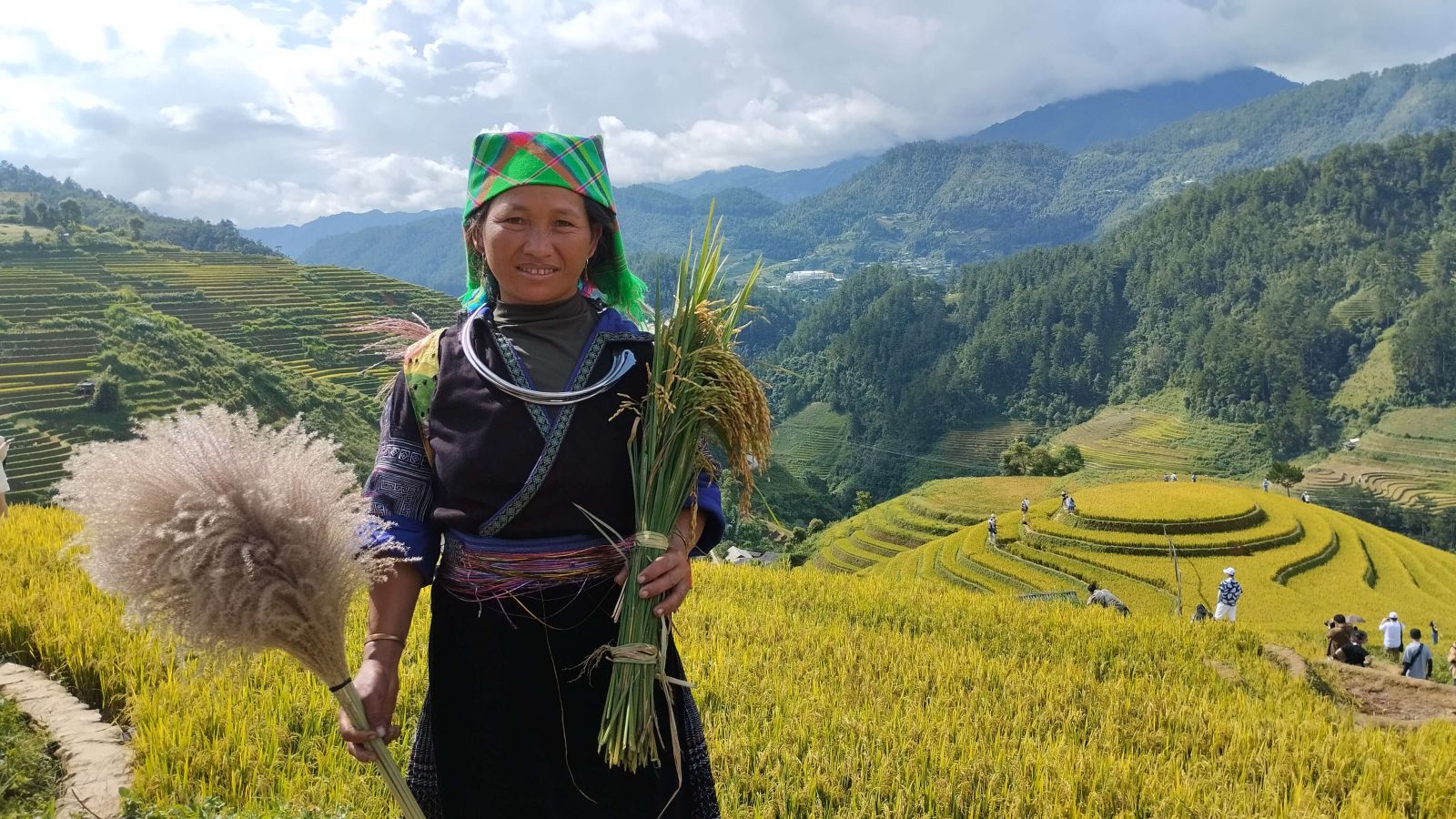
En route to Mu Cang Chai town, I could capture more landscapes of terraced fields & endless mountain views. In the region, for centuries, Black H’Mong ethnics have cultivated rice on these steep hills, creating a picturesque beauty that draws photographers, hikers, and nature enthusiasts year after year. They used to travel along the hills and mountains mainly by foot and have created excellent hiking trails for us. Guiding me through this wonderland was Mr Pan, a local guide who introduced me to two hiking routes linking H’Mong villages, winding through the mountains.
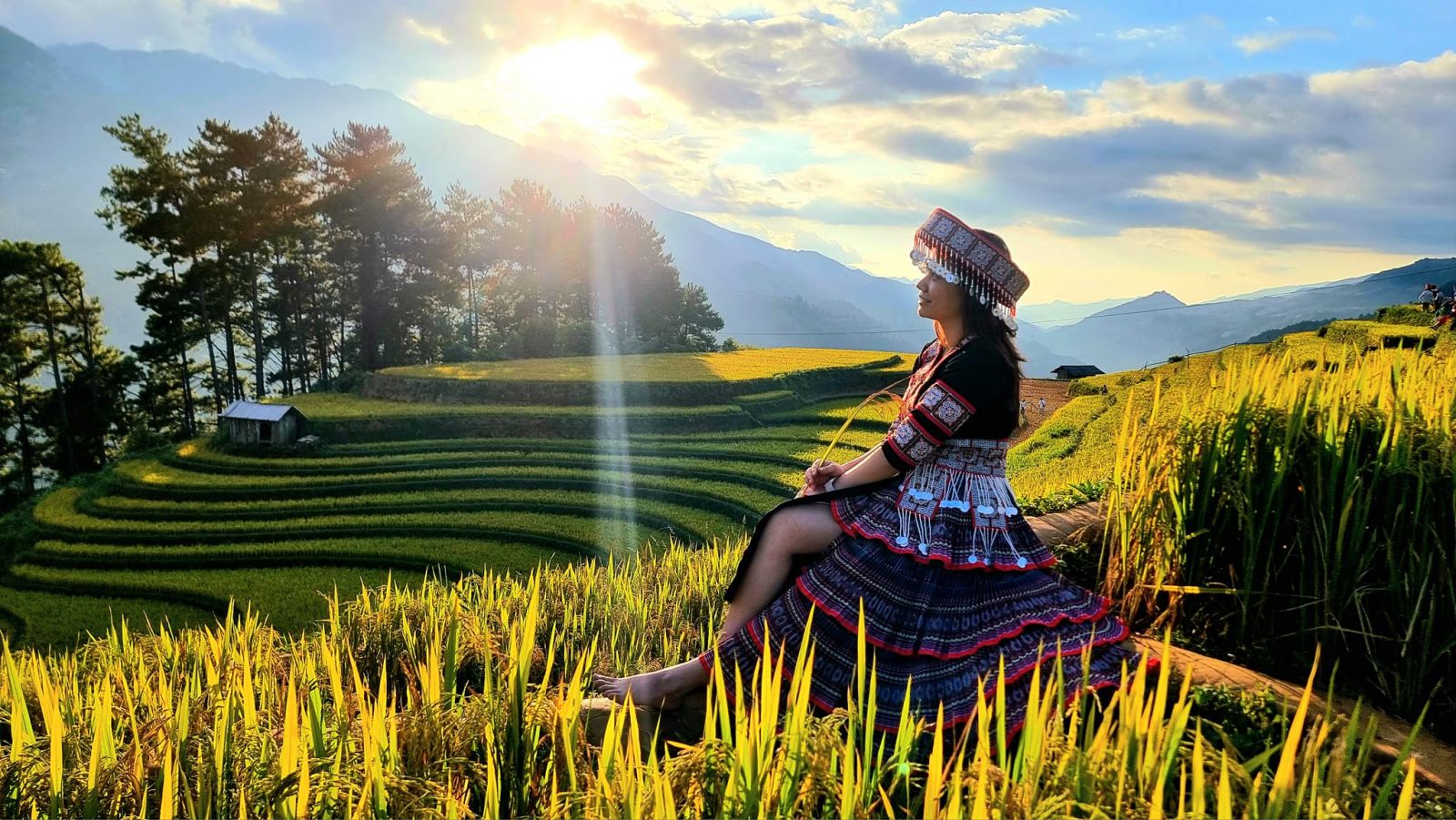
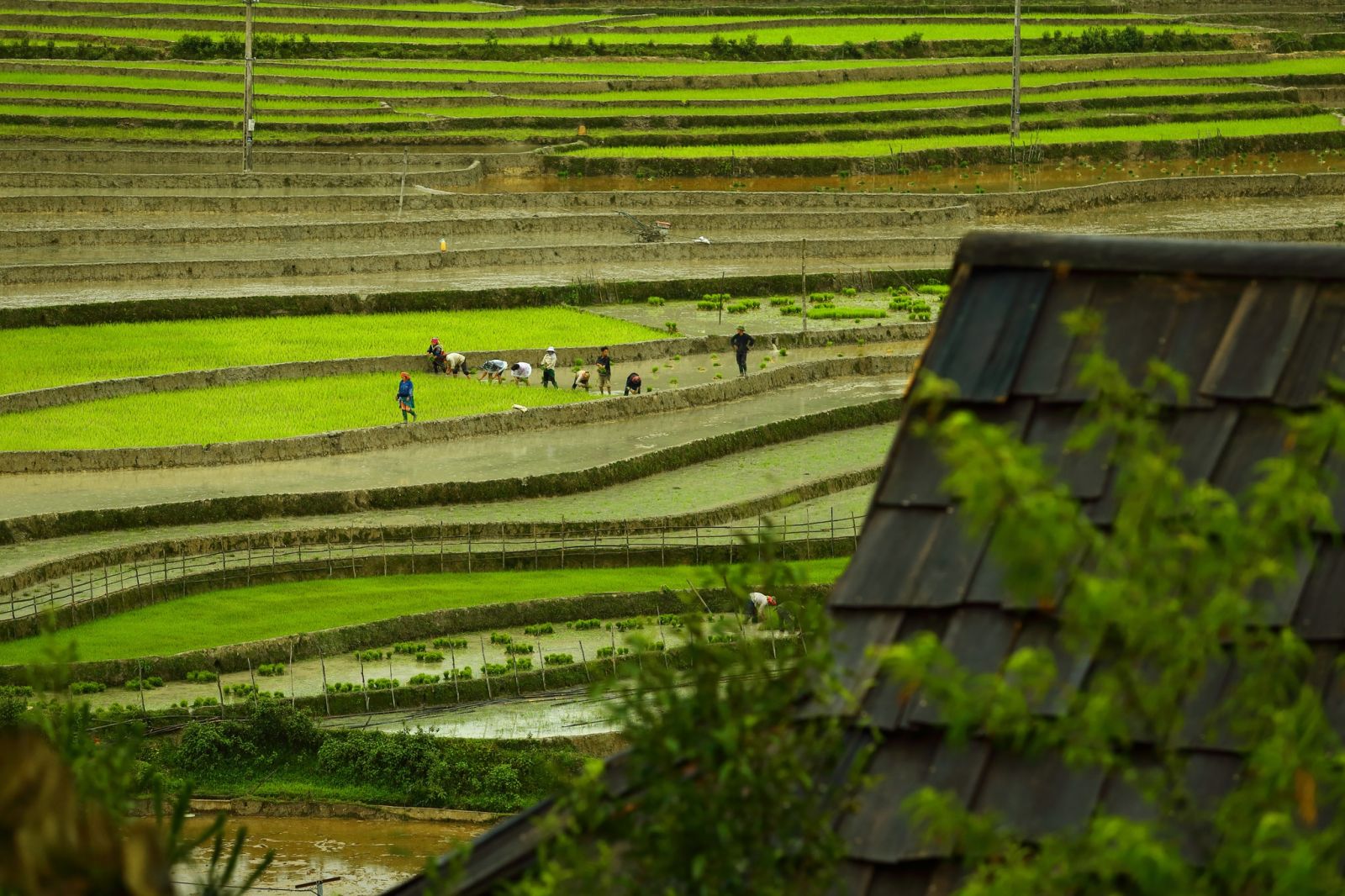
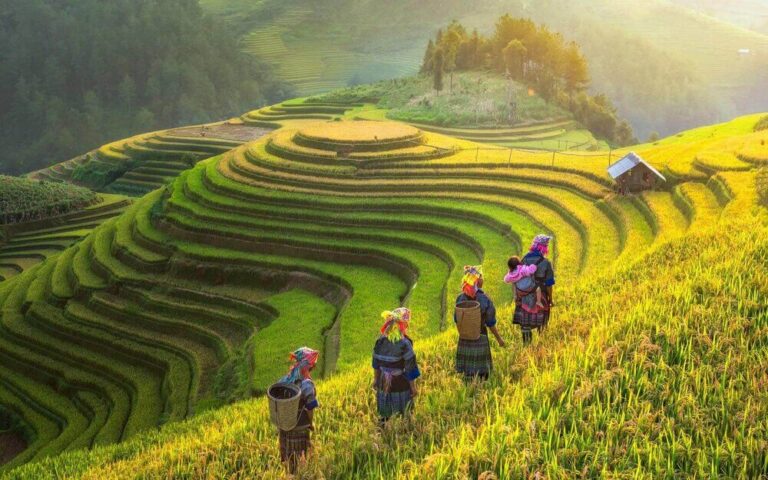
Mu Cang Chai has long been celebrated for its stunning agricultural terraces, particularly in La Pan Tan Village, renowned worldwide for its expansive rice terraces. As we trekked along narrow paths, overlooking the valleys, we were captivated by the vibrant green blanket of rice plants adorning the hillsides. Words alone cannot do enough description to its beauty; it truly must be seen to be believed.
The H’Mong people take great pride in their rice fields, transforming them into intricate works of art. La Pan Tan’s Mam Xoi Hill, known as Raspberry Hill, is revered as Vietnam’s most beautiful terrace, its step-like fields cascading elegantly alongside each other, culminating in a perfectly rounded summit. From our vantage point on the hike, Mam Xoi Hill appeared like the fingrerprints of heaven—a testament to the artistic skill of Black Hmong farmers.
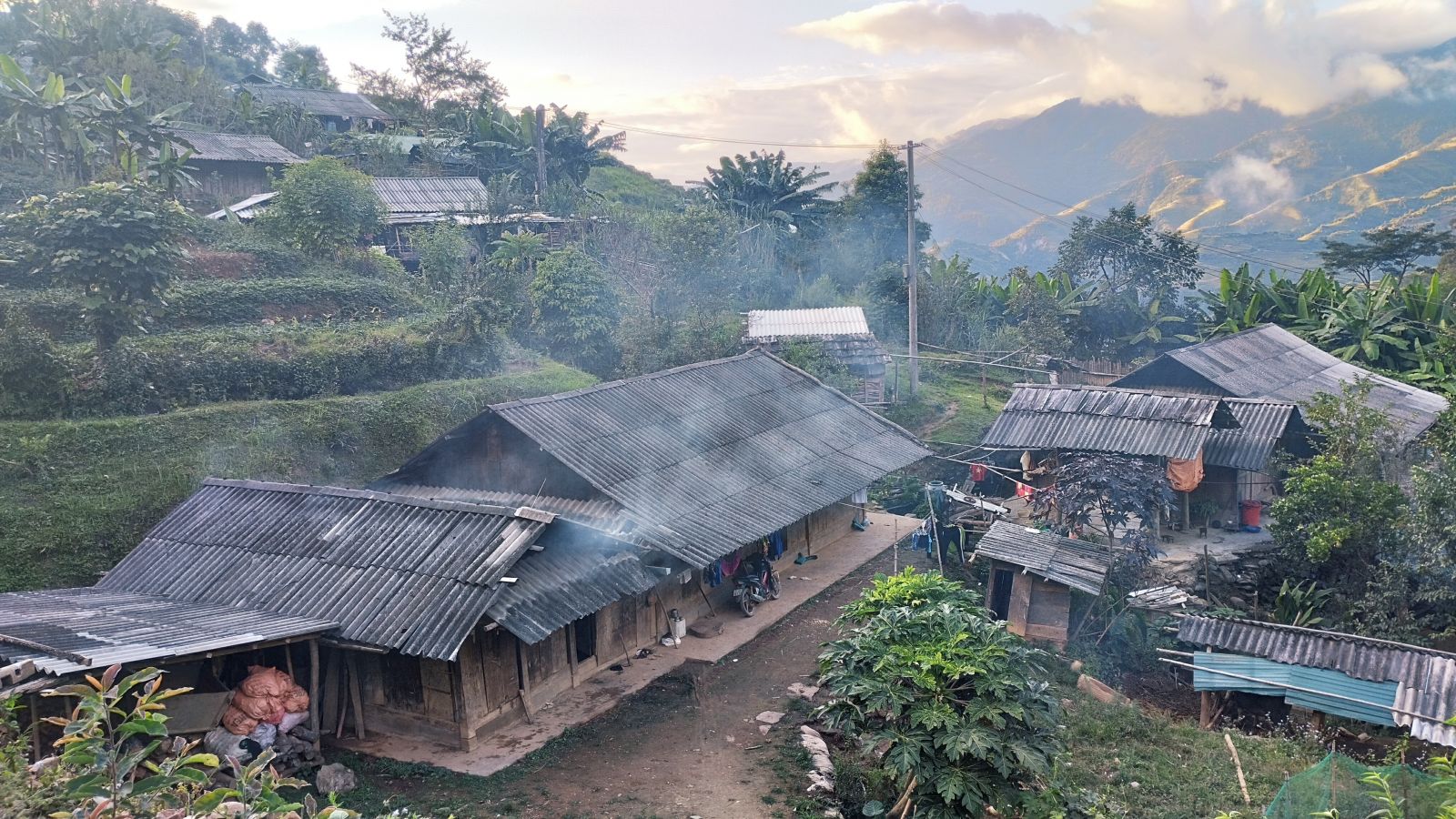
Unlike the poetic beauty of the La Pan Tan trek, Pung Luong hiking route provided a deeper immersion into local life. Passing old traditional houses scattered along dusty roads, I visited a community house bustling with children playing and women embroidering and sewing.
A chorus of quacking ducks led us to a humble roadside shop, where the woman knew that I was looking for a bottle of spring water, she laughed and said, “H’Mong people drink water at home; they come here for wine, beer, and soft drinks.” This shop also served as a young couple’s shelter, hid behind a thin cloth is their bed and household essentials. Life here was really simple; while urban dwellers might view their circumstances with sympathy, the locals seemed happy in their own way of life.
For travelers short on time, consider a customized 3 or 4-day trip covering Tu Le and Mu Cang Chai, tailored to your preferences. The optimal times to visit are from May to June during the water falling season, and from September to October when the rice fields are ripe for harvest.
– Suggested Accommodations:
- Mu Cang Chai Ecolodge
Located 30 kilometers from the town center, Mu Cang Chai Ecolodge provides boutique bungalows and charming restaurants that overlook the iconic paddy fields. Each room features comfortable beds and brocade paintings, enhancing the sense of place. The Ecolodge also offers customized private hiking tours, ranging from 2-day to 4-day treks, guided by experienced locals for enthusiastic hikers.
The view from room to thr rice fields
03. Bac Ha : The Romantic Charm of a Highland Town
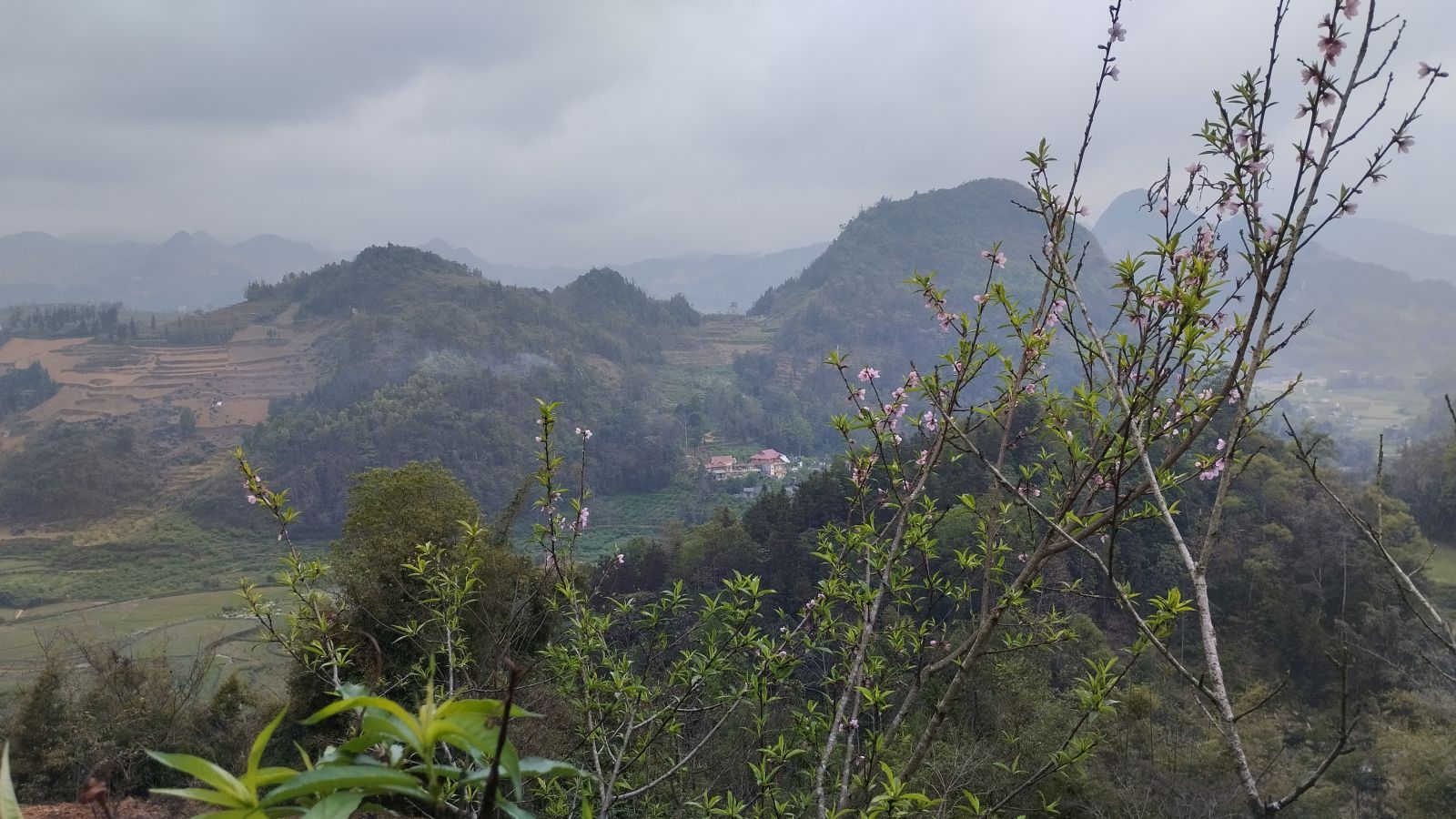
Situated in the northeast of Lao Cai province, over 300 km from Hanoi, Bac Ha enjoys a cool climate year-round due to its elevation of nearly 1,000 meters above sea level. The region is home to diverse ethnic groups, including the Hmong, Tay, Dzao, Phu La, and La Chi, creating a vibrant multicultural atmosphere.
One of the most common trees in Bac Ha is Sa Moc, a conifer from the pine family. Its wood is prized for making houses and furniture because of its durability and unique scent. The hills of Bac Ha town are dotted with boutique villas nestled among the Sa Moc trees, evoking memories of Da Lat 20 years ago before it became a popular tourist destination. The town’s romantic ambiance is palpable, especially while enjoying a steaming hot cup of coffee in the early morning.
Bac Ha boasts a number of markets, each open once a week, providing multiple opportunities for a visit. Though I missed the renowned Sunday Bac Ha market, I was able to explore Coc Ly market on Tuesday.
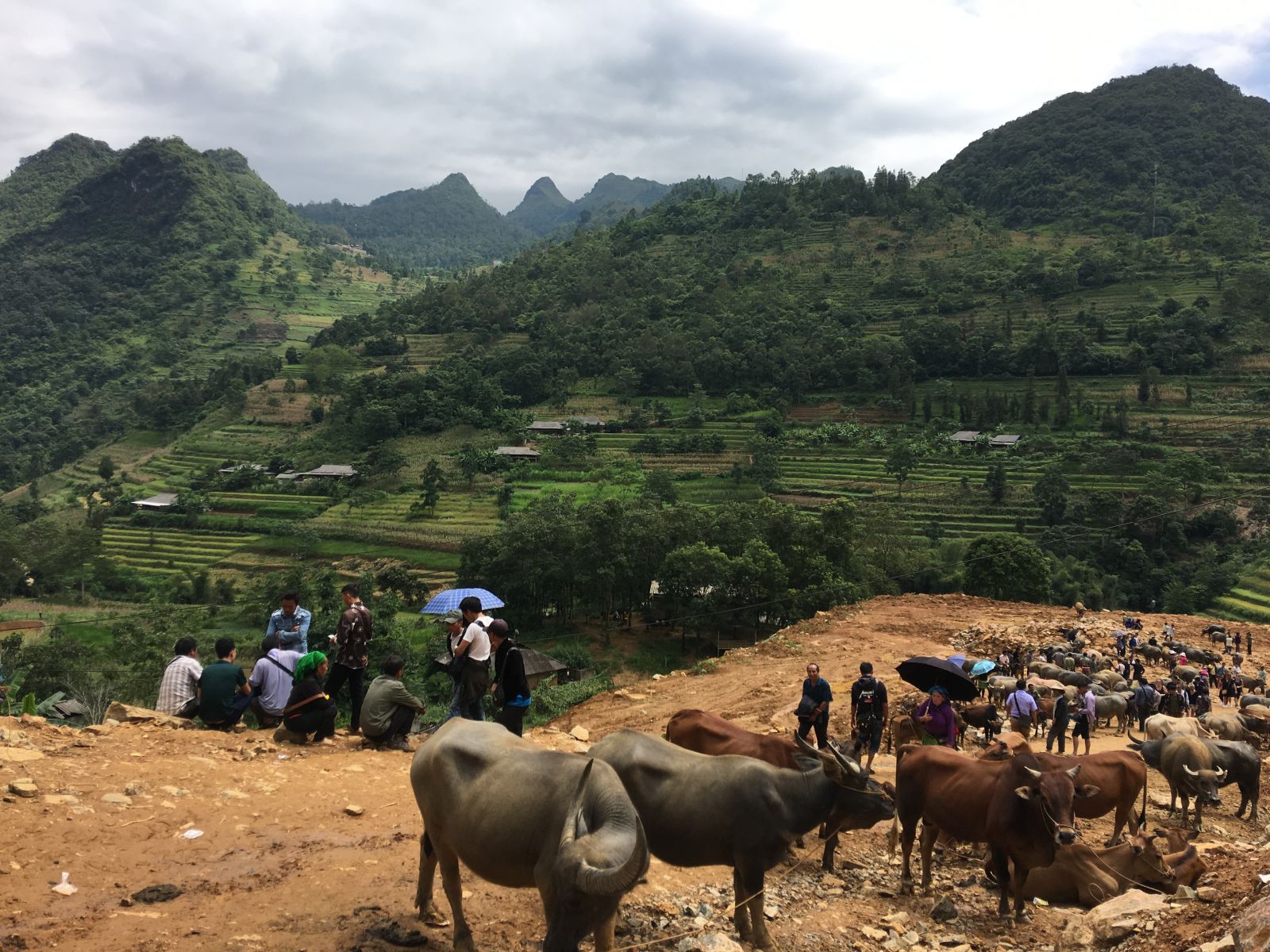
I arrived at the market around 10:30 AM, so it wasn’t very busy. The market opens at 7 AM, so it’s better to visit earlier to experience its full vibrancy. Coc Ly Market originally opened next to the suspension bridge over the Chay River. However, when the government decided to use that area for the Chay River hydroelectric project, they moved the market to its current location. The market offers a wide variety of goods, from vegetables and fruits to cloth, livestock, and agricultural tools. There is a large area dedicated to buffalo sales, including both adult buffaloes and calves. Sellers sometimes pour water on their animals to keep them cool on hot days, and there are also mud holes for the buffaloes to cool off.
I stopped by a young man selling plums. He told me it was plum season in Bac Ha and that nowhere in Vietnam were the plums as delicious as they were in Bac Ha. He was right. The plums had a berry-like skin, thick pulp, and a sweet taste. All these wonderful plums cost me only 25,000 VND per kilogram (about $1).
Another enjoyable activity in Bac Ha is taking a boat ride on the Chay River. This experience is less touristy and very pleasant.
Recommended Accommodations:
- Le Chalet Homestay:
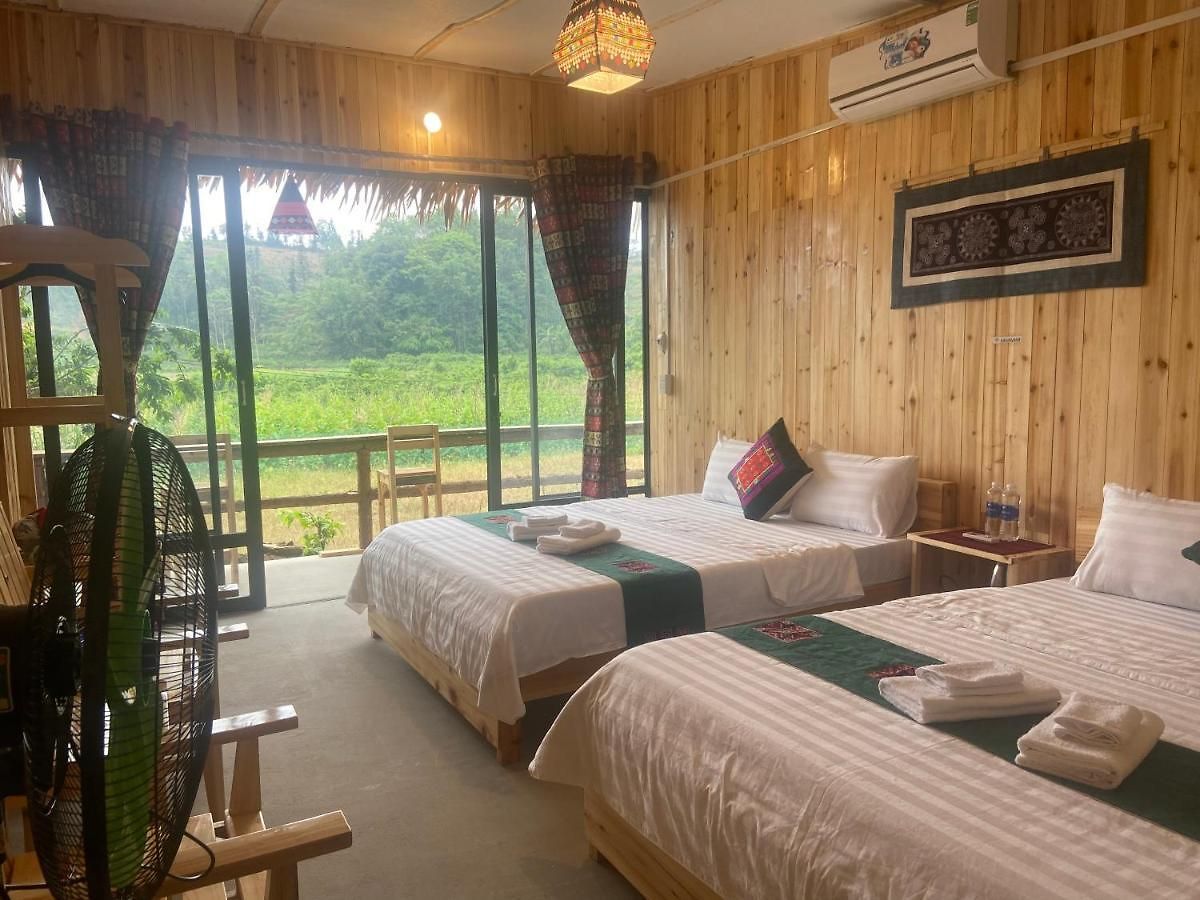
Le Chalet is a charming boutique homestay situated on a hillside, overlooking the plum fields of Na Lo village. From your balcony, you can enjoy the sight of farmers working in the rice fields. Despite being in the mountains, the coffee at Le Chalet is surprisingly good.
- Bac Ha Boutique:
Located near the famous Bac Ha Sunday market, this boutique hotel offers a fantastic location to experience the town’s atmosphere. The rooms are clean and decorated with local touches, and some even feature balconies with river views.
04. Hoang Su Phi : Waking Up Amidst the Clouds
Hoang Su Phi resembles Mu Cang Chai but sees fewer tourists due to its challenging, zigzagging roads. Yet, isn’t this an advantage for preserving its authentic culture and natural beauty? Here, you’ll discover some of the most spectacular rice terraces, diverse ethnic groups, rich cultures, and pristine landscapes.
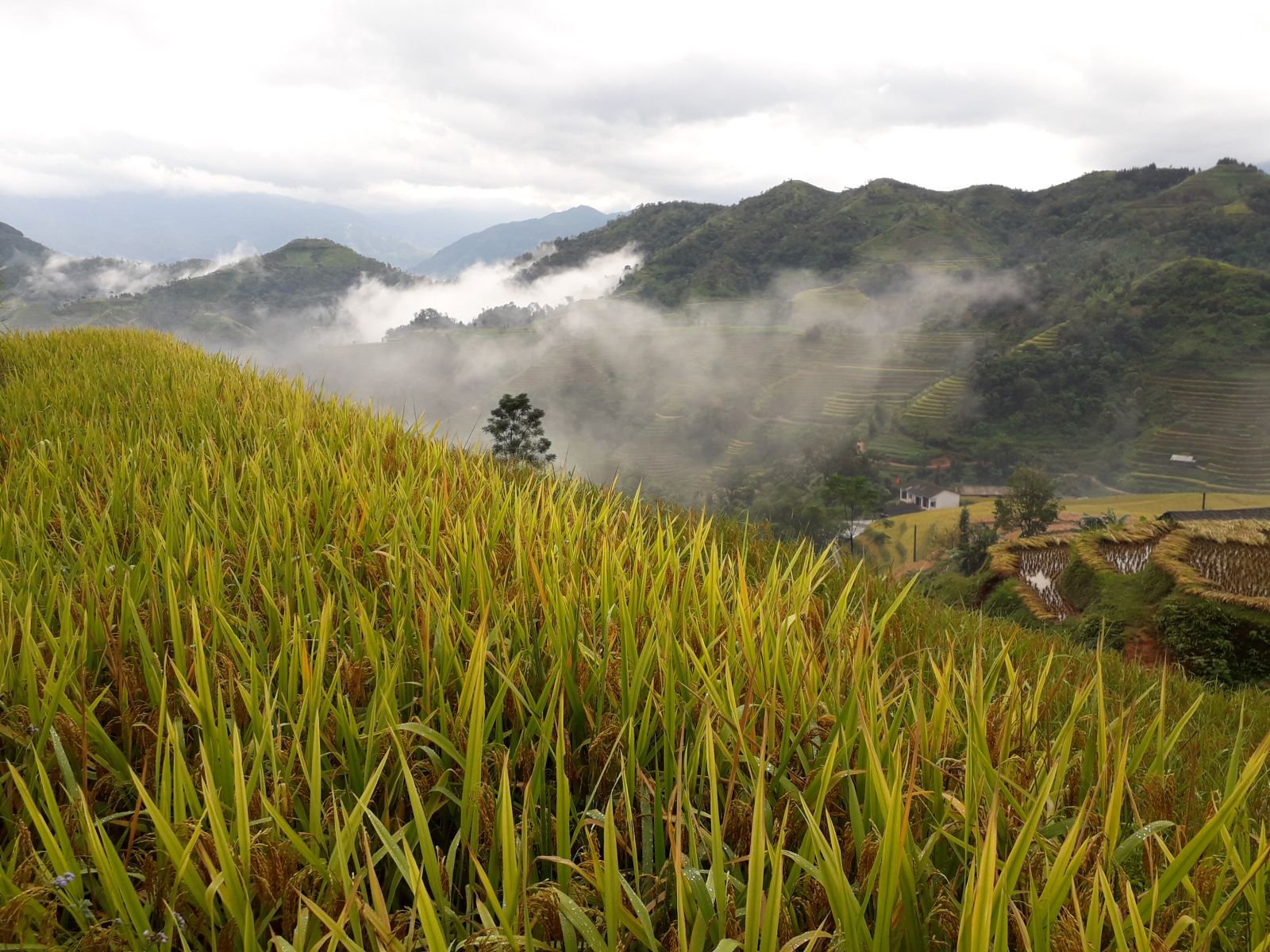
Among the many picturesque villages in Hoang Su Phi, I chose Thong Nguyen for my stay. Hidden amidst mountains, Thong Nguyen is blessed by the convergence of three major streams—Phin Ho, Nam Ong, and Nam Khoa—creating a stunning village setting. Due to its location, the ancients often likened Thong Nguyen to the future land of a bright future.
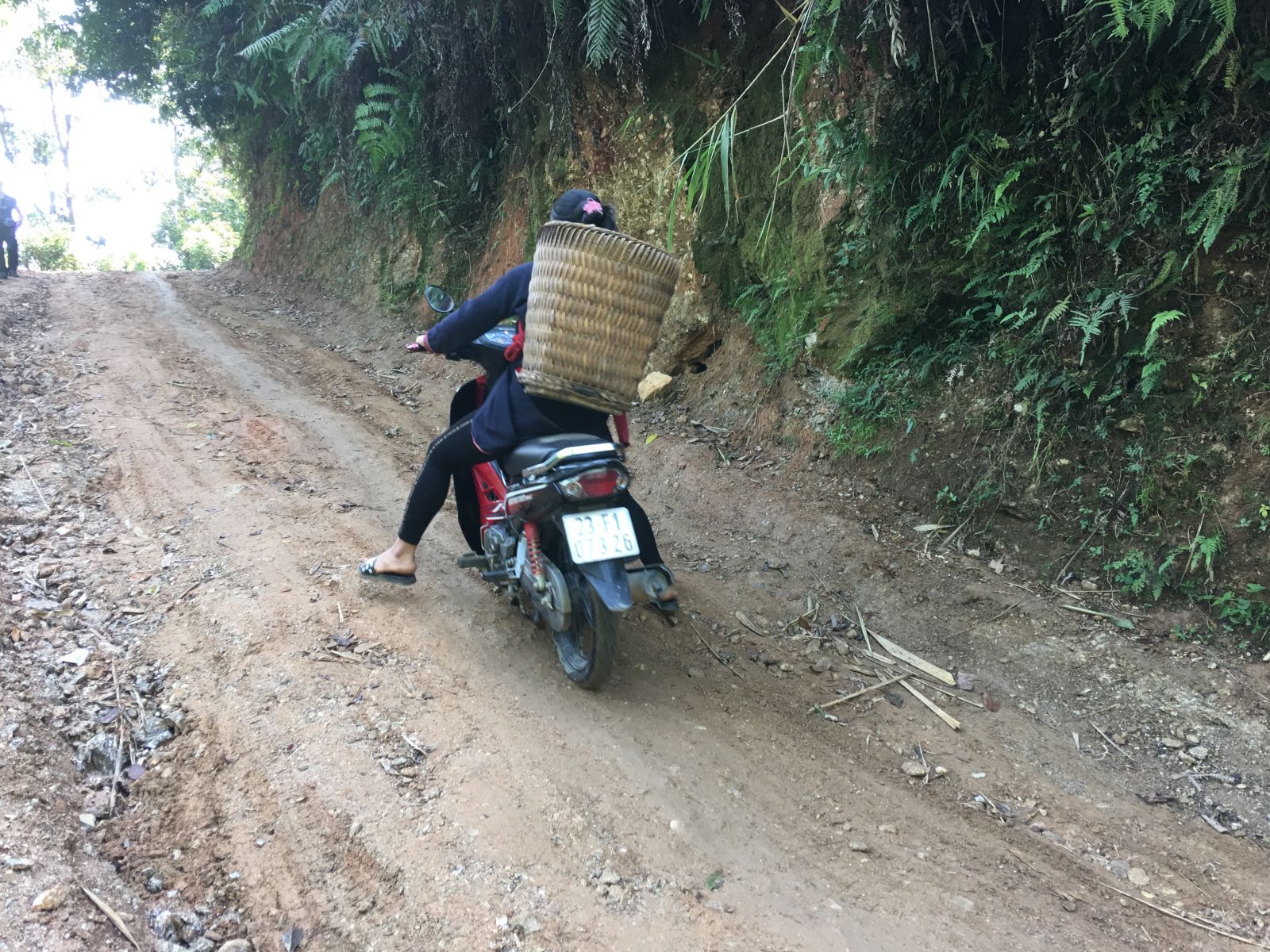
The journey to Thong Nguyen proved to be quite a challenge. Some paths were muddy from last night’s rain, while others were under repair as part of a government project, making it even more difficult for our car to navigate. According to the newspapers, the construction was expected to finish by the end of 2024. By then, Hoang Su Phi would surely emerge as a beauty awakening from her long sleep
Despite the hardships of travel, the rewards were abundant. I passed through sprawling valleys cloaked in vibrant forests, encountered waterfalls cascading gracefully, and marveled at terraced fields glistening with water, poised for the next crop, shrouded in clouds. These fields stretched from the valley depths to the peaks of the mountains, resembling a staircase to heaven. It felt as though I had stepped into a world far removed from civilization.
After a fulfilling day and a satisfying dinner, my sleep was deep and undisturbed. I woke up feeling remarkably refreshed and energized. That’s the beauty of staying in the mountains—no matter how early you rise, it always promises relaxation and renewal.
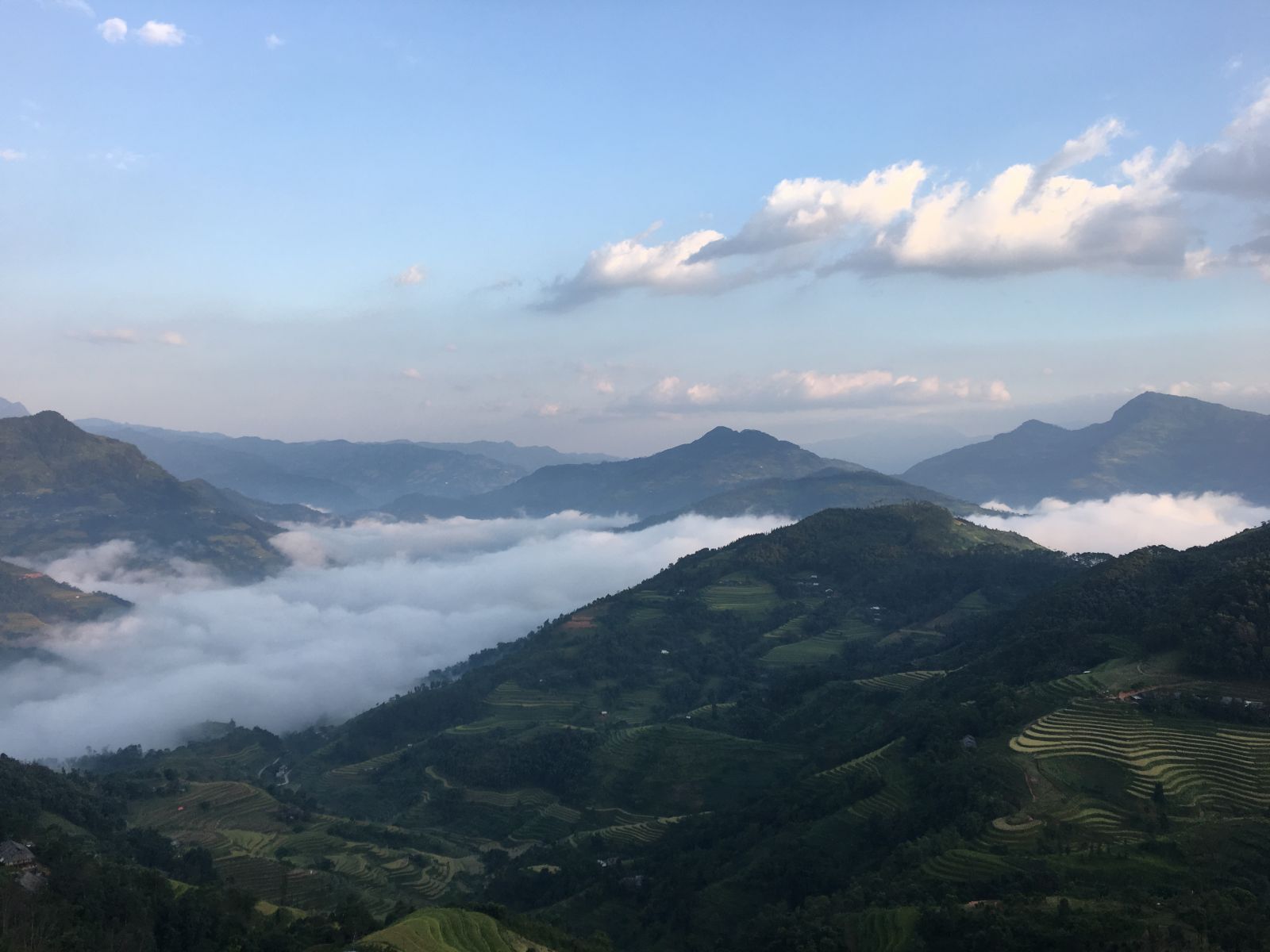
As I stepped onto the balcony, still half-asleep, it felt as though I was walking through dense white mist. Clouds had ascended to the peaks alongside me. Seated on a bamboo chair, leaning against my room’s wall, I embraced the cool morning air, admired the breathtaking scenery, and patiently awaited the sun’s first rays to pierce through the thick fog and warm the entire valley. In that moment, I relished a profound sense of contentment—a feeling uniquely evoked by exploring Vietnam’s northern mountains
Recommended Accommodations:
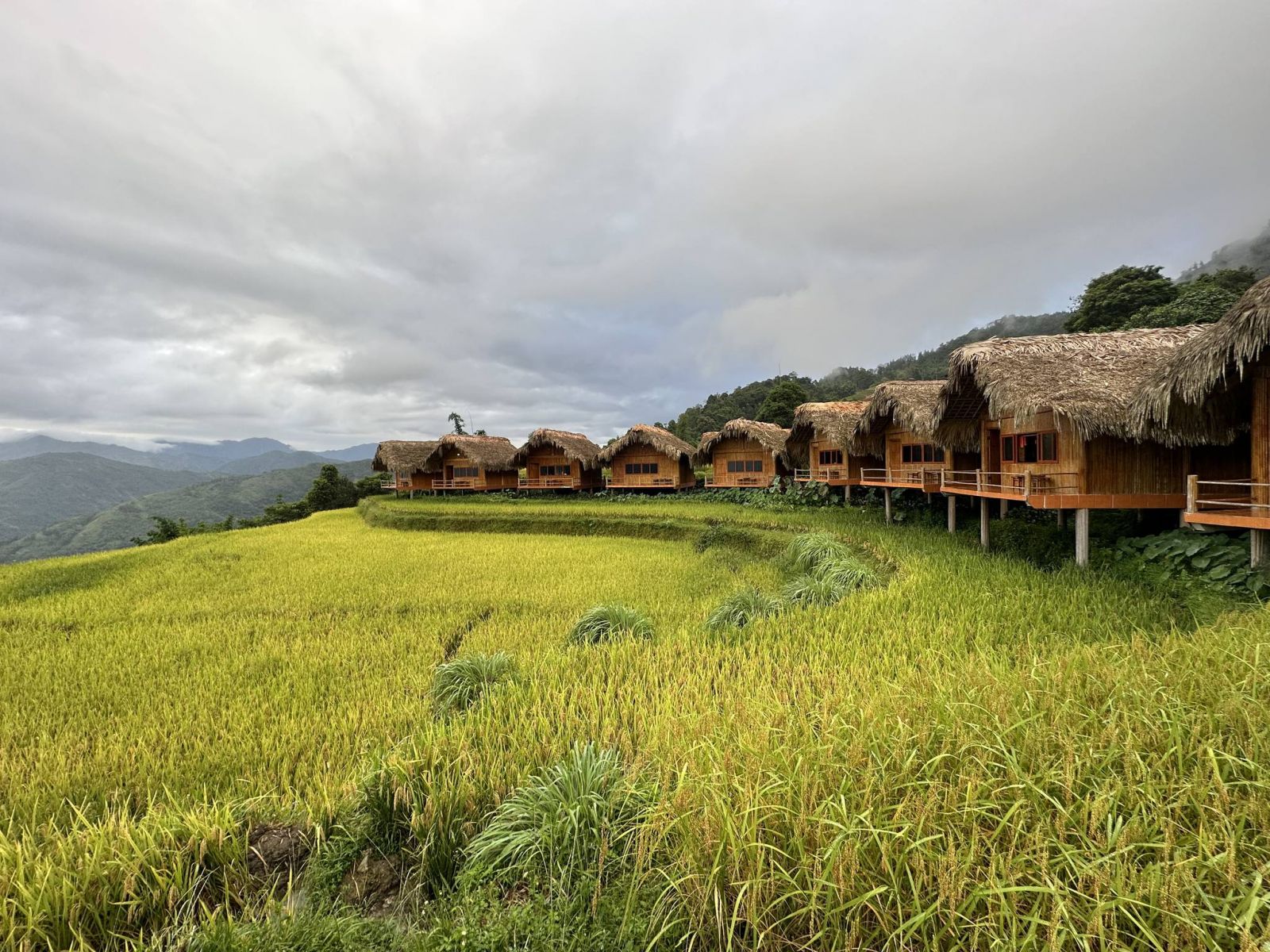
- Hoang Su Phi Lodge
Perched atop a hilltop, Hoang Su Phi Lodge features 12 bungalows offering panoramic views of deep valleys, majestic mountains, and lush paddy fields. Each room boasts cozy beds, expansive windows that frame the natural surroundings, and a spacious balcony perfect for unwinding and soaking in the stunning vistas.
- Panhou Retreat
Nestled amidst the natural beauty of Hoang Su Phi, Panhou Retreat is a sanctuary for rejuvenation of body, mind, and spirit. Inspired by Dzao culture, the retreat comprises 25 rooms and one villa, all adorned with sustainable materials that harmonize with the environment. Carefully designed to enhance your connection with nature, each accommodation offers either double or twin beds, ensuring a serene and enriching stay.
05. Quan Ba : Feel the Beauty of a Dzao Village
The following day, I journeyed from Hoang Su Phi to Quan Ba. If you visit Quan Ba on a Saturday, you can stop by Quyet Tien Saturday market to observe minority groups such as the Tay, H’Mong, Nung, Bo Y, and Dzao gathering here weekly.
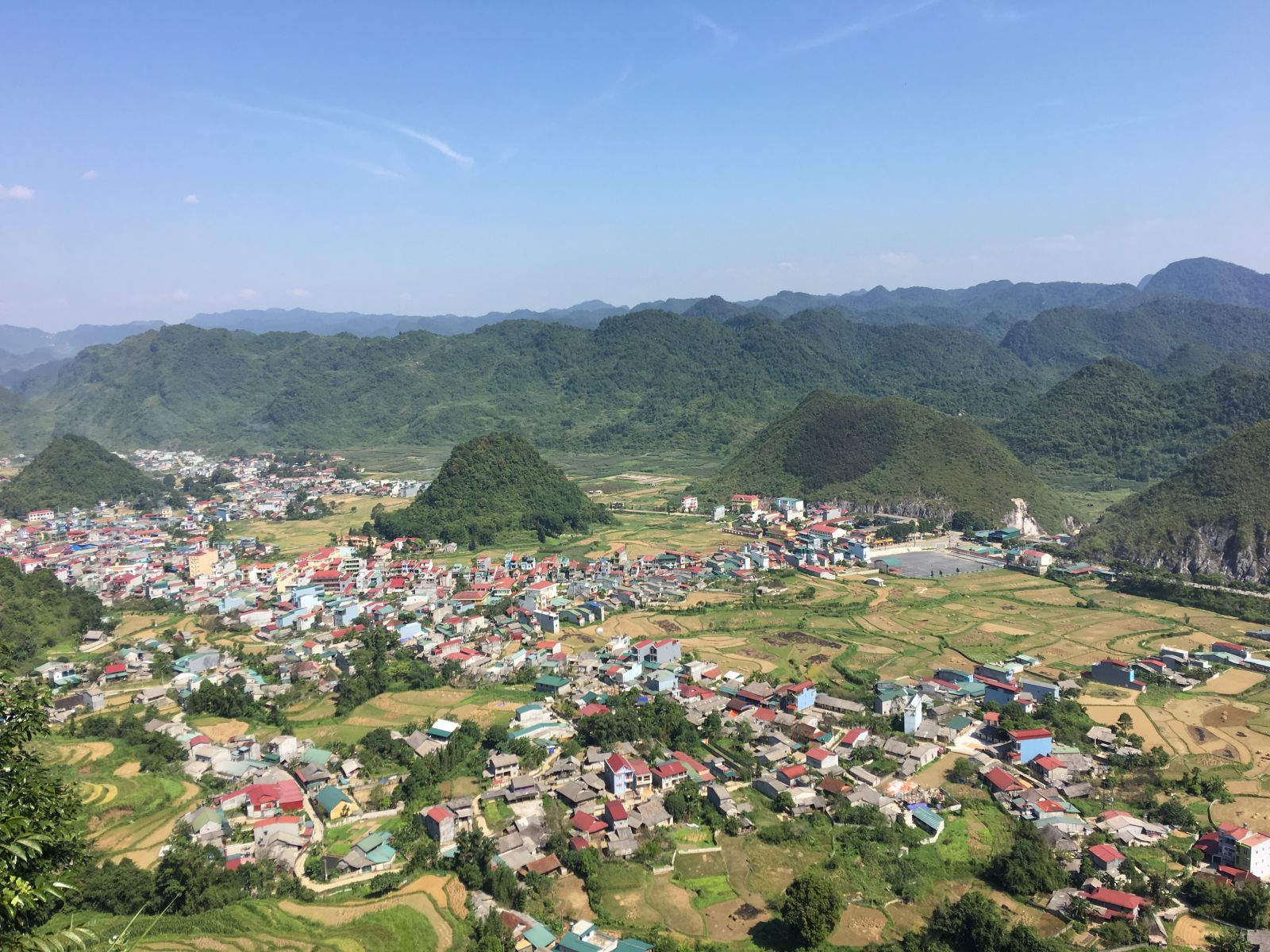
Tam Son town – Quan Ban
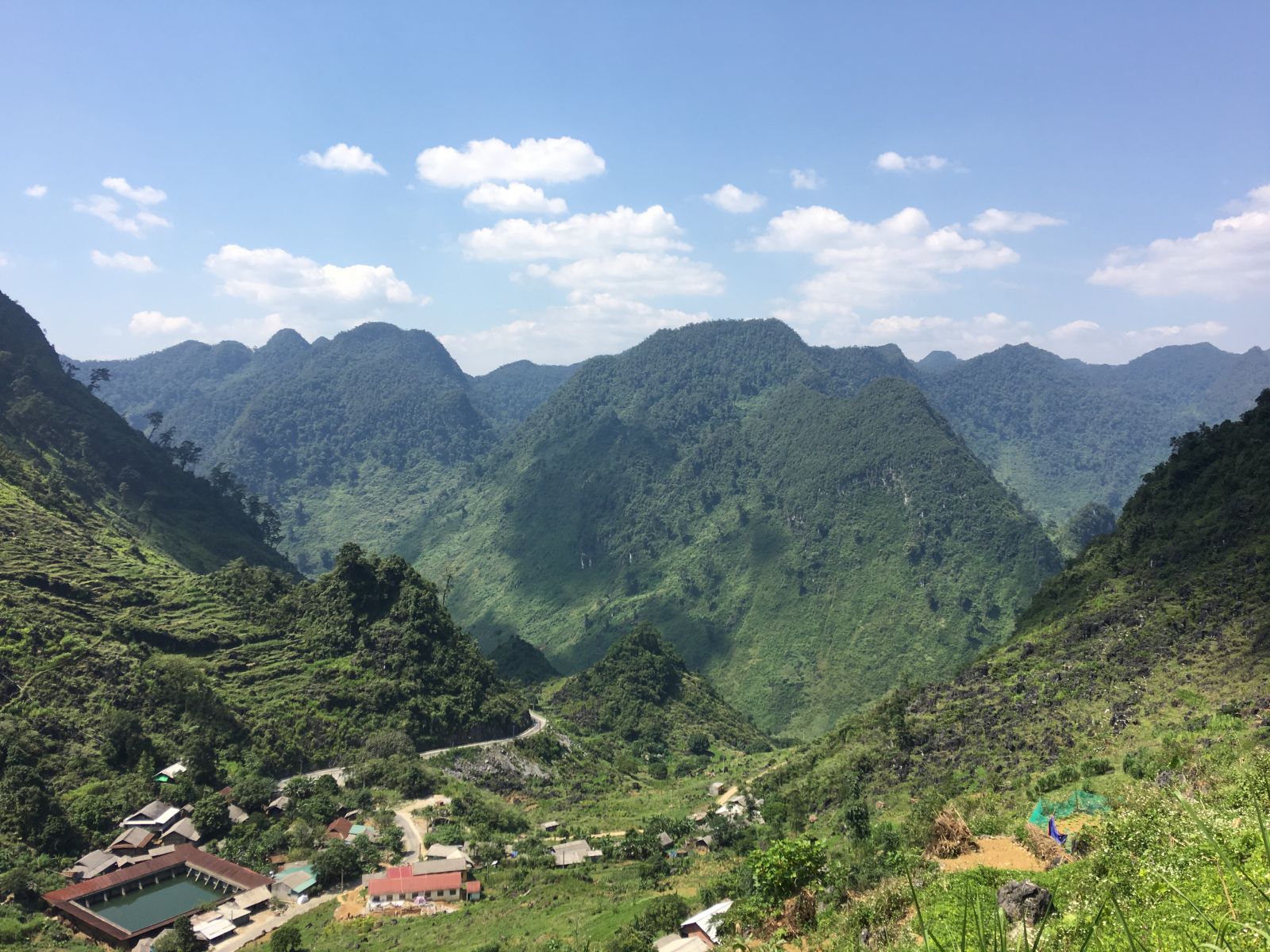
As I approached Quan Ba, the landscape transformed from lush mountains and rice-terraced fields to sharp limestone cliffs and verdant cornfields. This rugged terrain, iconic of the Dong Van Karst Plateau, would accompany us for the rest of our trip. The plateau spans the four districts of Quan Ba, Yen Minh, Dong Van, and Meo Vac, situated at elevations between 1,000 and 1,600 meters above sea level. The harsh climate and scarcity of arable land and water make rice cultivation difficult, so the residents grow corn, which thrives in the rocky soil and requires less water.
I stayed in a traditional house in Nam Dam Village. It was surprising to find such a charming village in a remote area, with numerous homestay options ranging from simple, rustic accommodations to modern bungalows with air conditioning. The village was rich with Dzao culture, evident in the decorations. The clean, quiet paths wound past houses with pear trees laden with fruit and dry twigs stacked for winter heating. Nam Dam is renowned for its mountain herbs, which the Dzao people gather from deep within the forest. After a full day of travel, indulging in an herbal bath or a foot massage with these medicinal herbs is a perfect way to relax yourself.
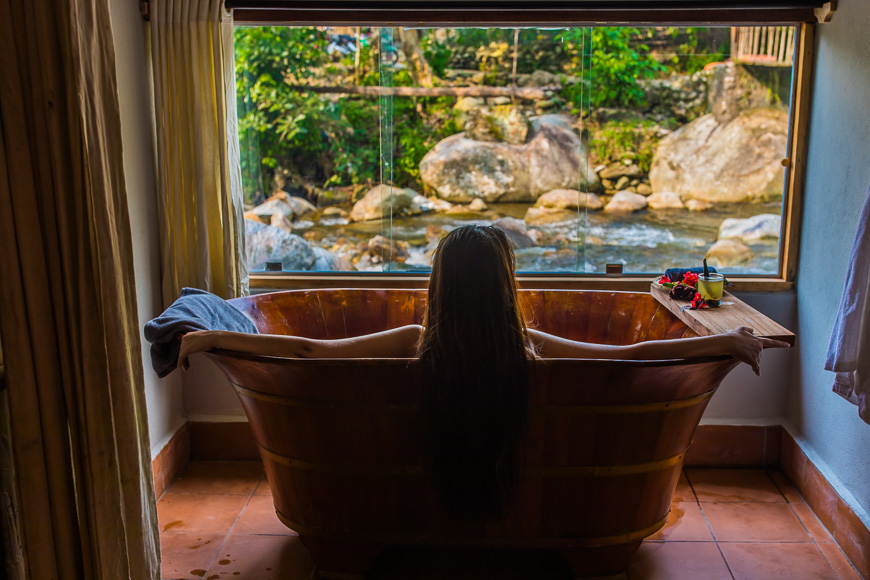
Herbal bath – famous treatment by Red Dzao
My homestay is an old house with earthen walls weathered by time and wooden tiled roofs. Three pieces of paper with Chinese characters were pasted on the main door for luck and safety. I found three swallows’ nests on the ceiling, with the parent birds constantly flying in and out to feed their young. The homestay owners, a Dzao couple, cooked dinner and shared corn wine with me. In Nam Dam, like many other mountainous villages, guests are welcomed with a cup of corn wine. An elderly woman, carrying her grandchild on her back, taught me simple words in her language. All Dzao people have gentle, brown eyes. The men wear traditional black outfits with berets, while the women dress colorfully, adorned with silver necklaces and earrings. Dzao women also enhance their beauty with one or more gold-coated teeth.
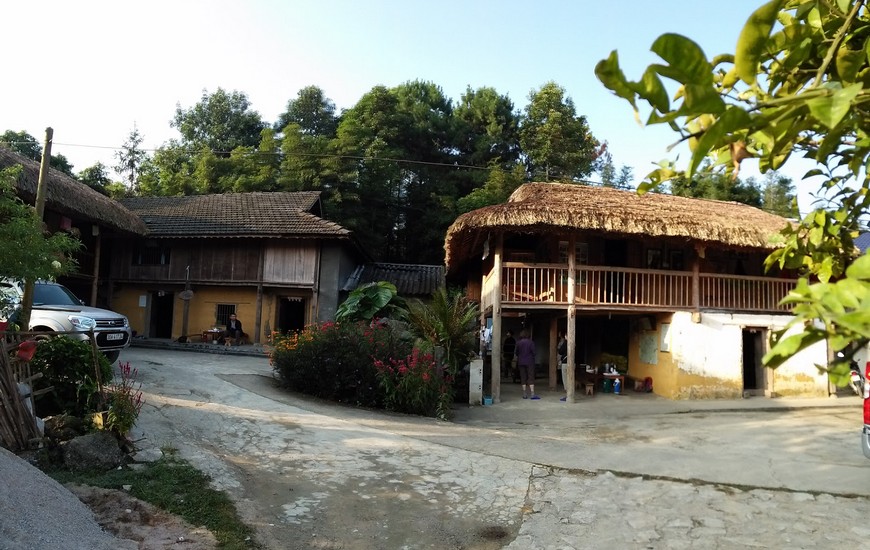
The rooms were adjacent to each other, separated by thin walls. A fan hanging on the wall was sufficient to cool the small room as the temperature dropped in the evening. My friend, who was in the next room, started to sing his favorite songs. The lyrics mingled with the cool, crisp air of the mountainous night, subtly evoking the beauty of homesickness.
– Suggested Accommodations
- Homestays in Nam Dam Village
Experience the charm of Nam Dam Village by staying in one of the homestays, offering an authentic cultural experience.
- H’Mong Village Resort
For a luxurious stay in a remote mountain setting, Hmong Village Resort is an excellent choice. The 2-story houses, inspired by the shape of the traditional H’Mong Quay Tau baskets, provide a unique architectural experience. For added comfort, consider booking a villa with breathtaking views of the renowned jagged mountains. Each villa is named after one of the most powerful Hmong surnames in Ha Giang, adding a touch of local heritage to your stay.

06. Dong Van : Ha Giang’s Best-Kept Secret
The distance from Quan Ba to Dong Van spans approximately 100 kilometers, a journey that typically takes 3 hours by car. It’s no mystery now why such a short distance can take so much time—Vietnam’s mountainous terrain doesn’t allow for fast travel. Yet, the breathtaking scenery compensates for any time lost.
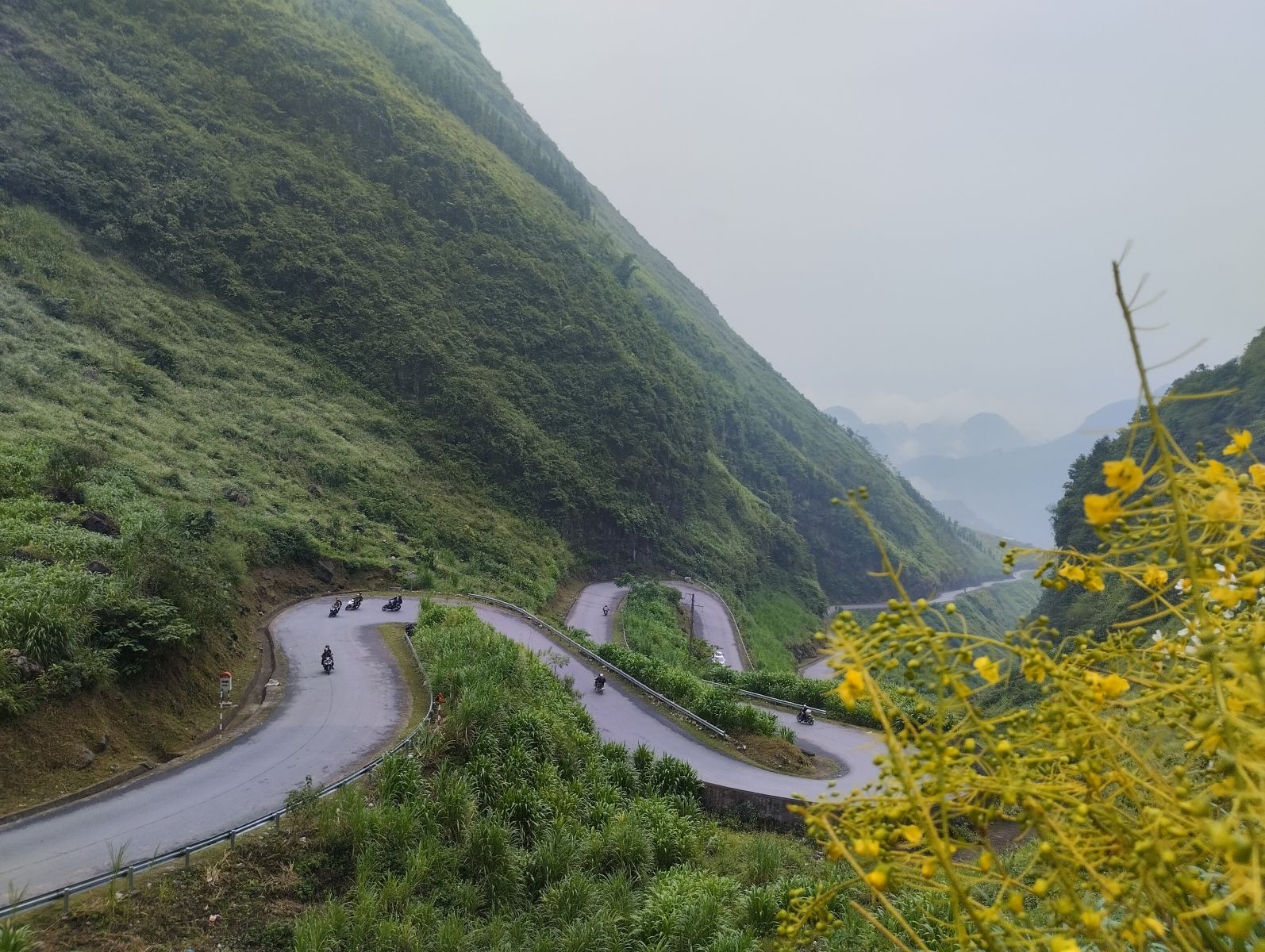
En route, we made a stop at Can Ti weaving village. Here, in days gone by, H’Mong women meticulously undertook every stage of fabric production: from planting hemp and processing its fibers, to weaving, embroidering, batik painting, and dyeing the fabric with indigo plants to achieve the distinctive deep blue hue. It could take months to make a dress. Therefore, each dress was how a Hmong girl showed off their ingenuity to young men.
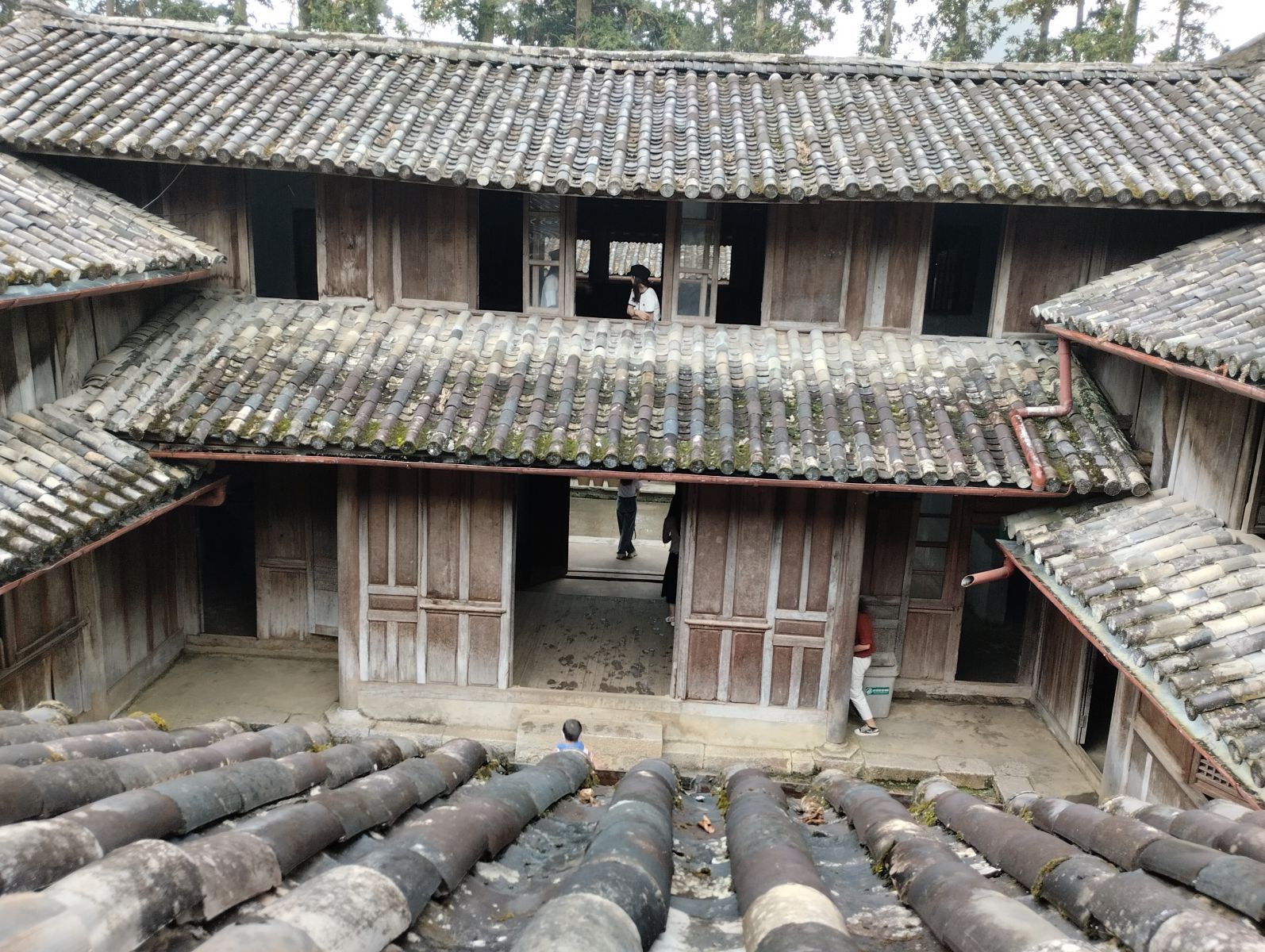
Continuing 1.5 hours from Can Ti Village, we reached Sa Phin Valley, home to the H’Mong Royal Palace nestled amid Sa Moc trees. This was once the seat of Hmong Kings during the French colonial period until Vietnam gained independence in 1945. Historically, the royal family gained their wealth through opium trade, with Sa Phin Commune serving as a trafficking hub connecting Myanmar, China, and Indochina. Opium poppy motifs adorn many corners of the palace. There is an interesting fact about Hmong King’s life. He made a brotherhood with Ho Chi Minh – the great leader of the Vietnamese Communist revolutionary.
That night we lodged at Ecostone House. My room boasted expansive windows that overlooked lush green rice paddies. The bathroom featured a soothing shower, a rustic wooden bathtub, and picturesque views of nature. The mattress was luxuriously soft, the room impeccably clean, and every detail meticulously tended to by the owner. As an easy traveler, I couldn’t have asked for more.
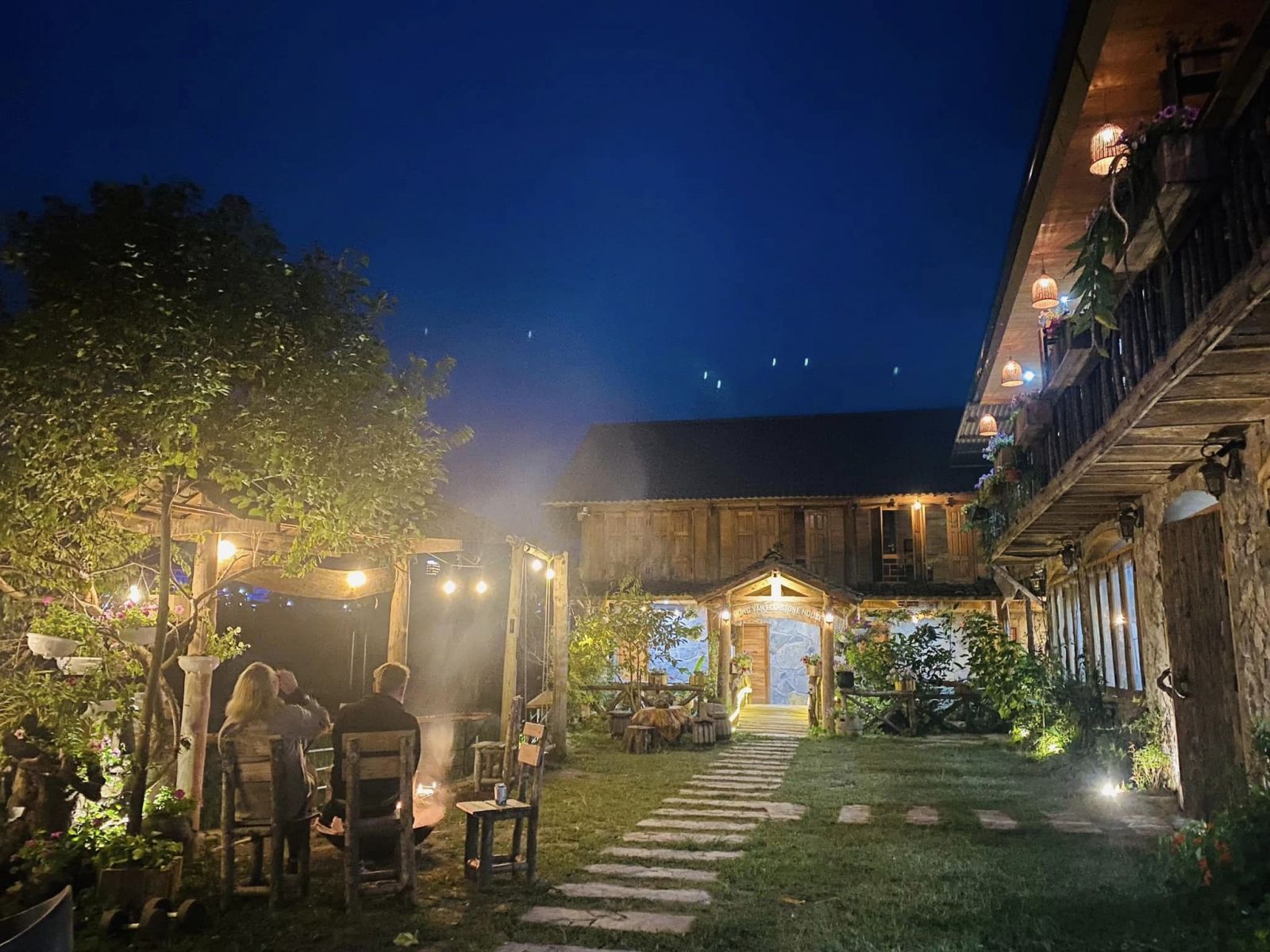
Ecostone House is just minutes away from the old town. I instantly fell for its charm from the outset. Dong Van’s unique character is defined by century-old traditional “Trinh Tuong” houses with yin-yang roofs nestled against rugged mountains. Despite its size, the town offers plenty: delightful restaurants serving excellent cuisine, cafes with diverse menus, and laid-back bars perfect for solo evening drinks.
I visited a massage center and treated myself to a body massage after five days of traveling. My masseuse was a 16-year-old H’Mong girl who graduated from secondary school just last year. Her parents work away from home, so she and her three siblings live with their grandparents. She works weekdays to save for her future education and spends weekends helping her grandparents with their cornfields. Since rice is scarce, corn serves as a staple in many H’Mong families’ diets. They call their corn dish “Men Men”, which varies in taste depending on the cook. “You should try it. I could eat Men Men every day,” she said. Her response moved me. In many books depicting life in remote mountains, Men Men is described as the sign of poverty, but for this girl, it’s a source of joy.

– Recommended Accommodations
- Ecostone House
Ecostone House provides comfortable rooms with well-maintained beds and bathrooms. For breakfast, they offer a selection including Banh Mi (Vietnamese sandwich), sticky rice, and Banh Cuon (steamed rice rolls).
- Hoa Cuong Hotel
Regarded as the top choice in town, Hoa Cuong Hotel in Dong Van exceeds expectations set by its website. It offers various room types suitable for solo travelers, couples, and families. The decor is tasteful, and guests can enjoy a breakfast buffet featuring both Vietnamese and international dishes.
07. Meo Vac: Scenic Boat Ride To View the Green Emerald River & the Majestic Ma Pi Leng Pass
If you’ve journeyed to Dong Van, extending your trip another 25 kilometers to Meo Vac in Ha Giang province is a must. Meo Vac boasts the iconic Nho Que River and Ma Pi Leng Pass, revered as Vietnam’s premier mountain pass. Our route followed the Road of Happiness, spanning 185 kilometers from Gacdie Bridge in Ha Giang town to Meo Vac, completed over 5.5 years by Vietnamese minority groups using basic tools.
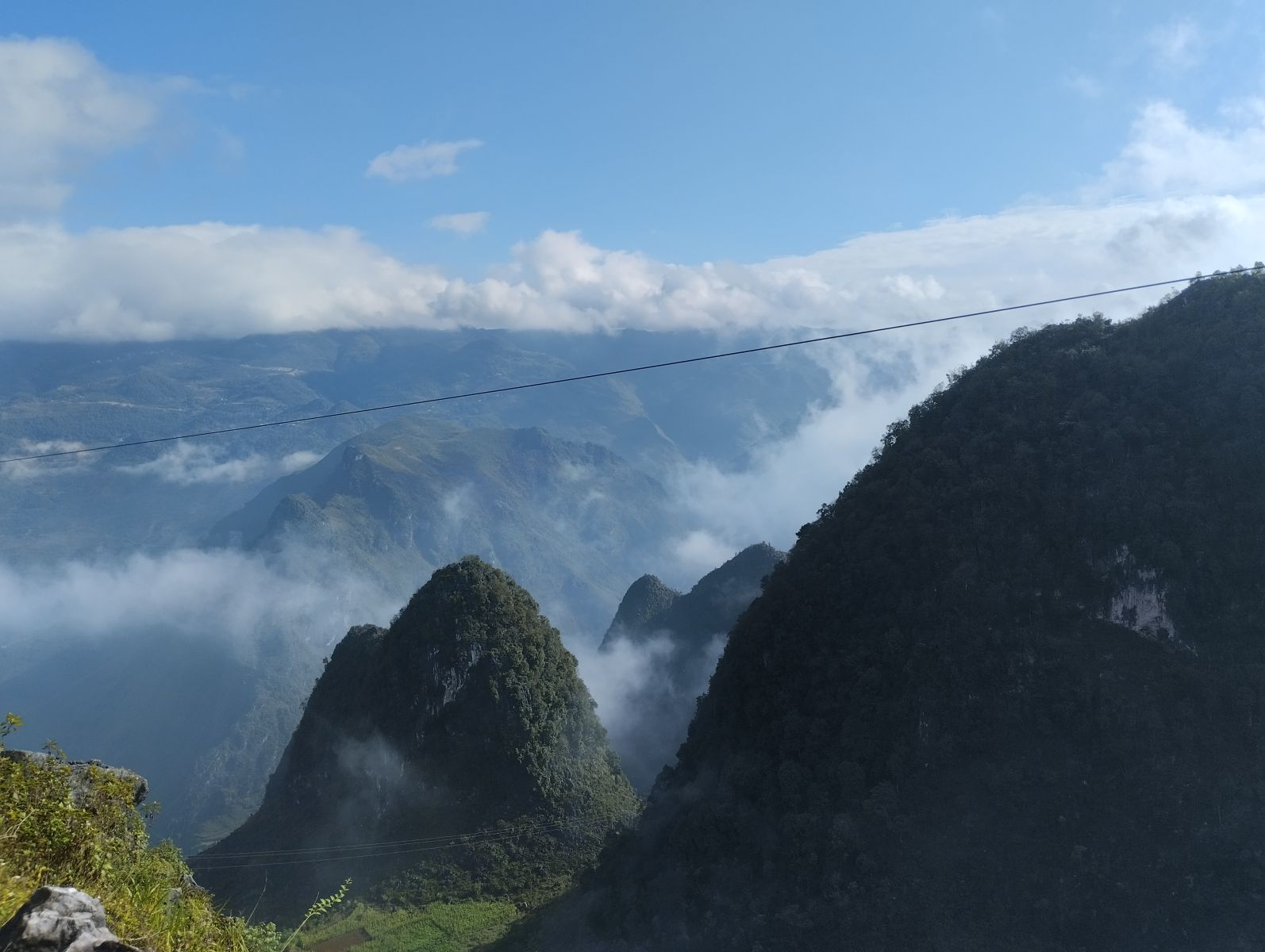
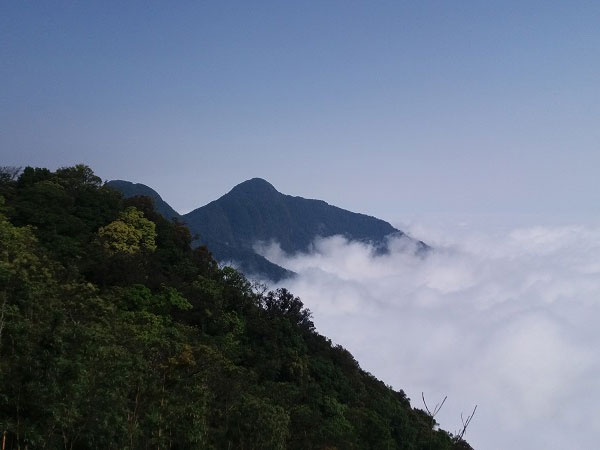
Upon our reaching Ma Pi Leng Pass, the morning fog shrouded the scenery at 9 AM. After a brief wait, the clouds parted, revealing the lush Nho Que River winding through towering mountains below. However, the natural spectacle was fleeting as the fog soon enveloped the landscape again.
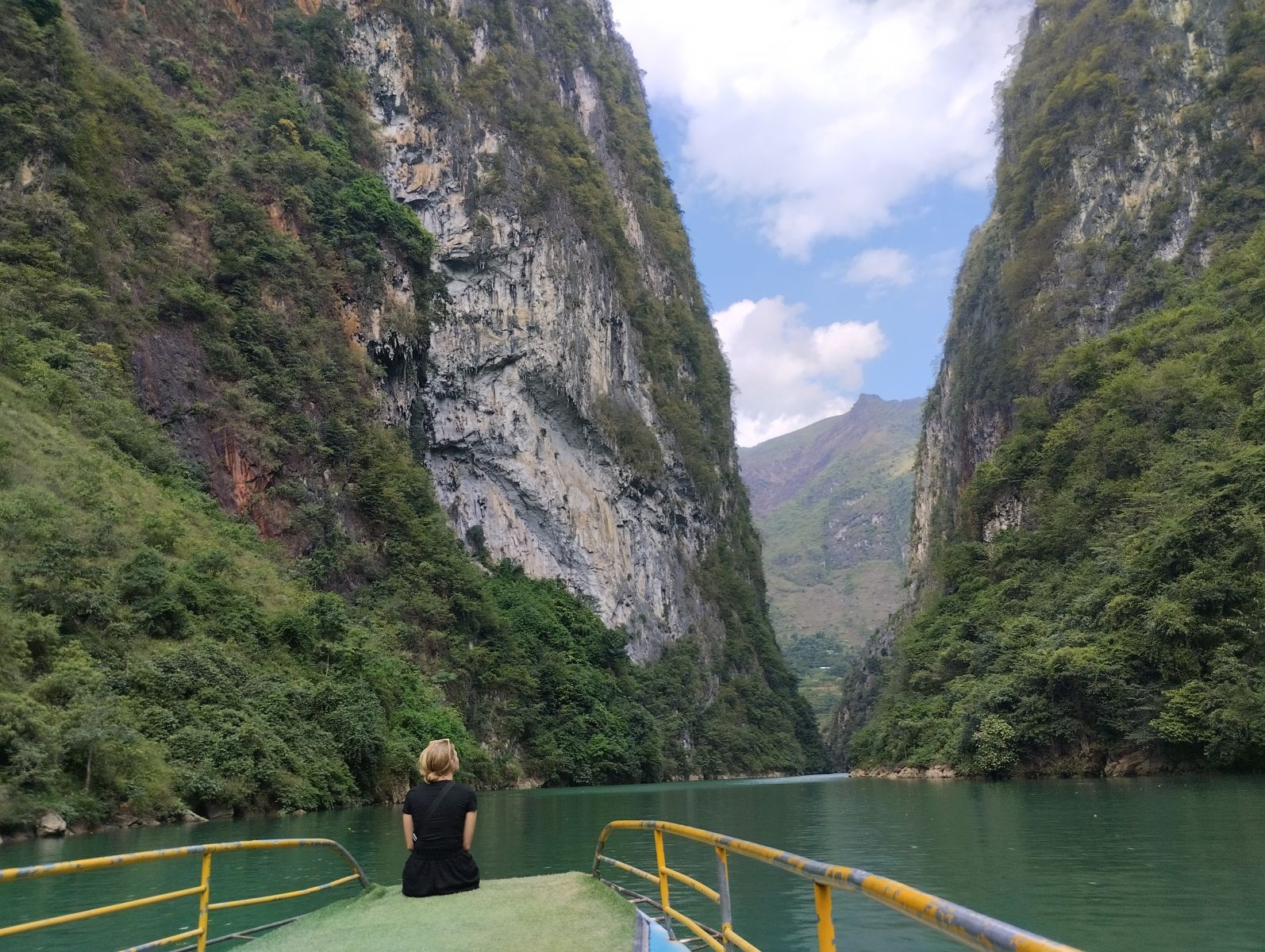
Descending to the Nho Que riverboat station, we purchased tickets for a one-hour cruise at VND120,000 per person (~$5). After a 10-minute buggy ride and another 10 minutes to reach the boat pier, we started the cruise once a sufficient number of passengers had gathered.
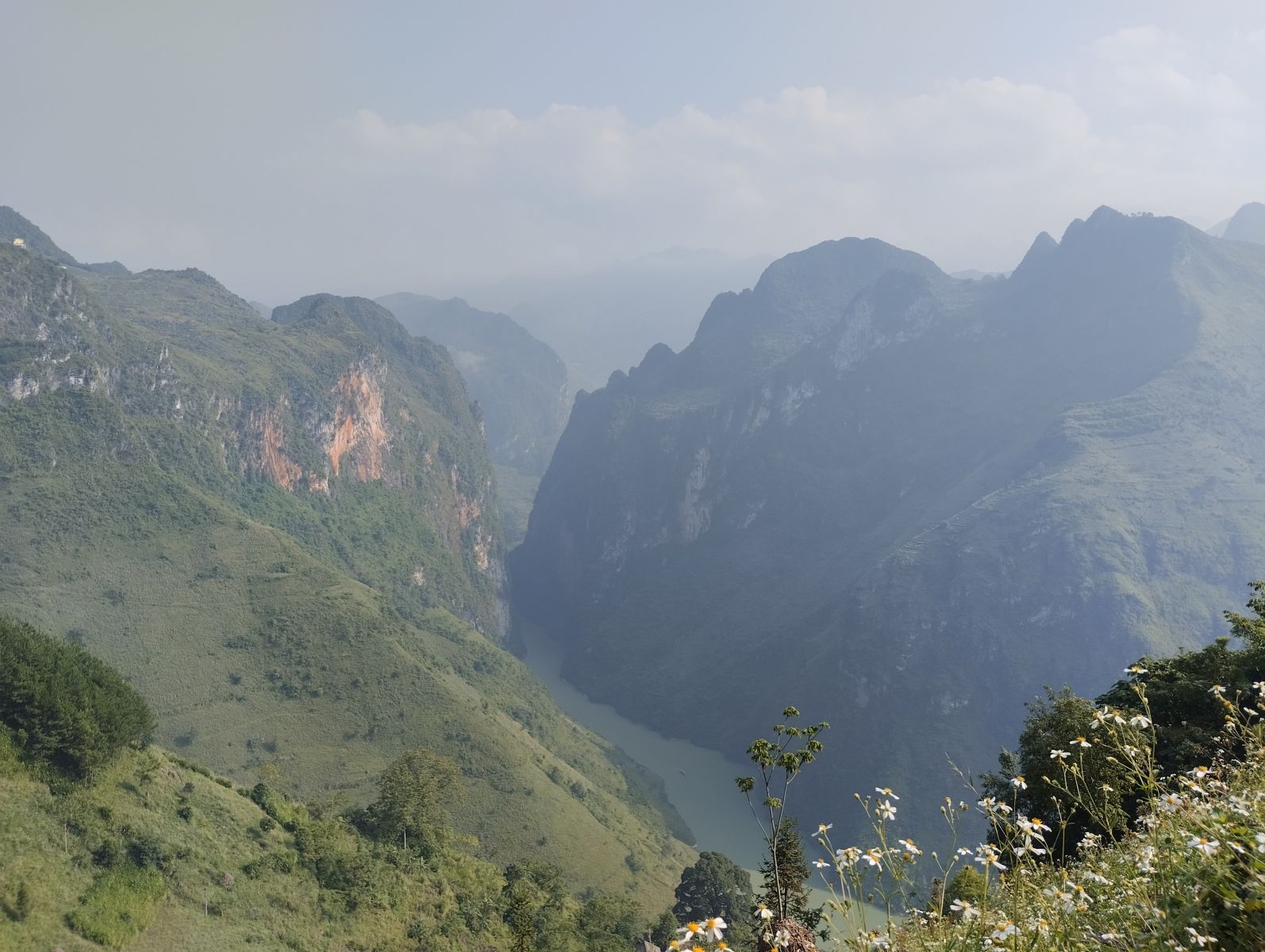
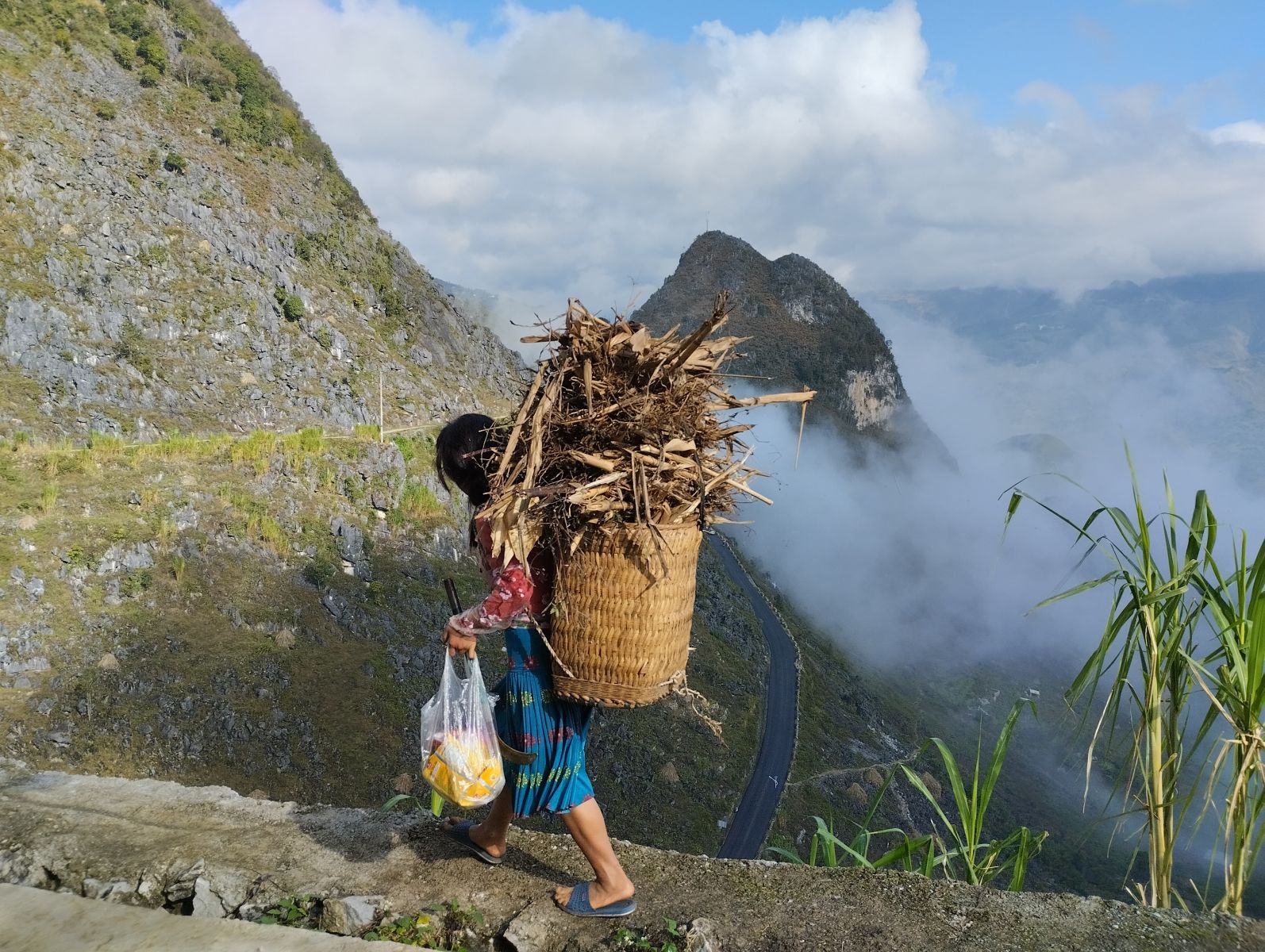
Nho Que River captivated with its striking green emerald, distinct from the verdant surroundings. Along its banks, lush mountain peaks and cornfields dotted with ethnic homes painted a picturesque scene. We observed H’Mong families tending fields and children playing barefoot. Our boat journey included a visit to Tu San Canyon, a 1.7-kilometer abyss flanked by cliffs soaring up to 800 meters—a testament to the extraordinary geological marvels of Meo Vac, blessed abundantly by nature.
Meo Vac is also renowned for its Khau Vai love market, a unique event held annually on March 27th in the lunar calendar. According to legend, long ago, a young couple from different ethnic backgrounds couldn’t be together. Despite marrying others and starting families, they continued thinking of each other. They agreed to meet once a year at Khau Vai market to ease their longing. Since then, Khau Vai love market has been the place for couples who love each other but don’t have a happy ending. Spouses do not criticize or feel jealous; instead, they understand this annual pilgrimage fulfills emotional needs.
On a tranquil morning in a mountainous village, I overheard the wind carrying heartfelt words a woman asked it to pass to her lover:
“My beloved, descend from the mountains,
Bring only your horse and go alone
I’m here waiting for you even though I’m not pretty and young anymore”
– Recommended Accommodations:
- Hmong Pa Vi Village offers nearly 30 households engaged in community tourism. Their homestays provide clean and comfortable lodging infused with Hmong cultural architecture and decor. Prices range from 200,000VND to 1,500,000VND, depending on whether you opt for a dormitory or a private room. The village also boasts restaurants, cafes, and souvenir shops, enhancing your overall stay.
- For those preferring hotel accommodations, Dong Van Town is a convenient alternative
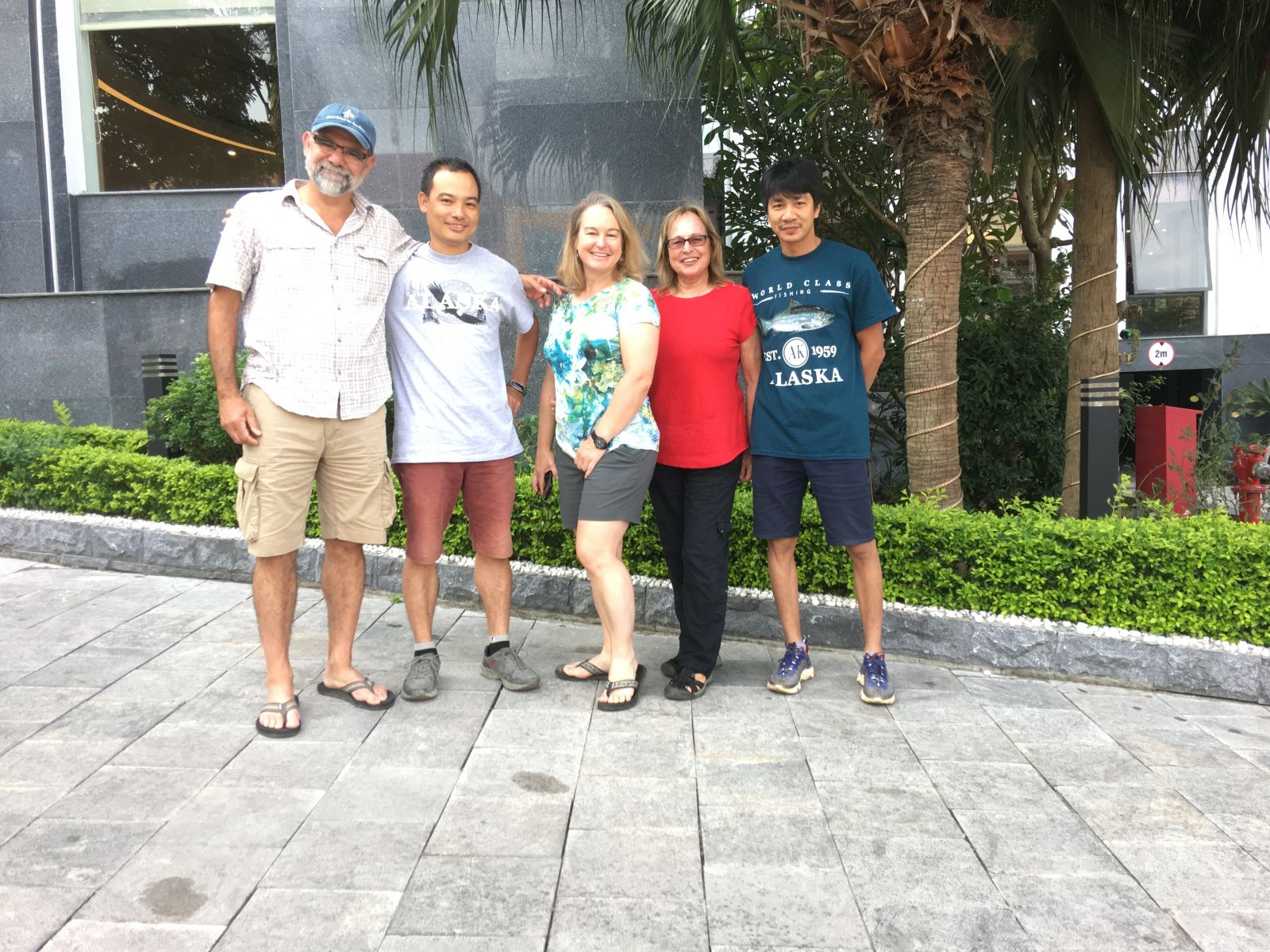
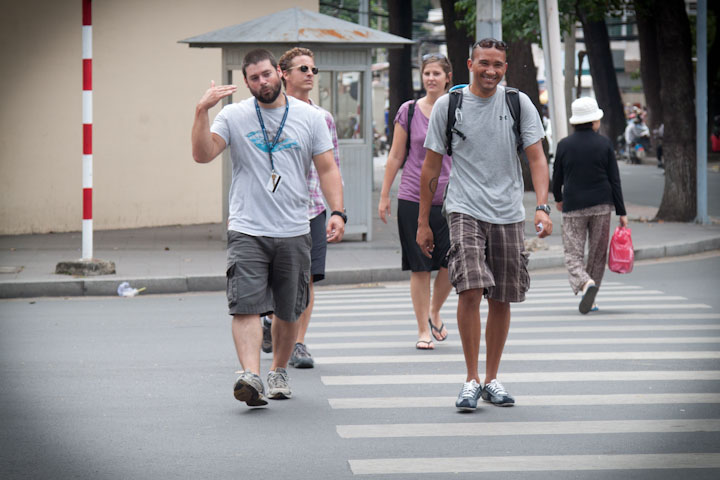
Past clients doing trip to Northern Loop with us
Explore Vietnam’s Northern Loop with Golden Holiday Travel
Above is our personal share about Vietnam Northern Loop with 7 awesome mountain destinations worth your visit in coming trips to Vietnam. Exploring Vietnam’s mountains can transform your Vietnam Vacation into a rich, unforgettable experience, much like adding a flavorful spice to a delicious dish. For a comprehensive experience, I recommend a trip lasting between 7-10 days. If time is limited, 5 days will br finr, or even a three-day adventure allows you to inhale the unique essence of Vietnam’s mountainous landscapes.
If you find inspiration from my blog, consider customizing your tour to suit your preferences. Unsure of which route to take or eager to include everything in your itinerary? Share your desires to [email protected] or whatsapp us to +84.988451530 and let our mountain experts assist you in crafting your perfect Vietnam adventure.
Frequently Asked Questions
The Northern Loop offers breathtaking landscapes, with the top destinations being Sapa, Ha Giang, and Mu Cang Chai. For those seeking dramatic mountain passes and ethnic culture, the Ha Giang Loop is a top choice. Meanwhile, Mu Cang Chai is world-renowned for its stunning rice terraces, and Sapa remains the premier location for trekking and visiting the Fansipan peak
To truly experience the beauty of the North, a trip of 7 to 10 days is recommended. This allows enough time to visit diverse locations like the Ban Gioc Waterfall in Cao Bang, the limestone peaks of Dong Van, and the tranquil Ba Be Lake without rushing. If you have limited time, a 3 to 5-day focused itinerary to Sapa or Ha Giang is a popular alternative.
The best time is generally during the dry season from September to November or March to May. September and October are particularly popular as the rice terraces in Mu Cang Chai and Sapa turn a brilliant golden yellow for the harvest. For those who enjoy cooler weather and blooming flowers like peach and plum blossoms, the spring months are ideal
While solo travel is possible, a private tour with a licensed operator provides safety and deeper cultural immersion. Navigating the steep, winding mountain passes can be challenging; a private car with a professional driver ensures you can focus on the scenery. Additionally, a local guide can bridge the language gap with ethnic minority communities, offering a more authentic experience
Since weather in the mountains can change rapidly, layering is key. Pack moisture-wicking clothing, a waterproof jacket, and sturdy trekking shoes with good grip. Don’t forget sun protection, insect repellent, and a portable power bank. Even in summer, evenings in high-altitude areas like Sapa or Ha Giang can be chilly, so a light fleece is essential
Yes, as a specialist in Northern Vietnam travel, Golden Holiday Travel can design a bespoke itinerary tailored to your interests. Whether you are looking for a photography-focused tour of the rice terraces, a challenging trek through remote villages, or a comfortable private car journey through the mountain passes, we provide expert planning and reliable local support.




Write Comment