Vietnam Visa Requirements 2026: Avoid Common MISTAKES Before You Travel to Vietnam

Vietnam visa requirements are an essential consideration for international tourists planning a trip to Vietnam. If you intend to explore Hanoi, cruise Halong Bay, or trek in Sapa, preparing your entry visa ahead of time is important. Our team at Golden Holiday Travel have compiled this complete regular guide to support your smooth entry into Vietnam and make planning your Vietnam holiday simple and stress-free.

Table of Contents

Understanding Vietnam Visa Requirements

Foreign travelers should check if their nationality’s eligible for Vietnam’s visa exemption program or they need to apply for an eVisa before traveling to the country. Standard tourist entries allow stays of 30 to 90 days, depending on the visa type and port of entry. Proper verification prevents boarding denials and border customs delays at airports.

To simplify the process, we’ve summarized the essential entry requirements you should know before traveling to Vietnam

  • Automated online screening: The Vietnam Immigration Department utilizes strict character-matching software to scan your submitted documents.
  • Passport validity rules: Your travel document must remain valid for a minimum of 6 months (180 days) from your actual entry date.
  • Multiple entry checkpoints: Over eighty airports, land borders, and deep-sea harbors officially accept digital entry papers.
GOLDEN HOLIDAY TRAVEL SERVICES

Tailor-Made Private Vietnam Tours

Fully Licensed Local Agency

Tailor-Made Private Vietnam Tours

Discover Vietnam your way with customized routes, private air-conditioned vehicles, and knowledgeable local guides. Our travel agency works with mid-range to high-end standards, providing complete flexibility and support. Reduce trip planning time by up to 70% with our rapid 24-hour itinerary design guarantee.

Who Needs a Visa to Visit Vietnam?

Most passport holders traveling from North America, Oceania, and South Asia must obtain an entry visa before starting their trip. For instance, travelers holding passports from the United States, Canada, Australia, and India must secure approved visas. Supporting documents or prior electronic visa applications are mandatory for boarding international flights heading to Vietnamese hubs like Hanoi or Ho Chi Minh City.

Failure to present an approved visa PDF or a physical visa stamp at the airline check-in counter results in immediate boarding denial. We suggest checking your country’s status well in advance of your flight booking. Our local tour coordinators consistently review airport entry data to assist our guests with pre-travel confirmations.

Who Can Enter Vietnam Visa-Free?

Citizens of selected nations enjoy visa-free entry privileges for specified durations based on unilateral or bilateral international agreements. This exemption is designed to support tourism and facilitate direct cultural and commercial exchanges. Over thirty nations currently utilize this framework, allowing travelers to clear customs simply by displaying their standard passport and a return ticket.

This visa-free category is particularly popular among travelers from Western Europe, Scandinavia, and neighboring Southeast Asian states. Standard exemptions grant stays ranging from 14 days up to 45 days. If you plan to remain in the territory longer than your passport’s exemption limit allows, you must obtain a formal tourist visa prior to arrival.

What Has Changed in Vietnam’s Latest Visa Policy?

Recent updates to the local immigration framework have greatly simplified entry procedures for global visitors. The electronic visa system now issues 90-day stays to citizens of all countries and territories, replacing the old 30-day restriction. This change supports longer regional itineraries, permitting single or multiple entries depending on your preference.

Also, starting in 2026, major international airport terminals like Tan Son Nhat Airport require a compulsory pre-arrival digital registration. Travelers must submit their details through the official state portal to obtain a personal QR code prior to landing. In addition, the previous rule requiring a 30-day gap between visa-free visits has been removed, meaning travelers can now tourists to exit and re-enter Vietnam immediately without waiting.

GOLDEN HOLIDAY TRAVEL SERVICES

Fully Licensed Local Agency

Hanoi Airport Transfer to City Center – 30% OFF 

Start your Hanoi – Vietnam exploration the easy way with our private Hanoi Airport Transfer, now 30% OFF. Skip long taxi queues, avoid hidden fares, and enjoy a comfortable ride directly to your hotel with a professional driver waiting for you upon arrival

Types of Vietnam Visas Explained

Vietnam categorizes its entry clearances based on the specific purpose of the visit and the duration of stay. While leisure travelers rely on standard tourist visas, business representatives, high-tech experts, and professionals must select specialized categories. Identifying the correct visa code helps guarantee compliance with local residency regulations.

Vietnam Tourist Visa (DL)

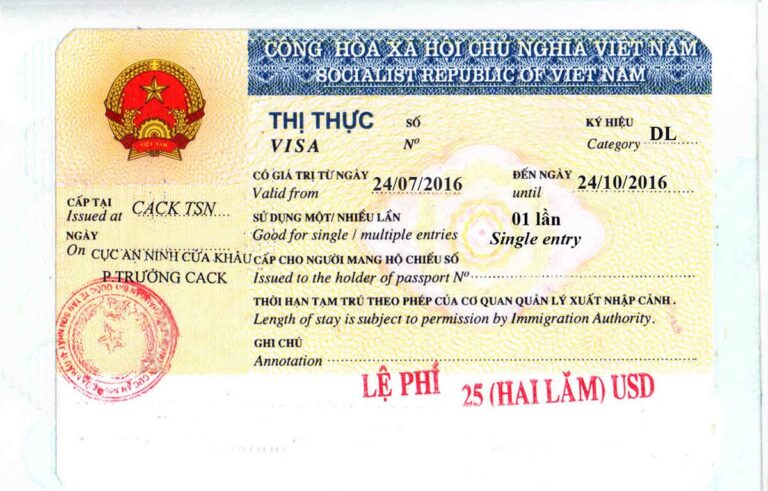
The DL tourist visa is the standard entry clearance issued specifically for sightseeing, leisure, family visits, and local explorations. This visa class is strictly for non-employment purposes and does not authorize any local work or commercial services. It is issued for a maximum stay of 90 days.

Travelers can select either a single-entry or a multiple-entry option depending on their planned itinerary. If you plan to visit neighboring nations like Cambodia or Laos, a multiple-entry DL visa is required. Our travel consultants can recommend the ideal visa option based on your draft tour routing.

Vietnam Business Visa (DN)

Foreign nationals traveling to work with local enterprises, attend business conferences, or initiate investment projects require a DN business visa. The category is split into DN1 and DN2 classifications based on the local entity’s legal status. A registered local sponsor organization must submit formal invitation documents to immigration to sponsor this visa.

The business visa cannot be used for standard employment, which requires a separate work permit (LD class). It can be issued for durations ranging from one month up to one year. We strongly suggest coordinating with your sponsoring corporate partner to manage the invitation paperwork before submitting your passport.

Vietnam eVisa

The electronic visa is the most common entry method used by travelers entering Vietnam. This digital document replaces physical paper stickers and traditional stamp letters, allowing you to manage the application online. It is open to all nationalities worldwide.

The application is completed directly through the national immigration portal – Vietnam’s e-Visa Application. Once approved, you download a PDF file to print and present upon arrival. This digital application simplifies the entire visa process and eliminates long airport queues at landing counters.

Multiple-Entry vs. Single-Entry Visas

A single-entry visa allows you to cross the border into Vietnam once. If you exit the country to take a short excursion to Angkor Wat in Cambodia, your visa is immediately cancelled. To re-enter, you would need to secure a brand new visa document.

In contrast, a multiple-entry visa permits you to exit and re-enter the country as many times as you wish within the validity period. This is highly recommended for regional tours where you connect Vietnam with surrounding nations. The government fee is $25 for single-entry and $50 for multiple-entry.

Long-Term Visa Options

For individuals planning extended stays, the immigration department offers specialized long-term visas. These include the LD work visa, the DT investor visa, and the TT family unification visa. These categories require extensive documentation, local sponsorships, and physical verification at governmental offices.

Starting in mid-2026, the government introduced the new UĐ1 visa for specialized digital technology and high-caliber professionals. In parallel, the UĐ2 class was created to grant residency rights to the spouses and minor children of UĐ1 holders. These new pathways reflect a strategic focus on welcoming international talents.

Visa Code Allowed Duration Highlight Features Government Fees
DL (Tourist eVisa) Up to 90 Days Single/Multiple Entry; 100% online application $25 (Single) / $50 (Multiple)
DN1 / DN2 (Business) Up to 12 Months Requires sponsoring local organization invitation Varies by duration
LD1 / LD2 (Work Visa) Up to 2 Years Requires local work permit and corporate sponsorship Varies by contract
DT1 – DT4 (Investor) Up to 5 Years Tiered based on capital investment in local enterprises Varies by category
GOLDEN HOLIDAY TRAVEL SERVICES

Northern Vietnam Tours

Fully Licensed Local Agency

Private Northern Vietnam & Halong Bay Tours

Discover the dramatic terraced farmlands of Sapa, the ancient waterlanes of Ninh Binh, and traditional junk cruises in Bai Tu Long Bay. Our local travel consultants provide custom private cars, professional drivers, and highly rated local guides tailored to your exact pacing.


Hotline Booking: +84.988451530

DISCOVER TOURS

Vietnam Visa Exemption (Visa-Free Entry)

Vietnam visa exemption agreements allow citizens of specific countries to enter the territory without visa documents for a defined stay. The exemption policy supports international arrivals by removing application hurdles for short-term holidaymakers and regional travelers. Knowing your exemption limit prevents overstay penalties at customs checks.

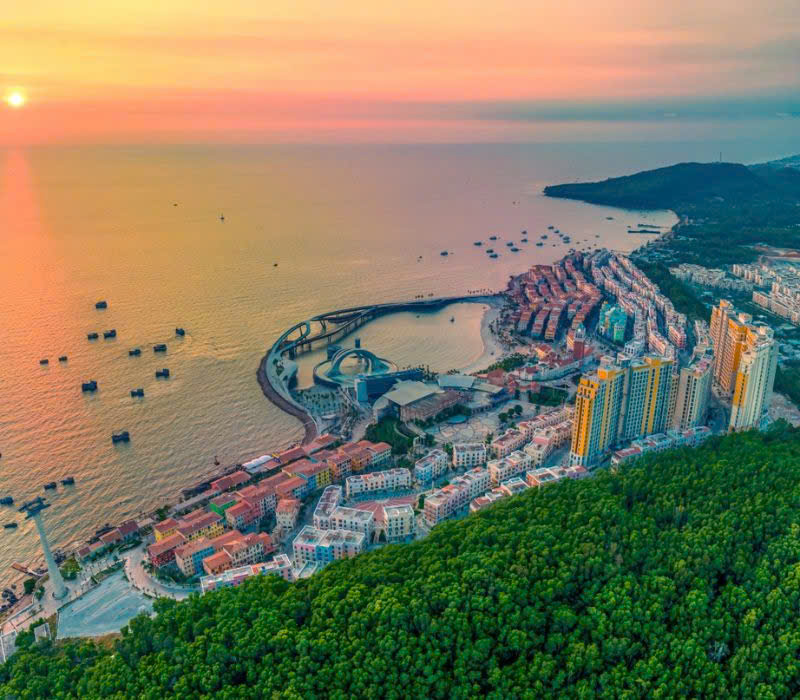
Phu Quoc Island Sunset Town Visa Exemption

Countries Eligible for Visa-Free Travel

Currently, citizens of 39 countries and territories enjoy visa exemptions for short-term travel. This list is subject to regular bilateral updates and tourism stimulus adjustments. We suggest verifying your country’s status directly before booking your flights.

Western European (United Kingdom, France, Germany, Italy, Spain, Denmark, Finland, Norway, Sweden, Switzerland), Scandinavian (Belarus, Belgium, Bulgaria, Croatia, Czech Republic, Hungary, Luxembourg, Netherlands, Poland, Romania, Slovakia, Slovenia), and selected East Asian citizens (Japan, South Korea, Russia) enjoy unilateral exemptions granting a stay of up to 45 days. Citizens of ASEAN countries are granted up to 30 days of visa-free entry. 

A specialized 30-day exemption applies exclusively to all international tourists flying directly into Phu Quoc Island.

How Long Can You Stay Without a Visa?

The allowed duration of a visa-free stay is strictly calculated from your arrival date, which is recorded as Day 1. For Western and Northern European countries, the maximum stay is 45 days. For Southeast Asian countries like Singapore and Thailand, the limit is 30 days.

It is important to remember that the previous restriction requiring a 30-day interval between visa-free visits has been completely removed. This allows you to plan back-to-back excursions, exiting to a neighboring country and returning immediately under a new exemption. However, overstaying even by a single day results in heavy airport fines.

Conditions for Visa Exemption

To utilize any visa-free entry exemption, your passport must meet strict international criteria. Your travel document must remain valid for at least 6 months (180 days) from your actual entry date. Along with this, you must present an onward or return ticket showing your departure date.

For the special Phu Quoc island exemption, you must arrive at Phu Quoc International Airport directly from an international hub without domestic transfers. If you later choose to travel to the mainland (such as flying to Hanoi or Ho Chi Minh City), you must obtain a standard tourist visa beforehand.

Vietnam eVisa Requirements

Vietnam eVisa requirements demand specific digital materials and biometric matches before your online application enters the governmental approval queue. Since all submitted scans are processed via automated computer systems, minor errors in your application may lead to an immediate rejection. Collecting correct digital papers beforehand helps confirm a straightforward approval.

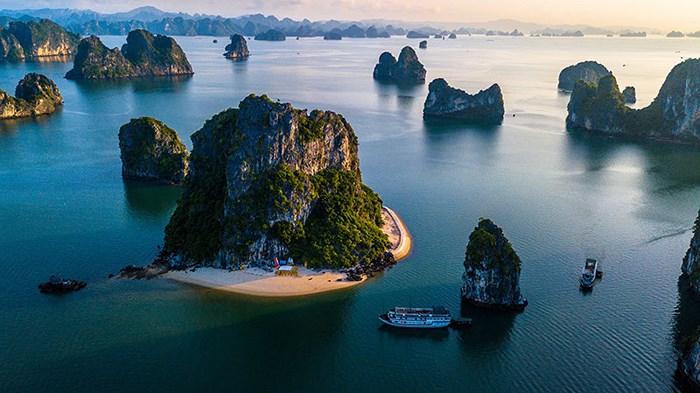
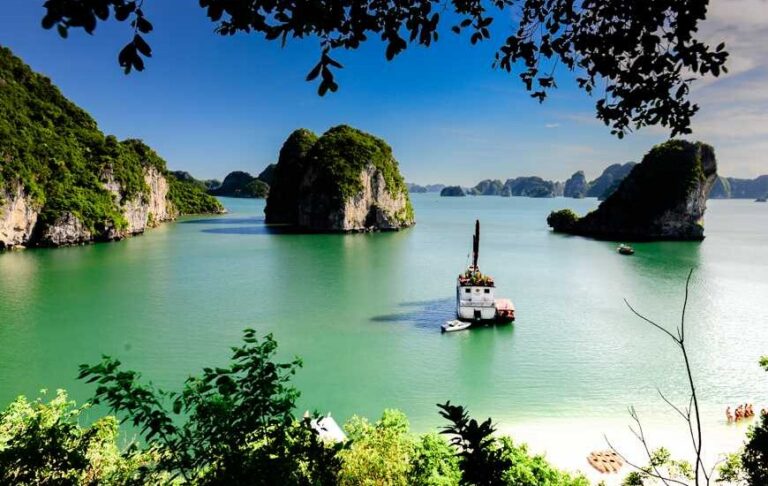
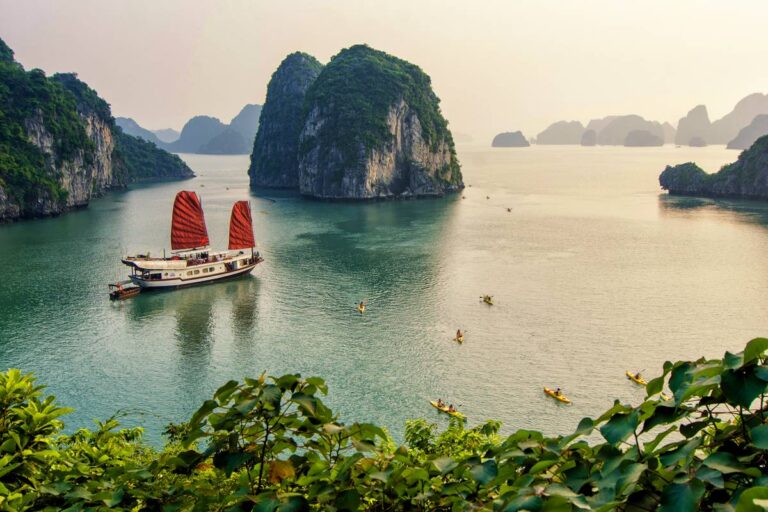
Treasure Junk in Bai Tu Long Bay, Vietnam

Who Can Apply for an eVisa

The electronic visa is open to citizens of all countries and territories worldwide. The government has removed all previous nationality limitations to provide equal digital access to everyone. This means travelers from the Americas, Europe, Asia, Africa, and Oceania apply through the exact same system.

This universal availability has made independent travel preparation much more straightforward. Whether you are traveling for a family holiday or planning a private customized tour, the eVisa is the standard pathway. Our travel consultants recommend securing this document at least two weeks before your flight.

Documents Required for Vietnam Visa

To successfully apply for your electronic visa online, you must gather a few specific files. Having these materials ready in the correct formats prevents application delays. The required documents are straightforward but must meet exact technical standards.

You will need a high-resolution scan of your passport’s information page, a digital passport photo (4×6, white background, without glasses), a valid credit or debit card, and a precise entry port name. You must also supply a temporary local address, such as your booked hotel in Hanoi or Ho Chi Minh City.

Passport Requirements for Vietnam

Your physical passport is your primary travel document and must meet the minimum requirements set by local border authorities. The passport must remain valid for a minimum of six months beyond your planned date of entry. This is a strict international rule that airlines enforce at check-in.

In parallel, your booklet must contain at least two empty pages for physical entry and exit stamps. Emergency passports or temporary travel documents are often not accepted under the standard eVisa scheme. We strongly suggest renewing your passport if it is close to expiring.

Photo Requirements

Your digital passport photo ((4×6, white background, without glasses) must be uploaded in a standard JPEG format and meet strict biometric guidelines. The photo must be a recent portrait taken within the last six months with a plain white background. It must clearly show your full face from the front without any headwear.

Do not wear glasses, headphones, or large jewelry in the photo, and maintain a neutral facial expression. Selfies, blurry images, or cropped photos from family events will cause automatic rejection. Obtaining a professional digital passport photo remains the safest choice.

Eligible Entry and Exit Points

The electronic visa is accepted across 83 international entry and exit checkpoints throughout the territory. These include 13 international airports, 16 sea ports, and 54 land border crossings. You must declare your specific port of entry during your application.

It is important to remember that you must enter the country through the exact port stated on your approved visa document. If your flight is rerouted to a different airport not listed on your visa, you may be denied entry. Always double-check your arrival airport before completing the application.

How to Apply for a Vietnam eVisa?

Learning how to apply for a Vietnam eVisa correctly prevents unnecessary application delays and rejection fees. The digital application system is automated, requiring precise data entry that matches your physical travel document. Following the correct governmental path helps secure your travel permission smoothly.

To start, navigate directly to the official government Vietnam’s e-Visa Application Portal. Upload your passport data scan and portrait photo, then fill out the online form with your personal details and travel dates. Save your unique registration code safely, as you will need it to download your document.

After paying the non-refundable government fee ($25 for single-entry or $50 for multiple-entry), your application goes to immigration processing. Standard processing takes three working days, but peak travel seasons can double this timeline. Once approved, download the PDF and print at least two paper copies.

Vietnam Visa on Arrival: Is It Still Available?

Vietnam visa on arrival (VOA) is no longer the default option for independent travelers and remains restricted to specific emergency cases. To utilize this entry path, you must obtain an official pre-approval sponsor letter through a licensed tour operator or business sponsor before your departure date. Relying on this without proper prior planning can lead to immediate airline boarding denials.

Who Can Use Visa on Arrival?

The landing visa service at physical airport counters is now strictly limited to specific, pre-authorized groups. This includes official business delegations, tourists booking pre-approved tour packages through licensed local travel agencies, and emergency humanitarian cases. Standard independent travelers cannot use this method.

Airlines will strictly block you from boarding if you do not possess either an approved eVisa or a physical visa pre-approval letter. If you are booking a private customized tour with us, our support team can coordinate the formal approval paperwork if an emergency arises.

How the Process Works

To use this pathway, a licensed local travel agency must submit your passport details directly to the Immigration Department to request an official Visa Approval Letter. Once this letter is issued as a PDF, we email it to you to show during your airline check-in.

Upon landing at one of the international airports, you must walk to the Landing Visa desk before clearing customs. You will submit your physical passport, two printed passport photos, the approval letter, and pay the stamping fee in USD cash ($25 for single-entry, $50 for multiple-entry).

Visa on Arrival vs. eVisa

The electronic visa has largely replaced the traditional visa on arrival due to its convenience and speed. The eVisa allows you to pay all fees online beforehand, so you can walk directly to the immigration counters upon landing. This avoids waiting in secondary airport queues.

In parallel, the eVisa is accepted at 83 ports of entry, whereas the visa on arrival is only available at major international airports. For this reason, the electronic visa remains the strongly suggested route for almost all tourists. Our travel coordinators always recommend the eVisa to prevent arrival delays.

Parameter Electronic Visa (eVisa) Visa on Arrival (VOA)
Pre-travel paperwork Applied 100% online directly Requires official sponsoring agency letter
Airport procedures Walk directly to immigration desks Queue at Landing Visa counter to pay cash
Allowed entry ports 83 ports (air, land, sea) Only major international airports
Stamping cash fee No airport fees ($25/50 paid online) $25 or $50 paid in cash USD at airport

Vietnam Visa Fees & Processing Times

Vietnam visa fees and processing timelines differ depending on your selected entry class and the urgency of your travel schedule. While standard processing handles most tourist submissions within a few business days, high-season holiday volumes frequently cause severe operational backlogs. Planning your application timeline carefully prevents missed flights and boarding delays.

Standard Processing

Under normal operational conditions, the immigration department processes standard electronic visas within three working days. However, public holidays in Vietnam or high-season tourism peaks can extend this timeline to five or seven business days. We strongly suggest applying at least two weeks before your trip.

Remember that processing fees are collected immediately upon submission and are completely non-refundable. If your application is rejected due to a minor typing error, you must pay the fee again. Planning early remains the best way to safeguard your holiday plans.

Urgent and Emergency Processing

If you discover an error on your visa last-minute or face unexpected delays, professional assistance is available. Golden Holiday Travel provides direct visa support services to help resolve emergency situations quickly and professionally. Our team works closely with processing channels to expedite approvals.

Depending on your situation, we offer standard expedited services (1-2 business days), same-day rush services (4-8 hours), and super-rush emergency options (1-2 hours) for travelers facing boarding blocks. For immediate support, contact us directly on WhatsApp +84.988451530

Government Fees vs. Service Fees

It is important to distinguish between official government processing fees and third-party service fees. The standard government fee is $25 for a single-entry eVisa and $50 for a multiple-entry eVisa, paid directly through the portal. These base fees do not include any expedited support.

Service fees are charged by licensed agencies to manage, review, and speed up the processing of your application. These fees cover manual data checks, communication with officials, and fast-tracked processing. Our travel consultants provide clear, upfront quotes with no hidden costs.

Vietnam Entry Requirements After Receiving Your Visa

Vietnam entry requirements dictate the final border clearance procedures once your approved electronic visa or paper stamp is in hand. In 2026, major international entry ports are introducing mandatory digital arrival registrations to improve terminal throughput. Verifying these local customs regulations prevents delays at the security check-points.

Zipline in Quang Binh Province, Vietnam Travel Activities

Immigration Procedures at Vietnamese Airports

Upon landing, you must present your physical passport and printed eVisa documents to the immigration officers. In 2026, key air hubs like Tan Son Nhat Airport require a mandatory pre-arrival digital declaration. This form must be completed online prior to departure to generate a personal QR code.

Airport health screening is managed via automatic thermal sensors, and no paper health forms are required unless a public health emergency is declared. After clearing passport control, you collect your baggage and proceed through the green or red customs channels.

Required Travel Documents

To prevent any airport issues, you must carry a few essential documents in your hand luggage. Do not pack these files in your checked baggage, as you must present them before reaching the baggage carousels. Having organized paperwork guarantees a quick customs clearance.

Your checklist must include your physical passport (with 180 days validity), two printed copies of your eVisa PDF, your return flight ticket, your hotel address, and your pre-arrival QR code. We suggest keeping a digital backup on your phone as well.

Customs Regulations and Restricted Items

Vietnamese customs laws strictly control what items can be brought into the country. You are permitted to import up to 1.5 liters of spirits above 22% alcohol, or 2 liters of wine. Tobacco allowances are capped at 200 cigarettes or 250 grams of raw tobacco.

If you are carrying cash exceeding $5,000 USD or equivalent in other currencies, you must declare it at the red customs desk. Importing illegal narcotics, weapons, or politically sensitive materials is strictly prohibited and carries heavy legal penalties.

Can You Extend or Renew a Vietnam Visa?

Vietnam visa extension rules are highly regulated and rarely granted to short-term tourists while remaining in the country. To stay past your initial 30 or 90-day visa limit, you must plan a strategic border crossing, commonly known as a visa run, to obtain a fresh entry clearance. Attempting to overstay results in severe administrative fines and potential travel bans.

Visa Extension Options

Under current regulations, in-country visa extensions for DL tourist visas are almost impossible to secure. The government has restricted tourist extensions to promote the electronic visa system. This means you cannot simply pay a fee to extend your stay at an immigration office.

Extensions are generally restricted to long-term business visas, investor categories, or family visa holders. If you are traveling as a tourist and wish to prolong your holiday, you must prepare to exit the country and return under a new entry visa.

Visa Renewal vs. Extension

A visa renewal grants you a completely new visa without having to leave the country, but this is currently restricted to business sponsors. For tourists, the only practical solution is to coordinate a quick border crossing, commonly known as a visa run. This involves traveling to a neighboring country like Laos or Cambodia.

You will exit the Vietnamese border, enter the neighboring country, and immediately return using a fresh electronic visa. Our team frequently assists travelers in coordinating private cars and drivers to land borders like Moc Bai or Lao Bao to complete this process smoothly.

What Happens If Your Visa Expires?

Overstaying your visa is a serious administrative violation of local laws and leads to immediate penalties. These fines must be paid in cash at the airport before you are allowed to board your departure flight.

In parallel, severe overstays of several weeks or months can lead to detention, formal deportation, and a multi-year entry ban. If you find your visa is close to expiring, we strongly recommend reaching out to our support team immediately to coordinate a legal exit path.

Step by Step Guide For The First Timers Applying for Vietnam’s Visa

Applying for a Vietnam visa as a first-time visitor requires careful execution of each administrative step to help confirm approval. Minor entry inaccuracies or digital mismatches can cause automatic immigration gate rejections during airline boarding. Following this guided checklist protects your holiday from avoidable issues.

  1. Gather Your Essential Materials: Collect your passport (ensuring 180 days remaining validity), a high-quality portrait photo in JPEG format, and a valid international payment card.
  2. Access the Official National Portal: Open the official government eVisa submission system directly to avoid lookalike copycat websites that charge high service markups.
  3. Upload Crisp Scans: Upload your clear passport details page scan and portrait photo. Verify that no glare or shadow blocks your personal information.
  4. Fill Out Your Personal Details: Input your full name, date of birth, passport number, and nationality exactly as they appear on your physical passport.
  5. Input Your Target Entry Port: Choose your exact point of entry from the official airport or land border drop-down list, as this cannot be modified after approval.
  6. Pay the Processing Fee: Pay the non-refundable government fee ($25 for single-entry or $50 for multiple-entry) using the portal’s payment system.
  7. Save Your Registration Code: Write down and save your transaction registration number safely, as the system does not automatically email this code.
  8. Verify and Print Your Visa: Check your application status after three business days, download the approved PDF document, and print at least two paper copies for your flight.
GOLDEN HOLIDAY TRAVEL SERVICES

Active Vietnam Adventure Tours

Fully Licensed Local Agency

Active Vietnam Adventure & Remote Tours

For active travelers seeking custom trekking, cycling, and remote Northeast loop travel services in Sapa, Ha Giang, and Ba Be Lake. We balance main sights with authentic, secluded local stops away from crowds.


Hotline Booking: +84.988451530

DISCOVER ADVENTURES

Common Vietnam Visa Mistakes to Avoid & Our Local Tips

Identifying common tourist pitfalls in independent visa submissions helps you sidestep frustrating travel errors and airline boarding blocks. The Vietnamese border authorities utilize strict, automated character-matching databases that reject any manual errors instantly. Our local experts have gathered the most frequent slip-ups to help safeguard your trip.

  • Reversing Your First and Last Name: Entering your given names and family name in the incorrect order is the most frequent typo. Your online details must match the ICAO line at the bottom of your passport photo page.
  • Passport Information Typing Errors: Mistaking the number “0” (zero) for the letter “O” is an extremely common error. Double-check your passport number letter-by-letter before completing your submission.
  • Digital-Only Copies: Carrying only a digital PDF on your smartphone is highly risky. Many regional airlines and border officers will refuse boarding if you do not carry physical, printed paper copies.
  • Mismatched Entry Gates: Arriving at a border point or airport different from the one declared on your visa will result in a refusal of entry. Always match your visa to your flight ticket.
  • Passport Types That Are Not Eligible: Standard visa exemptions do not apply to specific passport classes, such as British National Overseas (BNO) documents. Holders of these booklets must secure a standard visa.

Frequently Asked Questions (FAQs) About Vietnam Visa Requirements

Q1: Do US, UK, Canadian, Australian, or Indian citizens need a visa for Vietnam?

Answer: Yes. Citizens of the US, Canada, Australia, and India are not visa-exempt and must obtain an eVisa. UK citizens enjoy a unilateral 45-day visa exemption but must secure a visa for longer stays.

Q2: How long does it take to process a Vietnam eVisa?

Answer: Standard processing takes approximately three working days. However, due to seasonal backlogs or public holidays, we suggest submitting your application at least 10 to 14 days before your departure.

Q3: Can I enter Vietnam at a different port than the one on my eVisa?

Answer: No. You must enter Vietnam exactly through the port of entry declared on your approved eVisa document. Entering through any other checkpoint will result in immediate entry refusal.

Q4: Is my Vietnam eVisa fee refundable if rejected?

Answer: No. The official government eVisa fee ($25 for single entry and $50 for multiple entry) is completely non-refundable, regardless of whether your application is approved, delayed, or rejected.

Q5: What is the mandatory pre-arrival form requirement in 2026?

Answer: Key airports like Ho Chi Minh City’s Tan Son Nhat require a digital pre-arrival form via the official immigration website before departure. You must present the resulting QR code upon landing.

Customize Vietnam Tours Golden Holiday Travel Request

Plan Your Customized Vietnam Tour with Golden Holiday Travel

Securing your Vietnam visa documents is the initial step toward an exceptional stay in this beautiful country. Golden Holiday Travel serves as your trusted, licensed tour operator to help craft a custom, private Vietnam holiday that fits your specific needs. From private car arrangements with professional drivers to curated local guide experiences, our support team is ready to coordinate your Vietnam itinerary.

For custom Vietnam tours, private transfers, and urgent visa support, please reach out to our team at Golden Holiday Travel via email at [email protected] or contact us directly on WhatsApp +84.988451530. We will reply with a customized draft itinerary and transparent quote within 24 hours.

Note: The travel tips and recommendations shared in this guide have been prepared by the local travel experts at Golden Holiday Travel. While every traveler is different, our team is always happy to provide personalized itinerary planning, destination advice, and one-on-one support to help you create an ideal Vietnam stay.


Vu Dinh Ban

Vu Dinh Ban

Travel Consultant

Hi everyone! I’m Ban Vu Dinh, Sales & Marketing Manager at Golden Holiday Travel and a passionate Vietnam travel expert. With years of experience as a professional tour guide, I’ve gained deep knowledge of Vietnam’s culture, hidden gems, local life, and breathtaking destinations. I love helping travelers plan authentic and unforgettable journeys across Vietnam. Feel free to leave a comment or share your travel ideas - I’m always happy to connect and help you explore Vietnam in the best way possible !


Write Comment

Captcha
Click on the verify code to change to another one. You must type the characters of the image in the text

Meet Our Experts

Need to create your own Vietnam Trip?
Call us now +84.988451530 (WhatsApp)

Customize Your Trip

Featured article