
Tet Holiday in Vietnam: A Complete Guide to Vietnamese Lunar New Year Traditions & Culture
Vietnamese Lunar New Year, known locally as Tet Nguyen Dan or simply Tet, is the most important celebration in Vietnam. For first-time visitors to Vietnam, understanding this annual festival is essential for scheduling transport, checking which attractions remain open to experiencing a more authentic side of Vietnamese culture and daily life.
With more than 10 years of operating private Vietnam Tours for travelers worldwide, our team at Golden Holiday Travel offers firsthand local advice to help you experience the beauty and traditions of this special season with confidence. In this comprehensive guide, we explore the history and cultural meaning of Tet, regional culinary specialties, authentic local customs, and essential travel tips to help you enjoy a smooth, meaningful, and culturally enriching holiday in Vietnam.
KEY TAKEAWAYS FOR TRAVELERS
- Timing and Calendar: Tet falls between late January and mid-February, lasting 5 to 7 official days of public celebration.
- Transport Strategy: Book domestic flights, trains, and private car services at least 6 to 8 weeks in advance to avoid sold-out routes.
- Attraction Schedules: State-run museums and historic monuments close for the first 3 to 4 days of Tet, while public parks, temples, and outdoor walking streets remain open.
- Cultural Etiquette: Wear modest, bright-colored clothing at pagodas, avoid visiting private residences on the first day without an invitation, and keep smiles on your face.
- Local Services: Private guided tours and pre-arranged private drivers guarantee smooth travel while public buses and local taxis operate on reduced schedules.
What Is Tet? Understanding Vietnamese Lunar New Year
Tet Nguyen Dan is the formal name of the Vietnamese Lunar New Year, marking the beginning of spring and the arrival of the first lunar month. It is the single most important celebration in Vietnam, combining spiritual renewal, ancestral remembrance, and extended family gatherings.
Fully Licensed Local Agency
Vietnam Tour Packages
Discover Vietnam with private English-speaking guides, punctual drivers, and fully customized multi-day itineraries designed for families, couples, and small private groups.
The Meaning and Origins of Tet Nguyen Dan
The name Tet Nguyen Dan comes from Sino-Vietnamese roots. Tet refers to a festival or seasonal celebration, Nguyen means “beginning,” and Dan refers to the early morning. Put together, the phrase can be understood as “the festival of the first morning of the year.” Historically, Tet was closely tied to the wet-rice farming cycles of the Red River Delta and Mekong region. The period between finishing the old harvest and preparing for the next planting gave farmers time to rest, reunite with family, celebrate, and show gratitude to heaven, the earth, and protective deities.
Although Tet was influenced by East Asian lunar-calendar traditions more than a thousand years ago, it has evolved into a distinctly Vietnamese celebration with its own customs and traditions. The preparation of sticky rice cakes wrapped in green leaves, the worship of domestic kitchen deities, and regional floral displays reflect local agricultural identity. For modern Vietnamese citizens, Tet remains a time to reconnect with cultural roots, visit ancestral burial grounds, and reaffirm familial duties.
Why Tet Is the Most Important Celebration in Vietnam
Tet holds deep emotional and spiritual significance because it gathers separated family members under one roof. Migrant workers, university students, and professionals working in major economic centers return to their rural hometowns days before New Year’s Eve. The festival allows individuals to pause their daily work routines, settle interpersonal misunderstandings, and welcome the new year with a fresh start & a renewed sense of hope.
Spiritual practices during Tet emphasize filial piety and social solidarity. Families set up the altars loaded with seasonal offerings to invite deceased ancestors to join the celebration. It is also a time to settle outstanding debts and leave financial worries behind, while old disagreements and grudges are often put aside to welcome the new year with peace & goodwill.
When Does Vietnamese Lunar New Year Take Place?
Because Tet relies on the lunar calendar, the solar dates change every year, generally falling between January 21 and February 20. The official national holiday typically lasts for 7 days, though festive preparations start weeks earlier and traditional community celebrations continue well past the first week of the new lunar month.
Travelers planning a holiday during this period should check the specific lunar calendar dates for their travel year. Key preparatory milestones include the Kitchen God ceremony on the 23rd day of the 12th lunar month, followed by New Year’s Eve (Giao Thua) and the initial three days of the first lunar month, which carry strict cultural activities.
The Cultural Significance and Beauty of Tet in Vietnam
The cultural beauty of Tet lies in its focus on harmony, family lineage, and community renewal. Every custom observed during this season reflects values passed down through generations of Vietnamese families.
Tet as a Time for Family Reunion
The Vietnamese phrase “về quê ăn Tết,” meaning “returning to your hometown to celebrate Tet,” beautifully captures the central purpose of the holiday. No matter how far family members live or work, returning home before New Year’s Eve is an essential cultural duty. Multi-generational families gather around communal dinner tables to share meals, exchange life updates, and celebrate the presence of grandparents and grandchildren together.
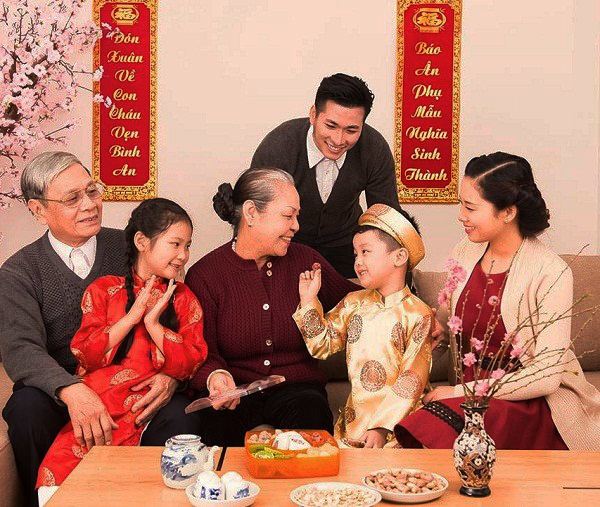
Family reunions form the core emotional foundation of Tet holiday in Vietnam.
Honoring Ancestors and Vietnamese Family Traditions
Ancestral veneration reaches its highest peak during the Tet season. Days prior to the holiday, families often visit their ancestors’ graves to tidy the burial sites, clean the headstones, and burn incense as a way of honoring their loved ones and inviting their ancestors’ spirits home to celebrate the New Year together. The home altar is polished, decorated with fresh brassware, and adorned with flowers, candles, and traditional feasts throughout the festive week.
These rituals teach younger generations to respect their heritage and maintain family solidarity. Daily offerings of hot tea, fresh fruit, and cooked dishes take place from New Year’s Eve until the official closing ceremony (le ta Tet), keeping ancestral spirits close to the living family.
Welcoming a New Year With Hope, Luck, and Prosperity
Tet is an absolute fresh start. People believe that actions, words, and emotional states during the first days of the new year set the tone for the remaining 365 days. Consequently, individuals maintain cheerful attitudes, speak words of encouragement, wear bright new clothing, and resolve past disagreements peacefully.
Fully Licensed Local Agency
Northern Vietnam Tours
Explore Hanoi, Ninh Binh, Halong Bay, and Sapa on private custom trips featuring vetted local accommodations, comfortable vehicles, and 24/7 dedicated support.
How Vietnamese People Prepare for Tet Holiday?
Preparation for Tet starts weeks ahead of the main holiday, involving thorough house cleaning, extensive market shopping, floral decoration, and ancestral worship rituals that engage every family member.
Cleaning and Decorating the Home Before the New Year
In the final weeks of the lunar year, every home undergoes a comprehensive cleaning process. Sweeping floors, washing curtains, repainting walls, and scrubbing cooking utensils symbolize the removal of misfortunes and negative energy accumulated over the past twelve months. Once the house is thoroughly cleaned, families place lively decorations such as red banners with calligraphic verses, paper lanterns, and decorative stickers throughout living spaces.
Crucially, all sweeping and cleaning must finish before midnight on New Year’s Eve. Old tradition strictly forbids sweeping floors during the first three days of the new year, as doing so is thought to sweep away newly arrived luck and wealth.
Shopping for Tet and Preparing Traditional Foods
Tet shopping creates bustling scenes in wet markets and shopping streets across Vietnam. Families purchase ingredients to prepare festive dishes, including glutinous rice, mung beans, pork belly, dried bamboo shoots, and candied fruits. Children receive brand new clothes and shoes, while parents stock up on tea, wine, and candies to offer visiting guests.
Peach Blossoms, Kumquat Trees, and Other Tet Decorations
Ornamental plants serve as central festive symbols in every Vietnamese household. In Northern Vietnam, pink peach blossoms (hoa dao) and kumquat trees loaded with ripe golden fruits are preferred. The bright pink petals ward off evil spirits, while the heavy orange kumquats symbolize fertility and abundance. In Southern Vietnam, yellow apricot blossoms (hoa mai) dominate homes, reflecting sunlight, wealth, and timeless elegance.
Returning to Hometowns for Family Reunions
The mass migration back to rural hometowns peaks between the 25th and 29th days of the 12th lunar month. Airports, railway stations, and interprovincial highways experience heavy traffic as millions of travelers head home. Once everyone arrives, family members join together to wrap traditional rice cakes and cook celebratory feasts before the stroke of midnight.
Traditional Vietnamese Customs and Rituals During Tet
Vietnamese Tet customs combine Taoist, Buddhist, and indigenous folk beliefs into a sequence of ceremonial events that unfold over several weeks.
The Kitchen God Day (Ong Cong Ong Tao)
The ceremonial cycle begins on the 23rd day of the 12th lunar month with the Kitchen God Day, known locally as Tet Tao Quan. According to Vietnamese folk legend, three kitchen deities (two male, one female) oversee daily domestic conduct. On this date, they ascend to heaven riding golden carp to deliver an annual report to the Jade Emperor regarding the household’s deeds.
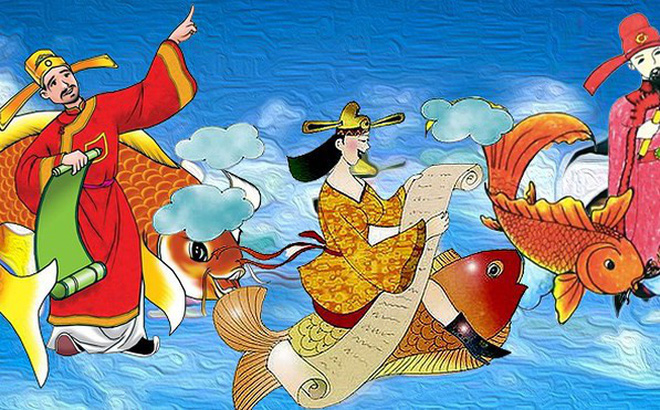
Preparations for the Kitchen God ceremony on the 23rd of the 12th lunar month.
The legend tells of Thi Nhi, her first husband Trong Cao, and her second husband Pham Lang. Through tragic misunderstandings and selfless love, all three ultimately lost their lives in a fire. Moved by their deep devotion and loyalty, the Jade Emperor transformed them into the Three Kitchen Gods, entrusting them with the duty of watching over the household, protecting family peace, and maintaining harmony within the home.
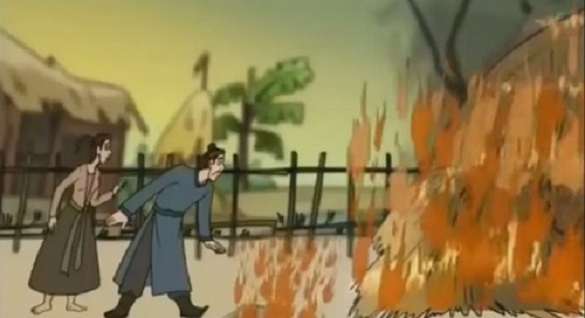
The moving tale of the three kitchen deities who oversee Vietnamese homes.
To honor the deities, households prepare offering trays with sticky rice, boiled chicken, spring rolls, and three sets of paper hats, boots, and robes. Families also release live red carp into nearby lakes and rivers, providing the gods with their sacred vehicles for the journey to heaven.
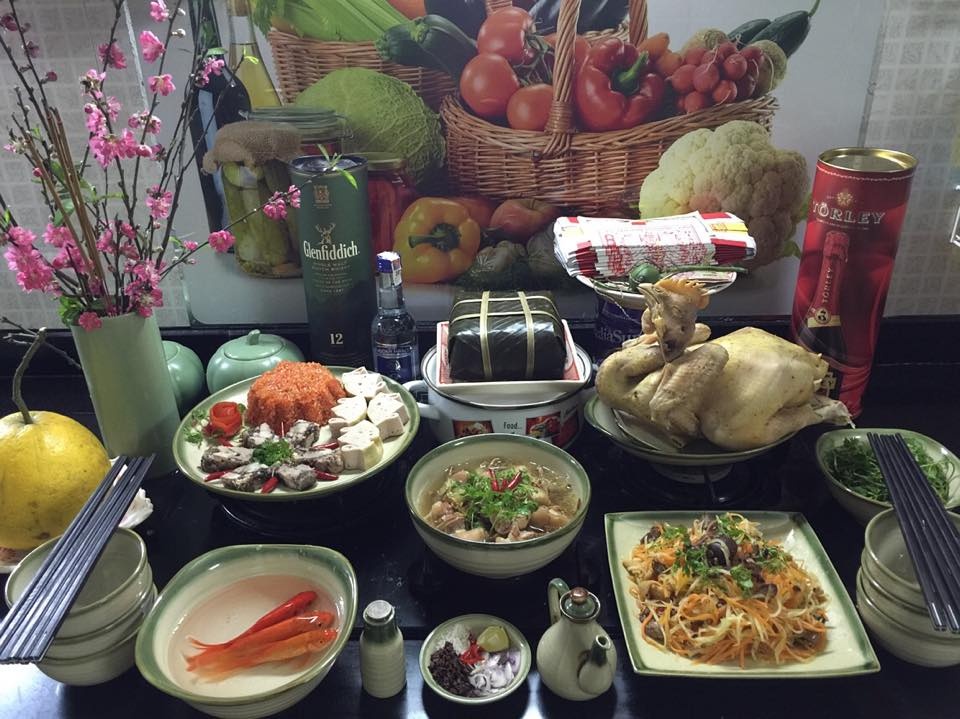
The offering feast and live carp release for Ong Cong Ong Tao.
The Custom of Erecting a Neu Tree
In traditional villages, families plant a tall bamboo pole known as Cay Neu in front of the house immediately after the Kitchen God ceremony. Standing 3 to 5 meters tall, the pole features red cloth strips, areca bags, and clay wind chimes at its peak. The sound produced by wind chimes deters evil spirits while the deities are away in heaven. On New Year’s Eve, lanterns hung on the bamboo pole guide ancestral spirits back to the family. The tree is formally taken down on the 7th day of Tet, signifying the end of the holiday.
The New Year’s Eve Ceremony and Giao Thua
Giao Thua is the sacred transition moment between the old and new lunar years at midnight. Families perform two separate offering ceremonies: one outdoors to bid farewell to the outgoing heavenly ruler and welcome the incoming administrative deity, and another indoors at the ancestral altar to invite ancestors to join the family feast. Midnight fireworks illuminate city skies across Hanoi, Da Nang, and Ho Chi Minh City as bells ring out from Buddhist pagodas.
Xong Dat – The First Visitor of the Lunar New Year
Xong Dat, or the ground-breaking first visit, is among the most influential old customs observed during Tet. Vietnamese people believe that the first person crossing the threshold of a home after midnight determines the family’s fortune, financial prosperity, and health for the entire coming year.
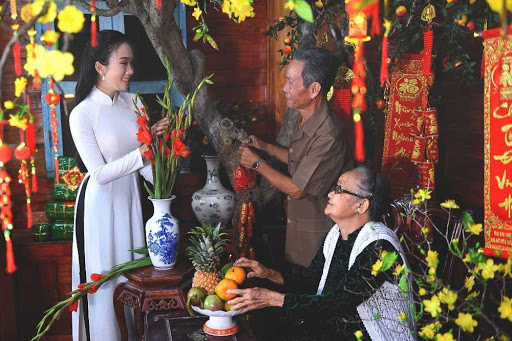
The first visitor entering a home sets the tone for the entire new lunar year.
Homeowners carefully select a respected relative or close friend whose zodiac sign harmonizes with the host and who is cheerful, optimistic, and successful in business. This invited guest arrives briefly on the morning of the first day, offers warm wishes, drinks tea, and gives lucky money to children. Homeowners often step out before midnight and re-enter their own house after the clock strikes twelve to prevent unintended visitors from entering first.
Giving Lucky Money and Red Envelopes
The practice of giving lucky money (li xi in the South, mung tuoi in the North) involves placing pristine, crisp banknotes inside red paper envelopes. Elders distribute red envelopes to children along with wishes for academic progress and good health, while adult children present envelopes to aging parents to wish them longevity.
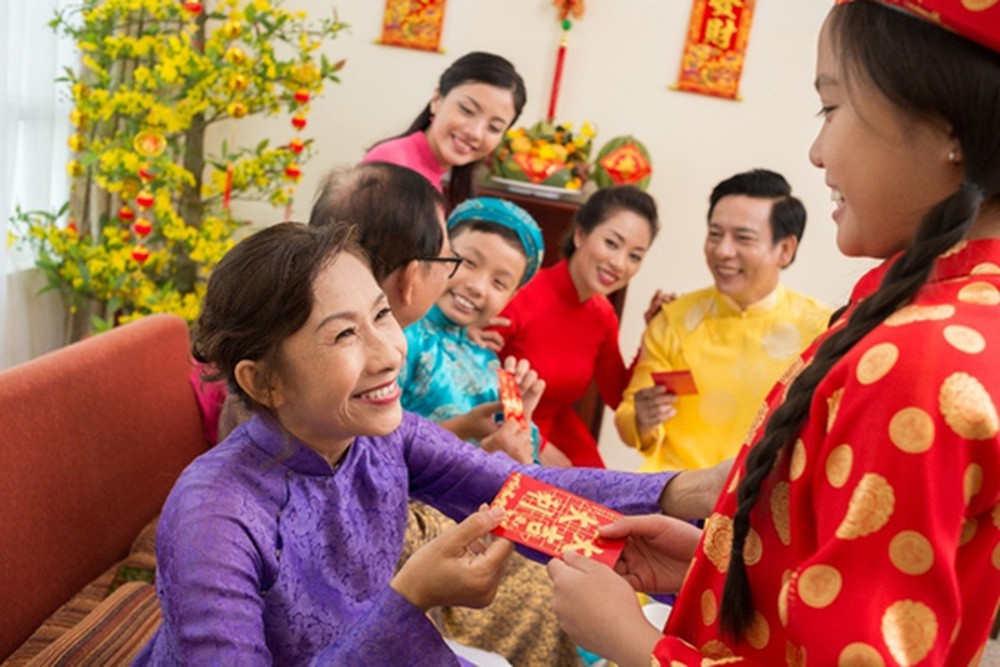
Exchanging red envelopes filled with crisp new banknotes brings fortune and protection.
The red color of the envelope symbolizes vitality, fortune, and protection against bad omens. The monetary value inside is secondary to the sincere blessing it conveys, though people make sure to use crisp new bills with even denominations, avoiding torn or wrinkled notes.
Visiting Relatives, Friends, and Teachers
A classic Vietnamese proverb outlines the social schedule of Tet: Mung mot Tet cha, mung hai Tet me, mung ba Tet thay (The first day is for father and paternal relatives, the second day is for mother and maternal kin, the third day is for teachers). This schedule structures family visits and reinforces social respect across generations.
Going to Pagodas and Praying for Good Fortune
Visiting Buddhist pagodas and communal temples (le chua) during the first days of Tet is a deep-seated spiritual tradition. People dress respectfully, burn incense, donate small offerings, and pray for peace, health, and career success. Many pagodas offer visitors symbolic green branches known as hai loc or red calligraphic scrolls, traditionally believed to bring peace, good fortune, and wisdom in the year ahead.
Traditional Vietnamese Tet Foods You Should Try
Festive cuisine during Tet showcases the culinary mastery of Vietnamese home cooks, centered around sticky rice, cured meats, pickled vegetables, and sweet candied preserves.
Banh Chung and Banh Tet – The Symbols of Vietnamese Tet
Banh Chung (square sticky rice cake) in the North and Banh Tet (cylindrical rice cake) in the South are the defining culinary symbols of Tet. Prepared with high-grade glutinous rice, rich mung bean paste, seasoned pork belly, and wrapped securely in green dong or banana leaves, these cakes boil over wood fires for 10 to 14 hours. Banh Chung represents the square earth in ancient cosmology, honoring ancestors and the agricultural bounty of Vietnam.
Gio Cha, Pickled Onions, and Other Festive Specialties
Alongside rice cakes, family feast tables feature gio lua (steamed pork sausage wrapped in banana leaves), gio thu (braised head cheese), boiled chicken, and bamboo shoot soup stewed with pork bones.
To balance out the rich flavors, Northern families often serve dưa hành (pickled small onions), while Southern households typically enjoy dưa món (pickled vegetables in fish sauce). These tangy side dishes add a refreshing contrast to hearty Tet meals and can also help with digestion after days of festive feasting.
Candied Fruits and Sweet Treats for Tet Guests
Every living room features a multi-compartment candy box (khay mut Tet) filled with candied ginger, sweetened lotus seeds, dried coconut ribbons, tamarind, and roasted watermelon seeds. Guests crack open red watermelon seeds and enjoy hot green tea while exchanging wishes for the new year.
The Meaning Behind Traditional Tet Dishes
Every item served during Tet carries symbolic meaning. Red sticky rice cooked with gac fruit (xoi gac) stands for good luck and vitality due to its natural crimson color. Candied ginger aids winter digestion and warms the stomach, while lotus seeds convey wishes for peace, pure intentions, and healthy offspring.
The Most Beautiful Tet Traditions and Cultural Experiences
Travelers visiting Vietnam during the weeks surrounding Tet can witness unique seasonal events, public art displays, and traditional games that only appear during this festive period.
Vibrant Flower Markets Before the Lunar New Year
During the final 10 days of the lunar year, major public areas convert into open-air flower markets. In Hanoi, Quang Ba Night Flower Market and Hang Luoc Street draw thousands of shoppers browsing peach blossom branches, dwarf kumquats, and white narcissus flowers. In Ho Chi Minh City, flower boats along the Ben Binh Dong canal create picturesque scenes filled with yellow marigolds, orchids, and chrysanthemums.
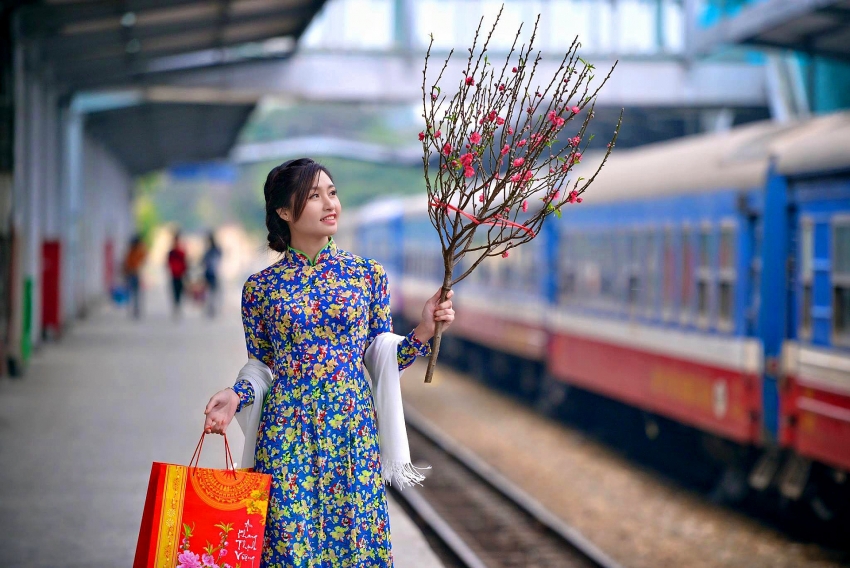
Peach blossoms and festive floral displays bring spring colors to Northern Vietnam.
Traditional Tet Markets and Festive Shopping Streets
Shopping streets like Hang Ma in Hanoi’s Old Quarter and Cho Lon in District 5 of Saigon display red lanterns, decorative couplets, gold-embossed envelopes, and festive decorations. Walking through these historic trading zones provides deep insight into the cultural beauty of Vietnam during the holidays.
Lion and Dragon Dances
Martial arts troupes perform lion and dragon dances (Mua Lan Su Rong) at public squares, major hotels, and commercial establishments during the first three days of Tet. Accompanied by loud cymbals and drum beats, the acrobatic dancers chase away negative energy, welcoming prosperity and success into the home.
Folk Games and Traditional Festivals
Rural villages and historic temples organize traditional folk games including bamboo pole jumping (nhay sap), wrestling matches & human chess (co nguoi). These events foster strong communal bonds and provide travelers with genuine cultural interaction.
The Peaceful Atmosphere of Vietnam During the Holiday
On the morning of the first day of Tet (Mung 1), large cities experience a remarkable quietness. The usual stream of motorbikes disappears from city centers like Hanoi and Saigon as residents stay home or gather in family reunion. Walking around Hoan Kiem Lake or through the French Quarter at dawn on the first day offers a rare, serene look at Vietnam’s historic urban centers.
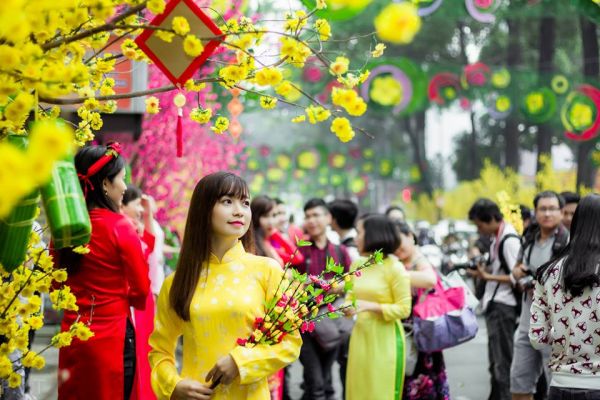
Families wearing traditional Ao Dai stroll through quiet city streets on New Year’s Day.
How Tet Is Celebrated Across Different Regions of Vietnam?
While shared cultural values unite the entire country, geographical climate and local traditions shape distinct regional practices across the North, Central, and South.
Tet Traditions in Northern Vietnam
Northern celebrations take place amidst crisp, cool winter weather. Homes feature pink peach blossoms, and families arrange five-fruit trays adhering strictly to the Five Elements : metal, wood, water, fire, and earth. Traditional offerings include green bananas cradling a yellow pomelo, surrounded by red persimmons and green mandarins.
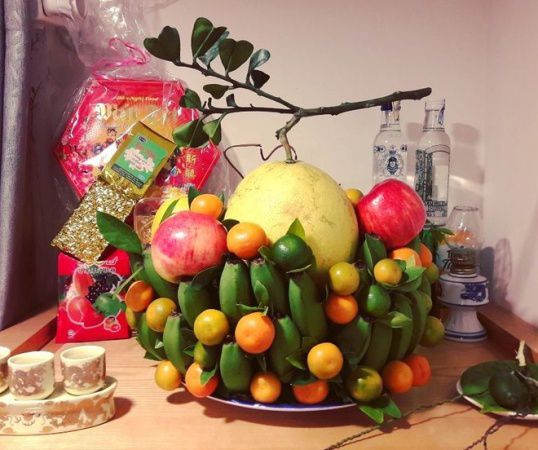
The Northern five-fruit tray displays color harmony reflecting the Five Universal Elements.
Tet Celebrations in Central Vietnam
Central Vietnam, characterized by a mild climate and strong imperial heritage around Hue, approaches Tet with refined simplicity. Families value sincerity over extravagant displays, arranging fresh fruits like dragon fruit, watermelon, and bananas on altars alongside dried specialties and savory meats preserved in fish sauce.
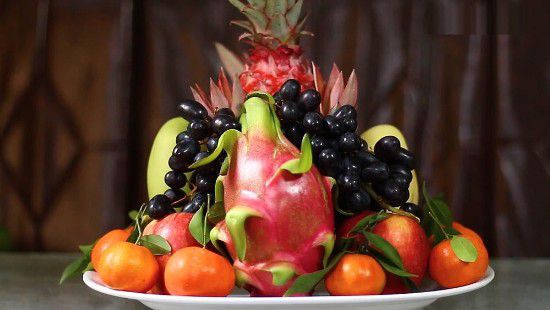
Central Vietnamese fruit trays focus on fresh local produce and sincere ancestral respect.
Tet in Southern Vietnam
Southern Vietnam enjoys warm, tropical sunshine during Tet. Yellow apricot blossoms bloom in courtyards, while the five-fruit tray follows a famous homophonic wordplay: Cau (soursop), Sung (fig), Dua (coconut), Du (papaya), and Xoai (mango), forming the wish Cau sung vua du xai (praying for sufficient prosperity and abundance).
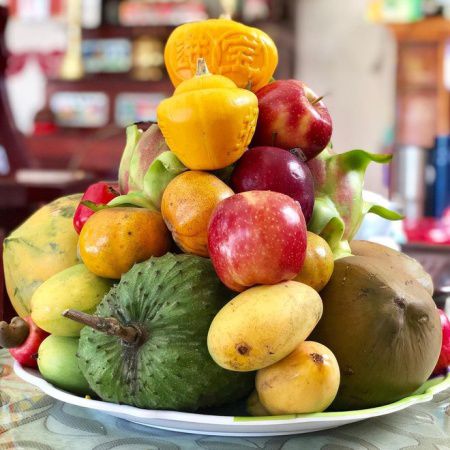
The Southern fruit tray pairs specific fruits to create an auspicious wordplay for wealth.
| Feature | Northern Vietnam | Central Vietnam | Southern Vietnam |
|---|---|---|---|
| Signature Flower | Pink Peach Blossoms (Hoa Dao) | Peach or Apricot Blossoms | Yellow Apricot Blossoms (Hoa Mai) |
| Traditional Rice Cake | Banh Chung (Square shape) | Banh Tet and Banh Chung | Banh Tet (Cylindrical shape) |
| Five-Fruit Tray Philosophy | Five Elements Balance (Colors) | Sincere heart with fresh local fruits | Homophonic wordplay for prosperity |
| Seasonal Climate | Cool, brisk winter (15-20°C) | Mild, pleasant spring (20-25°C) | Warm, sunny dry season (28-33°C) |
What Is It Like to Travel in Vietnam During Tet Holiday?
Traveling through Vietnam during Tet provides a rare cultural perspective, although it does require some flexibility and careful planning to navigate shorter business hours and higher transportation demand.
The Unique Advantages of Visiting Vietnam During Tet
Visiting during Tet allows you to observe authentic traditions that remain hidden during the rest of the year. Urban centers exhibit remarkable calm on the first days of the new year, public flower displays create exceptional photography settings, and locals dress in traditional Ao Dai costumes. Hospitality staff and locals greet foreign travelers with genuine warmth, frequently sharing seasonal cakes and fruit.
What Travelers Should Expect During the Holiday
Expect higher domestic ticket prices for flights and trains leading up to the holiday, along with significant service pauses between the 30th lunar day and the 3rd day of the new year. Major hotels, international restaurants, and private tour operators function normally, whereas family-run restaurants and mom-and-pop shops close temporarily. Surcharges of 15% to 25% are common at operational food establishments to compensate holiday staff.
Which Places and Activities May Be Closed?
Government offices, banks, post offices, and state-administered museums (such as the War Remnants Museum, Temple of Literature, and Ho Chi Minh Mausoleum) close for at least 3 to 4 days starting from New Year’s Eve. Conversely, public parks, walking streets, pagodas, Halong Bay day cruises, and resort facilities in coastal areas operate on regular or special holiday schedules.
Best Places to Experience Vietnamese Lunar New Year
Certain destinations in Vietnam offer particularly memorable settings to experience Tet, balancing rich heritage, festive public decor, and operational traveler amenities.
Hanoi – Traditional Tet Markets and Cultural Experiences
The capital city represents the heart of Northern traditions. Stroll through the Old Quarter to view seasonal calligraphy masters working near Van Mieu (Temple of Literature), admire blooming peach blossoms along Hang Luoc Street, and enjoy the tranquil atmosphere surrounding Hoan Kiem Lake on New Year’s morning.
Ho Chi Minh City – Vibrant Decorations and New Year Celebrations
Saigon offers expansive public spectacles, highlighted by the annual Nguyen Hue Flower Street installation, which features elaborate floral sculptures and cultural exhibits stretching down to the Saigon River. Nightly fireworks over the Thu Thiem area and lively festivities across Cho Lon create an exciting festive environment.
Hue – Discovering Royal Traditions During Tet
Hue revives imperial court traditions within the historic Citadel. Visitors can observe the traditional Thuong Neu pole-raising ceremony at the Imperial City, watch royal court music performances, and sample refined imperial cuisine at heritage garden houses.
Hoi An – Lanterns, Temples, and Festive Charm
The ancient town of Hoi An shines during Tet with thousands of colorful silk lanterns illuminating pedestrian alleyways along the Hoai River. Historic Chinese assembly halls host lively ceremonies, while local families release floating flower lanterns onto the river to pray for peace.
Essential Etiquette for Visitors During Vietnamese Tet
Respecting local customs and understanding traditional social taboos will help you build warm connections with local residents during this auspicious holiday.
New Year Greetings and Common Vietnamese Wishes
Learning a few simple Vietnamese phrases shows genuine cultural respect. Common greetings include Chuc Mung Nam Moi (Happy New Year), An Khang Thinh Vuong (Security, good health, and prosperity), and Van Su Nhu Y (May myriad things go according to your wishes).
Gift-Giving Etiquette During Tet
If invited to a Vietnamese home, bringing a small gift is customary. Ideal options include gift baskets containing premium tea, wine, dried candied fruits, or seasonal fruit boxes. Present items using both hands and wrap gifts in red or gold paper, avoiding black or white wrapping.
Things to Avoid During the First Days of the Lunar New Year
Be mindful of traditional cultural taboos during the initial days of Tet:
- Do not visit private residences on the morning of the first day unless specifically invited as the Xong Dat guest.
- Avoid wearing all-black or all-white outfits, as these colors are associated with traditional funeral rites.
- Do not sweep floors or dispose of garbage from homes during the first three days.
- Avoid arguments, shouting, or using coarse language, and handle ceramic glassware carefully to prevent breakage.
Why Experiencing Tet Offers a Deeper Look Into Vietnamese Culture?
Experiencing Tet in person allows international visitors to look beyond standard sightseeing attractions and appreciate the spiritual and community values that define Vietnamese life.
Discovering Vietnam Beyond Its Landscapes and Attractions
While karst mountains and coastline scenery are famous worldwide, the true soul of Vietnam resides in its social fabric and family structures. Participating in ancestral rituals, witnessing market preparations, and enjoying traditional meals provide direct insight into the everyday philosophy of Vietnamese people.
The Enduring Values Behind Vietnamese Lunar New Year
Despite rapid modern economic development, Tet remains untouched in its core values. The festival proves the resilience of filial piety, communal generosity, and cultural pride, passing down traditions intact to the younger generations.
Making Tet Part of an Authentic Vietnam Travel Experience
Incorporating Tet into your vacation transforms a standard holiday into a memorable cultural experience. Booking private customized trips to Vietnam with experienced local guides ensures you enjoy seasonal highlights without encountering logistical bottlenecks.
Common Mistakes & Our Practical Tips for Your Vietnam Visit During Tet
Based on our local travel operations across the country, we have compiled the most frequent visitor mistakes during Tet, paired with direct corrective solutions from our travel experts.
- Mistake: Booking domestic transport at the last minute. Domestic flights, trains, and express buses sell out weeks before Tet. Corrective Advice: Secure all inter-city tickets at least 6 to 8 weeks in advance, or book private car transfers with verified local drivers.
- Mistake: Expecting all museums and cultural sites to be open. Most major monuments and public exhibition halls close for 3 to 4 days. Corrective Advice: Schedule outdoor nature excursions, Halong Bay cruises, or walking city explorations during the initial days of the holiday.
- Mistake: Relying entirely on street-side dining without cash. Small street vendors often close or accept cash only. Corrective Advice: Withdraw sufficient Vietnamese Dong before banks close on New Year’s Eve and confirm operational dining options with your hotel concierge.
- Mistake: Entering a private home on New Year’s Day unannounced. Violating the Xong Dat custom causes distress to local hosts. Corrective Advice: Only visit local residences on the first day if the host explicitly invited you to be their inaugural visitor.
- Mistake: Wearing dark mourning colors to temples and pagodas. Black and white clothing can be seen as inappropriate during spring celebrations. Corrective Advice: Pack bright-colored attire such as red, blue, or yellow shirts with modest shoulder and knee coverage.

Frequently Asked Questions (FAQs) About Vietnamese Lunar New Year
1. Is it a good idea to travel to Vietnam during Tet?
Yes, traveling during Tet provides a rare look at authentic customs and quiet city streets. However, you must arrange transport, accommodations, and guided tours in advance because many small businesses close.
2. How long do businesses and attractions stay closed for Tet?
Government offices and museums close for 3 to 5 days, starting on New Year’s Eve. Most private restaurants, markets, and shops gradually resume business from the 3rd or 4th day.
3. Are hotels and resorts open during the holiday?
Yes, 3 to 5-star hotels, luxury resorts, and cruise lines operate normally throughout the holiday period, offering full dining, tour desk, and hospitality services to international guests.
4. Will prices increase during the Tet holiday in Vietnam?
Flight and train tickets increase during the peak travel rush. Some operational restaurants apply a holiday service surcharge of 10% to 25% to cover overtime compensation for staff.
5. What should I wear when visiting pagodas during Tet?
Wear modest clothing covering your shoulders and knees. Choose cheerful, bright colors like red, gold, or blue, avoiding all-black or all-white outfits associated with mourning.
6. Can I still book day trips and tours during Tet?
Yes, pre-booked private tours and cruise services operate throughout the holiday. Working with a licensed tour operator guarantees private transportation and confirmed itinerary arrangements.
Fully Licensed Local Agency
Vietnam Adventure Tours
Experience off-the-beaten-path trekking, cycling, and cultural discovery across Northern and Central Vietnam with licensed guides and comprehensive travel support.
Final Thoughts on Vietnamese Lunar New Year & Arrange Your Trip with Our Travel Experts
Celebrating Vietnamese Lunar New Year allows you to experience the country at its most meaningful cultural peak. If you are seeking tailor-made Vietnam Adventure Tours, or comprehensive Vietnam Tours, our travel team is ready to assist. Contact us to start planning your itinerary via WhatsApp +84.988451530 or send an inquiry to [email protected].
Note: The travel tips and recommendations shared in this guide have been carefully prepared by the local travel experts at Golden Holiday Travel. While every traveler is different, our team is always happy to provide personalized itinerary planning, destination advice, and one-on-one support to help you create the perfect Vietnam journey.
Meet Our Experts

Suggested


Featured article


Related Articles




Write Comment