
Hien Luong Bridge & Ben Hai River: Vietnamese Symbol of Peace, National Unity, and Independence
Hien Luong Bridge – A Historical Background
Hien Luong Bridge was originally built in 1928 by the residents of Vinh Linh District. At that time, it was a 2-meter-wide wooden structure with iron poles, designed solely for pedestrian use.
In 1950, the French constructed a new bridge for military purposes. This concrete bridge was 162 meters long, 3.6 meters wide, and capable of supporting a weight of up to 10 tons.
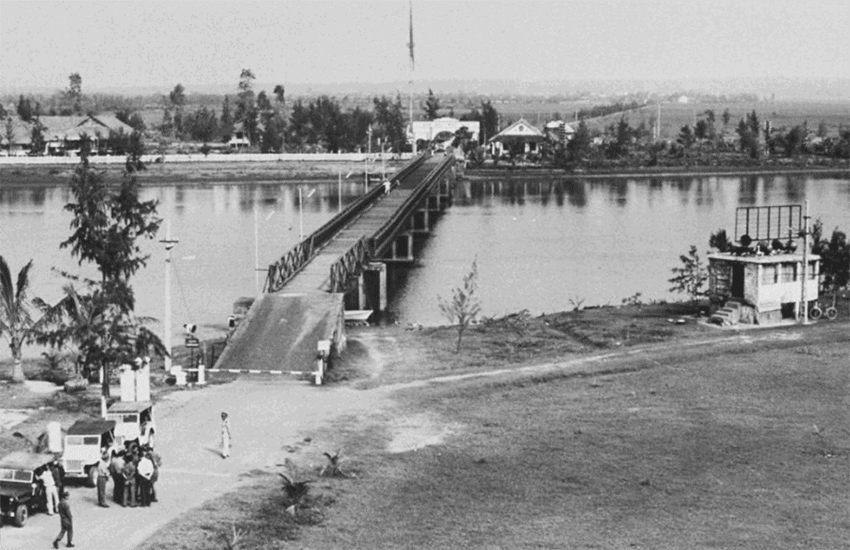
Later, in May 1952, the French rebuilt thebridge to connect Vinh Linh and Gio Linh districts across the Ben Hai River. This new structure featured seven spans, measured 178 meters in length, and was supported by reinforced concrete pillars and steel beams. The bridge, which had a pine-paved surface, was 4 meters wide and included 1.2-meter-high walls on either side.
Hien Luong Bridge: A Historic Witness to Vietnam’s Past
During Vietnam War with United States (1955-1975), Hien Luong Bridge and the Ben Hai River (in DMZ Quang Tri) stood as “historical witnesses” to Vietnam’s division into North and South. Following the Battle of Dien Bien Phu, the Geneva Agreement was signed in 1954, temporarily dividing Vietnam along the 17th Parallel, where the Ben Hai River flows through Do Linh and Vinh Linh as the borderline
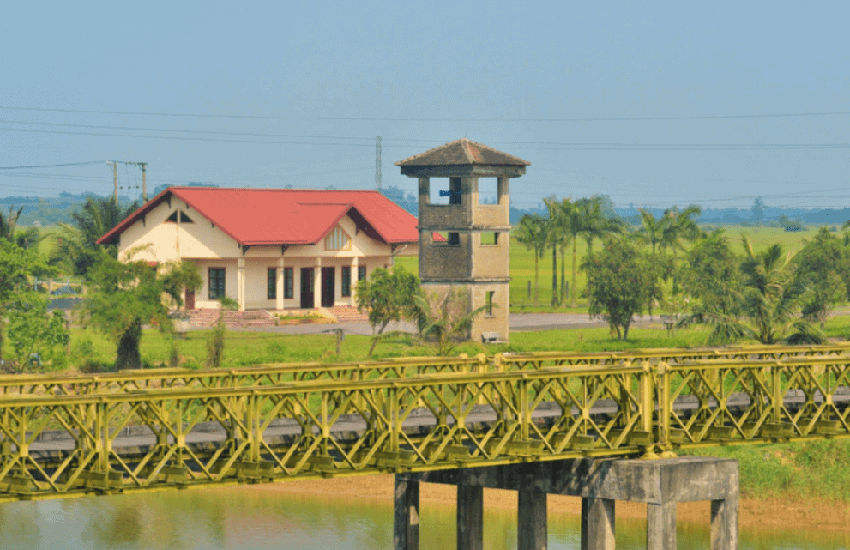
Iconic Hien Luong Bridge, measuring 89 meters on each side, was painted in two distinct colors to mark the division. This temporary separation was intended to last just two years until a reunification election could be held. However, it ended up lasting more than 2 decades
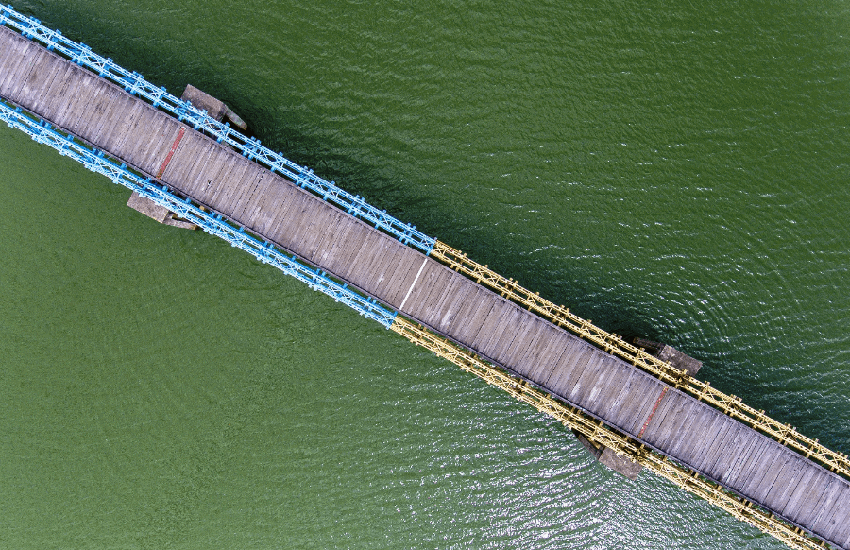
In 1956, President Ngo Dinh Diem of the Republic of Vietnam, under U.S. influence, did not hold the promised unification election. As a result, Hien Luong Bridge remained a poignant symbol of the country’s division for more than 20 years, embodying the pain of a divided Vietnam.
What Can You See at Hien Luong Bridge and Ben Hai River Today?
In 1986, the Hien Luong relic cluster was designated as a national historic site.
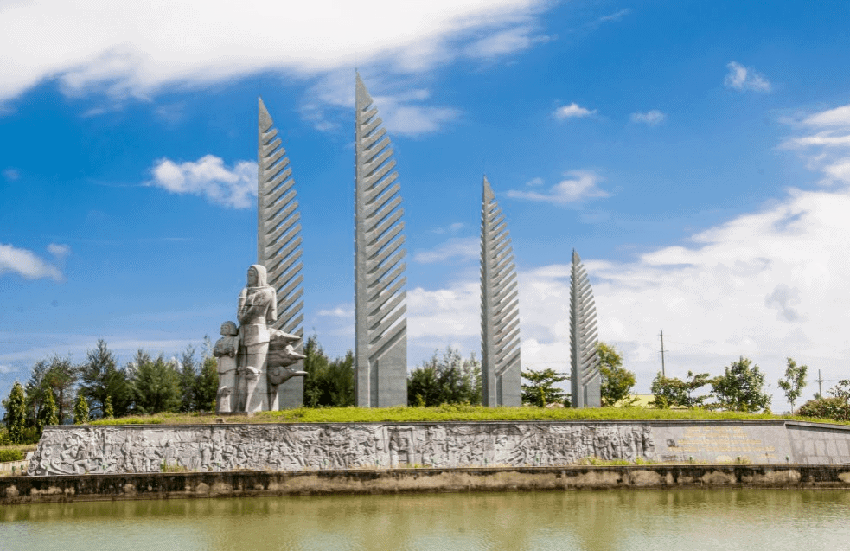
On the southern bank, you’ll find the “Desire for a Unified Country” monument, featuring a poignant image of a young mother and her son waiting for their loved ones to return home.
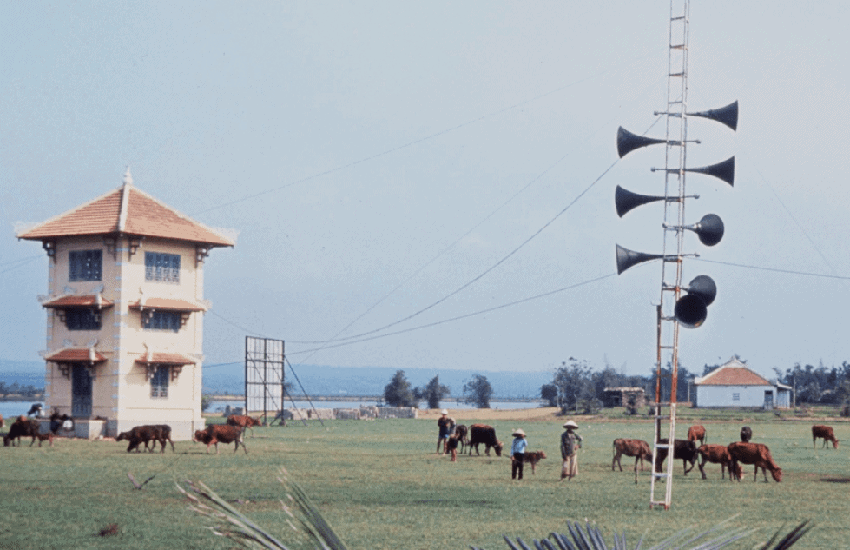
During the Vietnam War, loudspeakers on the northern bank were used to broadcast messages and play music for those on the southern side.
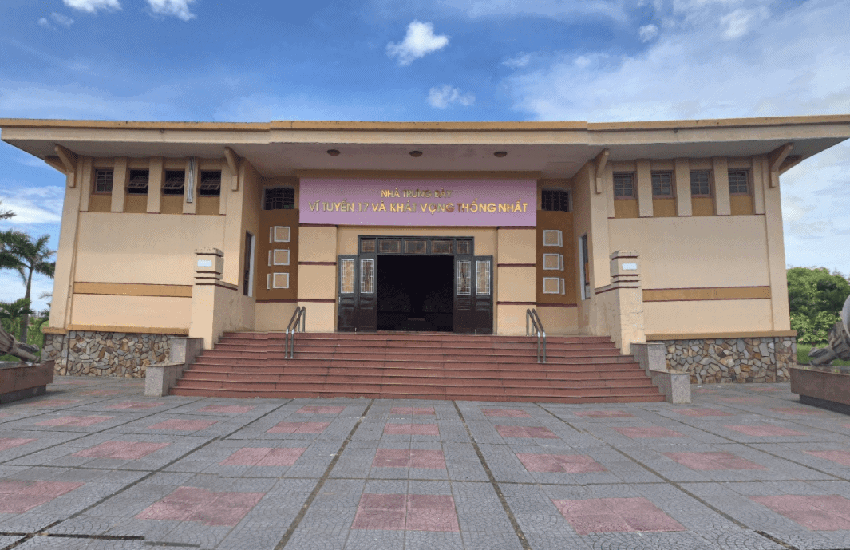
On the northern bank, the Desire for Unification Exhibition Hall showcases historical photos and artifacts related to the Hien Luong Bridge and Ben Hai River from 1954 to 1975, covering the Vietnam War period.
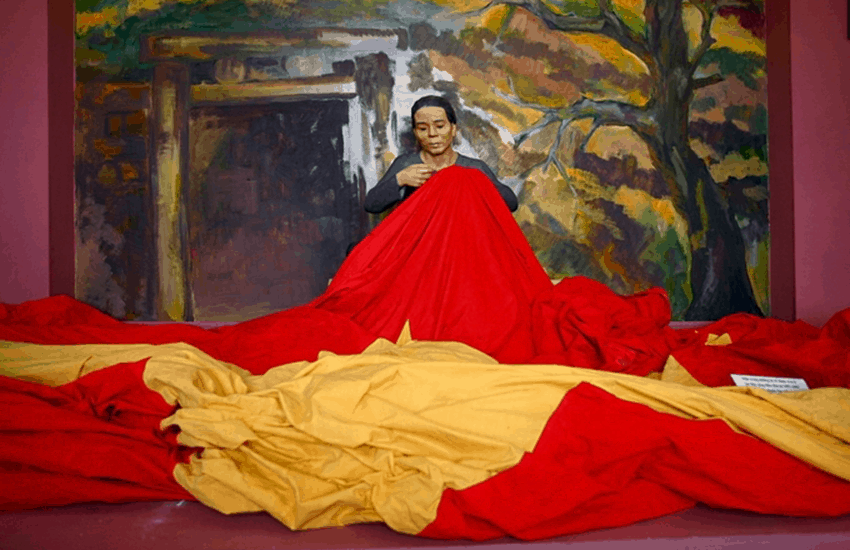
Nearby, a flagpole stands with a wax sculpture depicting a woman sewing the Hien Luong flag. Between 1957 and 1962, a 9×12 meter flag was displayed on the northern bank of the Ben Hai River.
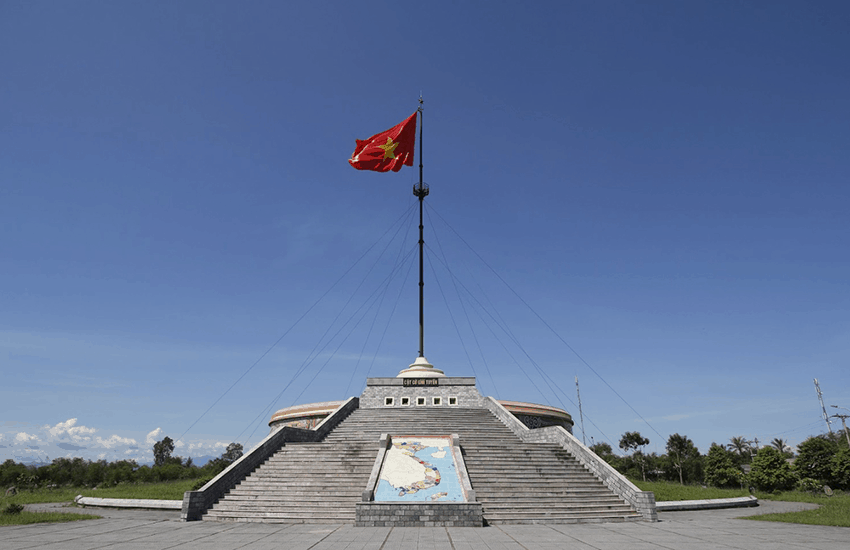
At the base of the flagpole, a pottery mural illustrates significant war events and the people’s resolve for national reunification.
To visit this site, an admission fee of 40,000 VND (approximately $2) is required for adults.
If you’re exploring DMZ Vietnam or Central Vietnam, a visit to Hien Luong Bridge and Ben Hai River is a must. For personalized local travel assistance, reach out to us via WhatsApp at +84.988451530 or email us at [email protected]. Let us help make your journey truly unforgettable!
Frequently Asked Questions
Hien Luong Bridge and the Ben Hai River, located at the 17th Parallel, served as the painful dividing line between North and South Vietnam for 21 years (1954–1975). Today, they stand as a powerful symbol of peace, national unity, and independence, representing the resilience of the Vietnamese people and their ultimate journey toward reunification
The 17th Parallel is located in Quang Tri Province, Central Vietnam. It was established by the Geneva Accords in 1954 as a temporary military demarcation line. The Ben Hai River served as the physical border, and Hien Luong Bridge became the iconic landmark where the division—and later the reunification—of the country was most visible.
Visitors can explore several well-preserved historical sites, including the two-colored Hien Luong Bridge (painted differently to represent the division), the Flag Tower, the “Desire for National Reunification” monument, and the Border Police Station. There is also a museum showcasing artifacts, photographs, and the history of the “flag-raising” and “loudspeaker” battles that took place across the river banks
During the period of division, the bridge became a site of “color combat.” When the South painted their half of the bridge one color, the North would immediately paint their half the same color to symbolize that Vietnam was one unified country. This constant repainting was a silent but powerful protest against the partition of the nation.
Absolutely. For travelers interested in history and culture, a visit to the DMZ (Demilitarized Zone) offers deep insight into the Vietnam War. Standing on the Hien Luong Bridge provides a unique perspective on the country’s past struggles and its current era of peace. It is often paired with visits to the Vinh Moc Tunnels for a full day of historical exploration.
Golden Holiday Travel, a licensed tour operator in Vietnam, offers specialized DMZ historical tours. We provide expert guides who share the moving stories of the Ben Hai River and the 17th Parallel, along with comfortable private transport from Hue or Dong Ha. Our tours are designed to give travelers a meaningful and educational experience of Central Vietnam’s history
Meet Our Experts

Suggested


Featured article


Related Articles




Write Comment