
Hanoi History Guide: Notable Stages Every Visitor Should Know
Hanoi is an ancient land nestled at the heart of the fertile Red River Delta. Millennia ago, pre-historic Vietnamese established early farming communities here, cultivating the land along the Red River and laying the foundation for the Red River Civilization – the cradle of traditional Vietnamese wet-rice culture.
Over the centuries, this vibrant settlement evolved from a strategic regional stronghold into the thriving, modern capital we see today. To help you appreciate the depth of this fascinating city, this article explores the four most notable stages of Hanoi’s history, highlighting the historic milestones and cultural monuments you can still experience on your next trip.
1. The Pre-Thang Long Period (3rd Century BC – 1010 AD)
The Birth of an Ancient Capital
Hanoi’s journey onto the national socio-political stage began in the 3rd century BC. According to historical records and local legends, King An Duong Vuong defeated the Hung Kings of Van Lang, established the Au Lac Kingdom, and moved his capital to Co Loa (a site located in modern-day Hanoi’s Dong Anh district). Co Loa became the region’s first fortified political and military center.
A Thousand Years of Resistance
The independence of the Au Lac Kingdom took a tragic turn in 179 BC when Northern forces invaded. This ushered in a brutal, millennium-long era of Chinese domination that lasted until 938 AD.
During this dark period, the area of modern-day Hanoi – known variously over time as Tong Binh, La Thanh, and Dai La – was repeatedly selected by foreign governors as their administrative center. They built heavily fortified citadels to secure their rule and suppress the frequent, fierce uprisings of the Vietnamese people fighting to reclaim sovereignty.
Travel Tip: When visiting the ancient Co Loa Citadel, you can still see the remaining vestiges of the multi-layered spiral earthen walls, view ancient bronze arrows, and learn about the enduring legends of King An Duong Vuong.

The ancient Hanoi history
2. The Golden Thang Long Period (1010 – 1802)
The Legend of the Ascending Dragon
In 938 AD, General Ngo Quyen famously defeated the Southern Han fleet at the Bach Dang River, decisively ending a thousand years of Chinese rule. Following a brief return to Co Loa and decades of civil fragmentation, King Dinh Tien Hoang reunified the nation under the name Dai Co Viet in 968 AD, establishing the capital in the protected valleys of Hoa Lu (Ninh Binh).
The true turning point for Hanoi occurred in 1010. Upon ascending the throne, King Ly Thai To – the founder of the Ly Dynasty – recognized the immense strategic and economic value of the Red River Delta. He decided to relocate the imperial capital from the mountainous terrain of Hoa Lu back to the open plains of the Dai La Citadel.
Legend has it that as the royal barge docked, the King witnessed a golden cloud shaped like a dragon soaring into the sky. Interpreting this as a divine omen of peace and prosperity, he renamed the capital Thang Long (“Ascending Dragon”).
The Heart of Vietnamese Culture
Thang Long remained the uninterrupted political, economic, and cultural epicenter of Vietnam for nearly eight centuries. In 1802, King Gia Long, the founder of the Nguyen Dynasty, moved the imperial capital south to Hue. Despite losing its status as the imperial seat, Thang Long remained the commercial powerhouse of the north. In 1831, King Minh Mang established the territory as a formal province and officially renamed it Hanoi (“The City Within the Rivers”).
Top Thang Long Historical Sites to Visit:
-
Imperial Citadel of Thang Long: A UNESCO World Heritage site dating back to the 11th century.
-
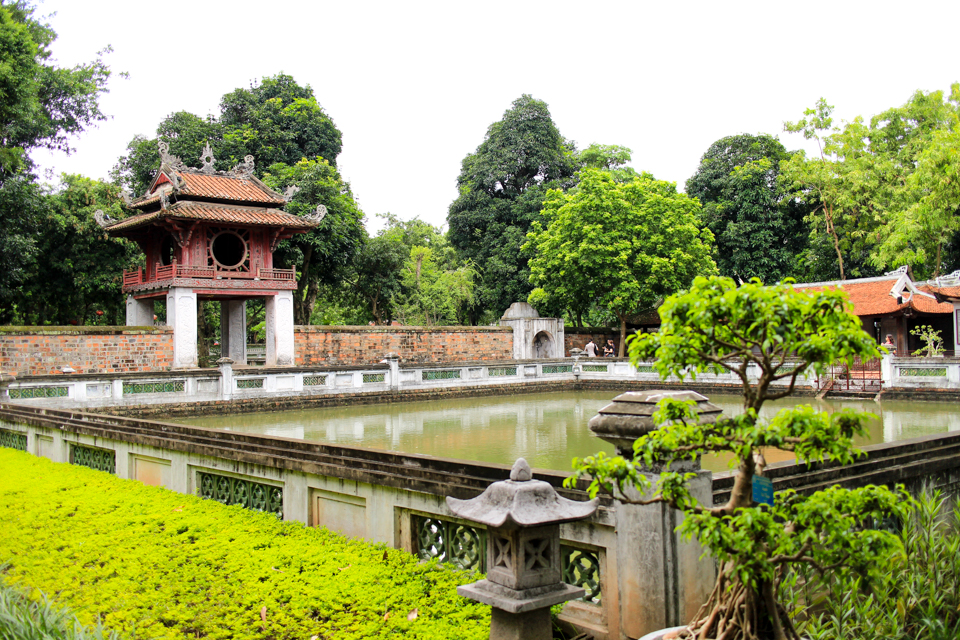
Temple of Literature (1070): Vietnam’s very first national university, dedicated to Confucius.
-
One Pillar Pagoda (1049): An iconic Buddhist temple built to resemble a lotus flower blooming out of the water.
-
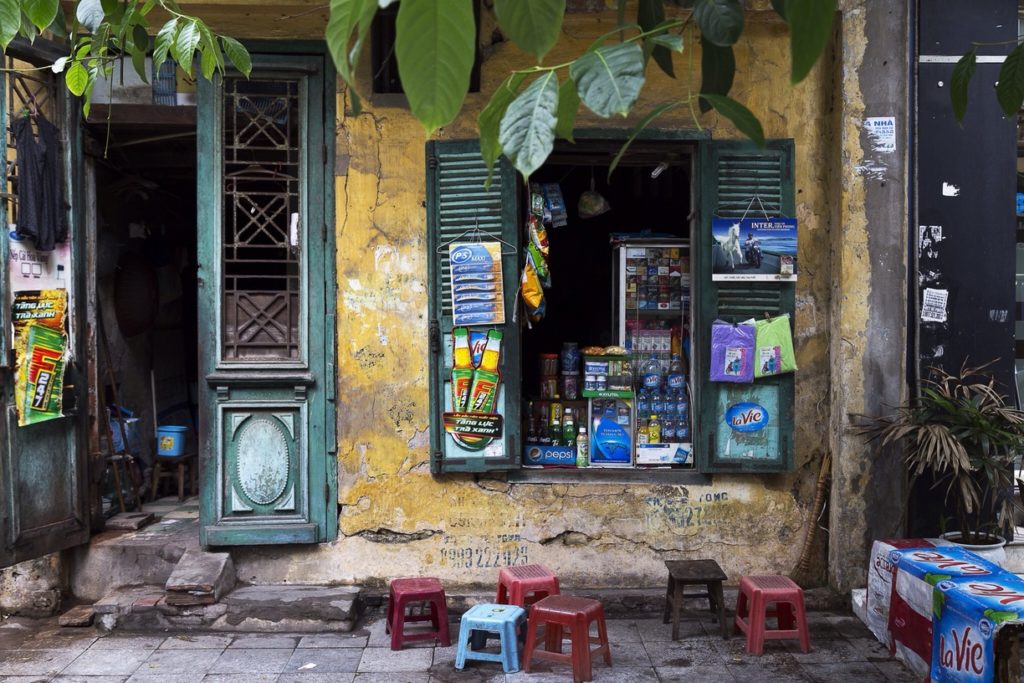
Hanoi Old Quarter: The bustling 36 ancient streets that have served as the city’s commercial heart since the 11th century.
3. The French Colonial Period (1883 – 1945)
Architectural Transformation and Conflict
In 1858, Southern part of Vietnam was attacked by French. By the late 19th century, French colonial forces began expanding their grip into Northern Vietnam. Despite heroic resistance led by Hanoi Governors Nguyen Tri Phuong and Hoang Dieu, the weakened Nguyen court signed a capitulation treaty in 1883, officially recognizing French rule. In 1888, the French administration formally established the city of Hanoi, turning it into the capital of the French Indochinese Federation.
This era fundamentally reshaped Hanoi’s urban landscape. The French implemented large-scale infrastructure projects, tearing down sections of the old citadels to build European-style boulevards, administrative headquarters, and railway networks.
The Path to Independence
While the city grew physically, its residents faced harsh taxation and political repression. The spirit of rebellion never faded. Following the foundation of the Communist Party of Vietnam in 1930, the local resistance grew highly organized.
In August 1945, seizing the moment of the Japanese surrender at the close of World War II, the Viet Minh forces led by Ho Chi Minh launched the August Revolution. They successfully seized control of the city, restoring Hanoi as the capital of an independent nation.
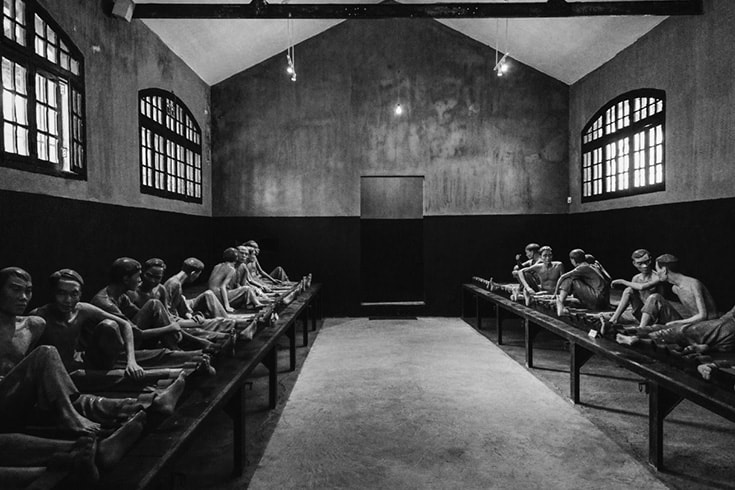
Historical Architectures to Explore: To see the duality of this era, visit the striking French-style Hanoi Opera House, Long Bien Bridge, and St. Joseph’s Cathedral, contrasted with the sobering history preserved inside the walls of Hoa Lo Prison.
4. Hanoi in the Modern Era & The Rise of a Global City
The Chaos of War
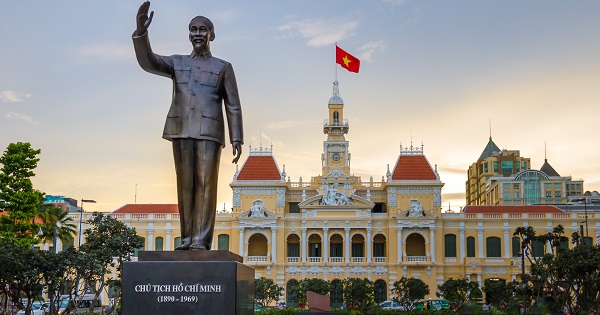
On September 2, 1945, at Ba Dinh Square, President Ho Chi Minh read the historic Declaration of Independence, founding the Democratic Republic of Vietnam. However, peace was short-lived; the French returned to reoccupy the city until their definitive defeat at the Battle of Dien Bien Phu in 1954.
During the subsequent anti-American war, Hanoi served as the steadfast rear guard for the southern front. The city faced severe devastation, culminating in December 1972 during the “Christmas Bombings.” Over 12 days and nights, US forces dropped over 40,000 tons of explosives on the city. Defiant, Hanoi’s defense forces orchestrated what became known as “Dien Bien Phu in the Air,” downing dozens of aircrafts and forcing the signing of the Paris Peace Accords in January 1973.
Following the Fall of Saigon on April 30, 1975, the nation was fully reunified. In July 1976, the National Assembly officially designated Hanoi as the capital of the unified Socialist Republic of Vietnam.
Economic Renewal and the City of Peace
The year 1986 marked another massive milestone with the introduction of the Doi Moi (Economic Renovation) policy. Hanoi in particular & Vietnam in general successfully transitioned from a state-subsidized model to a dynamic, market-oriented economy.
In 1999, recognizing its rapid development alongside its preservation of heritage and community culture, UNESCO awarded Hanoi the official title “The City of Peace.” Today, Hanoi stands as a major regional economic hub, blending ancient traditions seamlessly with skyscrapers and international commerce.

Discover the History of Hanoi with Us
Hopefully, this writting about Hanoi’s history & its related attractions is useful for your reference – getting to know about important milestones of Hanoi’s historical periods.The best way to truly appreciate Hanoi’s transformation is to experience its historical landmarks firsthand. On your next trip, make sure to visit the Ho Chi Minh Complex (including the Mausoleum, his stilt house, and the museum), the moving Hoa Lo Prison, and the Vietnam Military History Museum.
Are you ready to explore the rich history and hidden charm of Hanoi? Join our affordable group Hanoi city tour or enjoy the flexibility of a private customized experience tailored just for you. In need of local support with itineraries, visas, or tour bookings, feel free to contact us anytime at [email protected] or fast contact to us +84.988451530 (WhatsApp)
Let Golden Holiday Travel help you discover the best of Vietnam!




























Write Comment