
Top Attractions in Ba Vi National Park: What to See & Do?
Things to do in Ba Vi National Park include hiking through shady forests, exploring moss-covered French ruins, visiting sacred mountain temples, and enjoying panoramic views over the Red River Delta. Just 60 km from Hanoi, Ba Vi offers a refreshing escape from the city, with cool mountain air, lush greenery, and peaceful trails.
With 10+ years of experience crafting custom trips in northern Vietnam, Golden Holiday Travel helps travelers explore authentic local experiences beyond typical city tours. As a licensed tour operator, we personally check routes to provide reliable advice, fair prices, and trusted transport.
Planning a day trip or overnight stay in Ba Vi is easier with a quick look at the trails, road conditions, and weather. This guide covers the top attractions, transport options, and essential packing tips for your smooth mountain escape.
Key Takeaways For Travelers
- Location & Access: Situated 60 km west of Hanoi, accessible in 1.5 to 2 hours by private car or private tour.
- Top Outdoor Highlights: King Peak (1,296m), Tan Vien Peak (1,227m), French colonial church ruins at Point 600m, and the Cactus Greenhouse.
- Ideal Travel Seasons: April to October for clear skies and hiking; late October to November for blooming wild sunflowers.
- Physical Demands: Expect 1,320 stone steps to King Peak and steep forest staircases requiring sturdy walking shoes.
- Travel Convenience: Easily explored as an active 1-day itinerary from Hanoi or a relaxing 2-day nature break staying at local eco-resorts.
Why Visit Ba Vi National Park?
Ba Vi National Park gives travelers an easy escape into the mountains, combining lush tropical forests, historic French colonial ruins, and culturally significant temples. It serves as a refreshing day retreat from Hanoi, providing cooler mountain weather, scenic walking trails, and sweeping views across the lowlands.

Fully Licensed Local Agency
Northern Vietnam Private Day Tours & Excursions
Discover Ba Vi mountain peaks, peaceful valleys, and cultural landmarks with our licensed English-speaking guides and private air-conditioned vehicles. We build flexible day programs matching your personal walking pace.
A Quick Introduction to Ba Vi National Park
Covering an area of nearly 11,000 hectares across Ba Vi District and neighboring Hoa Binh Province, Ba Vi National Park centers around a three-peaked mountain that rises dramatically from the plains. The highest point is King Peak (Dinh Vua) at 1,296 meters, followed by Tan Vien Peak at 1,227 meters and Ngoc Hoa Peak at 1,131 meters.
The park was officially established in 1991 to protect protect its evergreen forests, diverse wildlife, and important water sources that feed into the Da and Red River systems. Because of its varied elevations, the reserve shelters over 1,200 plant species, including rare medicinal herbs, along with hundreds of bird, mammal, and butterfly species.
What Makes Ba Vi a Great Nature Escape from Hanoi?
The park sits within easy driving distance from Hanoi, allowing visitors to leave the city center after breakfast and walk through deep forest paths by mid-morning. Temperatures on the upper slopes remain 4 to 8 degrees Celsius cooler than the downtown streets throughout the hot summer months.
Beyond its natural beauty, Ba Vi also carries a fascinating history. In the early 20th century, the French colonial administration chose these cool mountain ridges as the site of a hill station, leaving behind old stone villas, a church, and administrative buildings that have since been slowly reclaimed by the surrounding forest.
When Is the Best Time to Visit Ba Vi National Park?
You can visit the mountain range year-round, though each season brings distinct weather conditions. Between April and October, the weather is warm and bright, offering clear visibility over the surrounding valleys. This period is ideal for hiking, photography, and escaping summer heat.
From November to March, temperatures drop significantly, bringing cool breezes and frequent sea-of-cloud formations around the summits. Mid-October through late November is famous for blooming wild sunflowers (hoa da quy), which cover the mountain slopes in bright yellow blossoms.
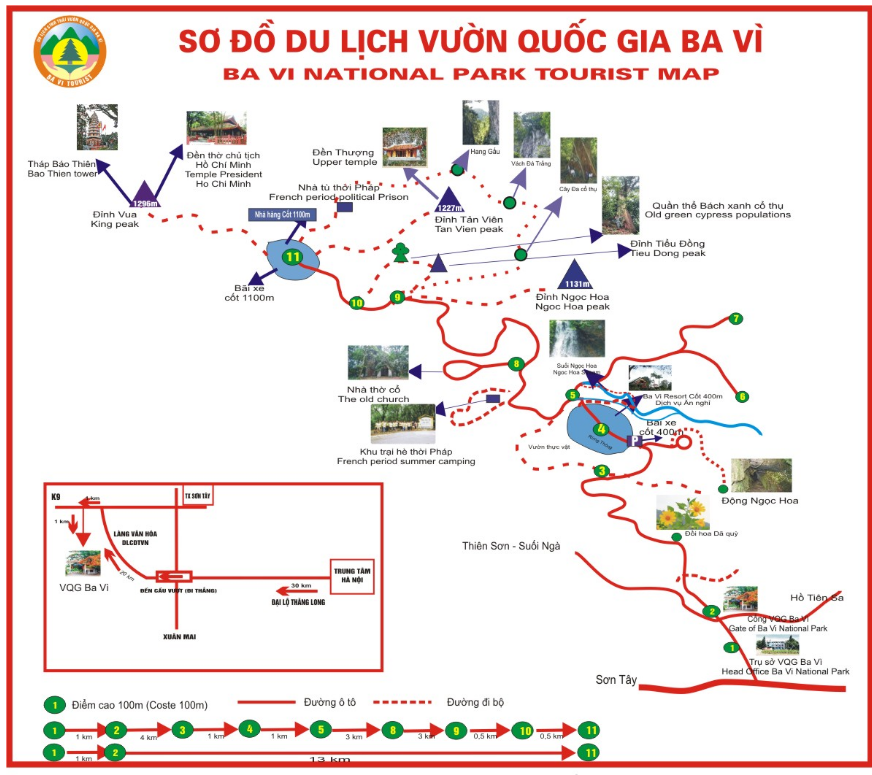
Detailed sightseeing route and elevation map of Ba Vi National Park.
| Season | Months | Average Temp | Weather Conditions | Highlights |
|---|---|---|---|---|
| Spring | Feb – Apr | 18°C – 24°C | Misty mornings, light drizzle, lush foliage | Quiet trails, blooming mountain plants, temple visits |
| Summer | May – Aug | 23°C – 29°C | Sunny, clear skies, occasional afternoon showers | Cool mountain retreat, clear valley views, stream bathing |
| Autumn | Sep – Nov | 19°C – 25°C | Dry, pleasant breezes, golden sunlight | Wild sunflower blooming season, prime trekking weather |
| Winter | Dec – Jan | 11°C – 17°C | Crisp mountain air, thick fog, sea of clouds | Cloud hunting on high ridges, quiet winter photography |
Top Things to Do in Ba Vi National Park
Visitors can enjoy a diverse range of outdoor activities in Ba Vi, from mountain road drives and botanical greenhouse tours to historical explorations and strenuous stone-step summit hikes. Whether you have four hours or two full days, these activities deliver rewarding experiences for nature enthusiasts.
1. Drive or Ride Through the Scenic Mountain Roads
The paved road climbing from the park entrance gate at Point 0m to the main parking terminus at Point 1,100m covers 12 kilometers of steep curves and hairpin turns. As your vehicle climbs higher, the air turns cool and roadside trees form a thick green canopy overhead.
Along the route, several roadside viewpoints look down on terraced valleys, forest plantations, and the winding Da River. Driving with a licensed private driver ensures a safe trip while you enjoy the mountain scenery.
2. Explore the French Colonial Ruins Hidden in the Forest
Located around the 600-meter and 800-meter elevation markers, stone ruins from the early 1900s stand silently among towering trees. The most famous structure is the abandoned French Church (Nha Tho Co), whose roofless stone walls and arched window frames are now covered in wild vines and green moss.
Nearby footpaths lead to the remains of a French military command post, residential summer villas, and an underground prison facility built during the colonial period. Walking through these stone structures provides a fascinating look into northern Vietnam’s colonial history.
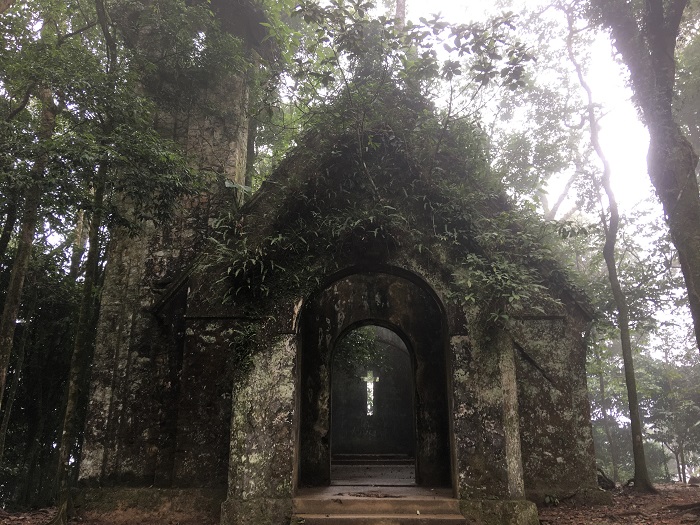
The historic French Church ruins surrounded by evergreen forest canopy at Point 600m.
3. Visit the Ba Vi Mountain Summit and Mountain Temples
From the upper parking lot at Point 1,100m, travelers can hike up two distinct stone staircases leading to sacred peaks. The left trail ascends 1,320 stone steps to King Peak (Dinh Vua, 1,296m), where the Ho Chi Minh Temple and Bao Thien Pagoda stand.
The right trail ascends approximately 600 steps to Tan Vien Peak (1,227m), where the ancient Thuong Temple honors Saint Tan Vien (Son Tinh), a prominent figure in Vietnamese mythology. Reaching these shrines combines physical exercise with cultural discovery.
4. Hike Through the Forest and Discover Ba Vi’s Biodiversity
Ba Vi National Park offers multiple walking tracks through natural tropical forests. Walking beneath large hardwood trees, wild ferns, and bamboo groves allows you to experience northern Vietnam’s sub-tropical mountain ecosystem up close.
Birdwatchers frequently spot endemic songbirds, woodpeckers, and colorful mountain butterflies along the quieter trails branching off from Point 400m and Point 600m. Joining a guided Trip to Ba Vi national park with an experienced local guide helps you navigate these forest trails safely.
5. Visit the Cactus Garden
Located right before the park entrance gate, the Cactus Garden (Vuon Xuong Rong) houses over 1,200 cactus species inside a large geodesic glass dome. This botanical collection was established for research and plant preservation, showcasing desert succulents from across the globe.
Inside the greenhouse, towering column cacti, spherical golden barrel varieties, and flowering succulents create a unique visual environment. Entry requires a modest supplementary ticket of 10,000 VND per person, making it an easy first stop on your ascent.

The botanical glass dome housing over a thousand cactus varieties near the park entrance.
6. Enjoy a Picnic or Camping Experience in Nature
The pine forest around Point 400m provides level grassy clearings shaded by tall pine trees, making it a favored location for outdoor picnics and day camping. Many visitors bring light lunches and picnic blankets to relax in the mountain breeze.
Designated camping zones allow travelers to pitch tents overnight. If you choose to camp, always pack out all trash and respect national park regulations regarding open campfires to protect the forest environment.
7. Go Cloud Hunting and Capture Panoramic Mountain Views
During late autumn and winter mornings, low-hanging clouds often settle across the valleys, leaving the upper peaks standing above a vast white sea of clouds. Reaching Point 1,100m or the observation terraces on King Peak by early morning gives photographers remarkable viewpoints.
On clear summer days, the view extends dozens of kilometers eastward toward Hanoi’s skyline and westward across the blue Da River and Son La mountain ranges.
8. Relax in the Cool Mountain Climate
Simply relaxing in the cool, oxygen-rich mountain atmosphere is one of the most healing experiences Ba Vi offers. The steady elevation gain creates a microclimate where gentle mountain breezes replace city humidity.
Sitting on an open-air veranda at Ba Vi Resort or enjoying hot local green tea near the pine forests gives travelers a quiet space to unwind before returning to Hanoi.
Fully Licensed Local Agency
Tailor-Made Vietnam Adventure & Trekking Tours
Experience customized trekking routes across northern Vietnam’s national parks and mountain passes. We provide reliable transportation, professional trekking escorts, and complete safety support for foreign visitors.
Best Places to Visit in Ba Vi National Park
The national park features a collection of designated viewpoints, historic compounds, botanical gardens, and sacred shrines arranged along the main mountain routes. Visiting these highlighted locations will provide a complete overview of Ba Vi’s natural and cultural significance.
1. Ba Vi Mountain Summit
The summit zone at Point 1,100m serves as the central staging area for all high-elevation walking tracks. Here you will find vehicle parking, resting pavilions, and small local refreshment stalls serving hot tea and snacks.
From this mountain saddle, two stone stairways lead upward toward King Peak and Tan Vien Peak through ancient forest growth filled with moss, wild orchids, and native mountain flora.
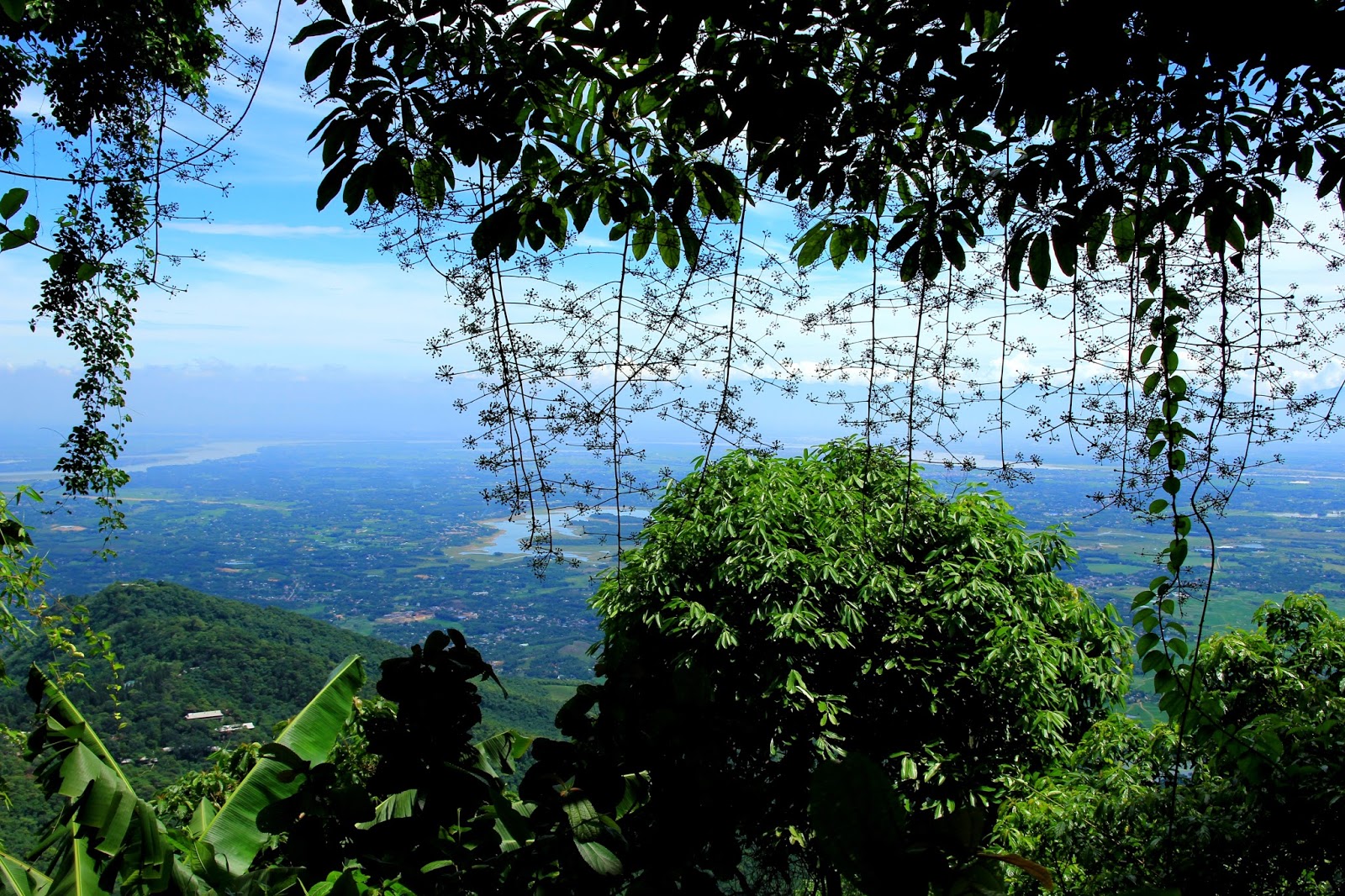
Panoramic view over the surrounding valleys and mountain ridges from King Peak.
2. Uncle Ho Temple
Perched on the highest point of King Peak at 1,296 meters, the Uncle Ho Temple (Den Tho Bac Ho) honors President Ho Chi Minh. Constructed in 1999, the temple follows traditional Vietnamese wooden architecture with curved tiled roofs and intricate timber pillars.
According to historical accounts, President Ho Chi Minh expressed a wish during his lifetime for his ashes to be distributed across northern, central, and southern Vietnam, naming the summit of Ba Vi Mountain as a favored northern location. Today, the sacred shrine draws many domestic travelers who come to pay homage.

Travelers visiting the sacred Uncle Ho Temple situated atop King Peak at 1,296 meters.
3. Thuong Temple
Located atop Tan Vien Peak at 1,227 meters, Thuong Temple (Den Thuong) is dedicated to Saint Tan Vien (Son Tinh), the Mountain God who is revered as one of the Four Immortals in Vietnamese folk belief. The temple sits directly on the rocky cliffside surrounded by dense forest canopy.
Legend recounts the ancient contest between Mountain God Son Tinh and Water God Thuy Tinh for the hand of Princess Ngoc Hoa, daughter of the Hung King. Whenever Thuy Tinh raised floodwaters, Son Tinh raised the mountain ridges higher. Climbing the 600 stone steps to Den Thuong offers both a cultural journey and rewarding summit views.
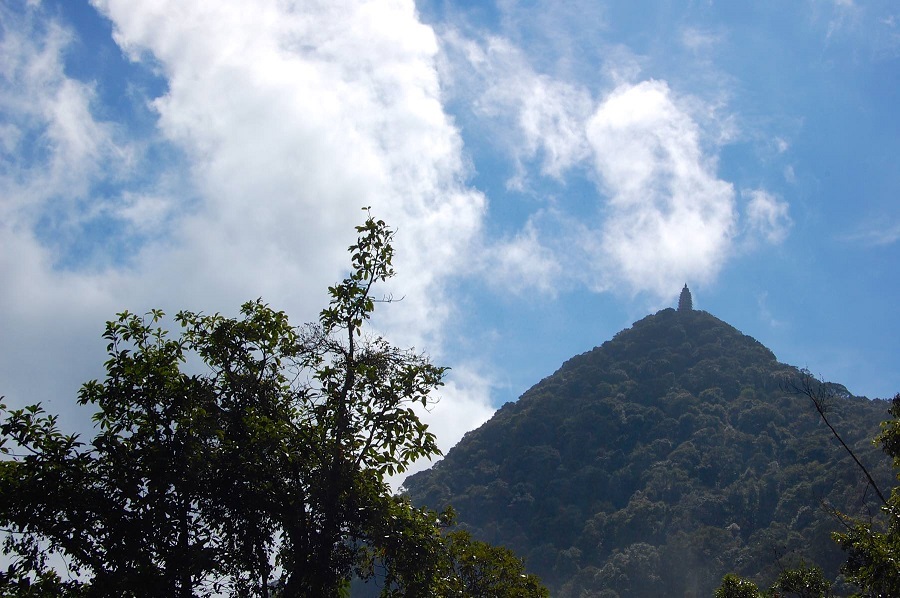
Looking out across cloud banks and forested slopes from Tan Vien summit.
4. The French Colonial Ruins
Scattered between Point 600m and Point 800m, the French ruins remain among the most photographed landmarks in the reserve. The stone walls of the abandoned church, ancient fire hearths in ruined villas, and mossy perimeter structures stand amid towering jungle trees.
The structures provide a tangible connection to the early 20th century, showing how French engineers developed hill stations across northern Indochina to escape tropical diseases and summer heat.
5. The Cactus Garden
Located near the park base, the Cactus Greenhouse provides an engaging contrast to the surrounding sub-tropical rainforest. The expansive glass dome shelters hundreds of succulent species, from slender desert columns to giant flowering varieties.
The greenhouse is a popular photo stop for travelers heading up the mountain road. A stone staircase leads up from the roadside parking bay directly to the dome entrance.
6. The Cloudy Forest and Scenic Mountain Roads
The upper sections of the mountain road wind through evergreen forest tracts where low clouds frequently drift through the treetops. The road offers designated stopping points where travelers can pause to photograph the scenery.
At Point 400m, the pine forest and surrounding lake at Ba Vi Resort create a peaceful environment for resting and admiring the mountain landscape.
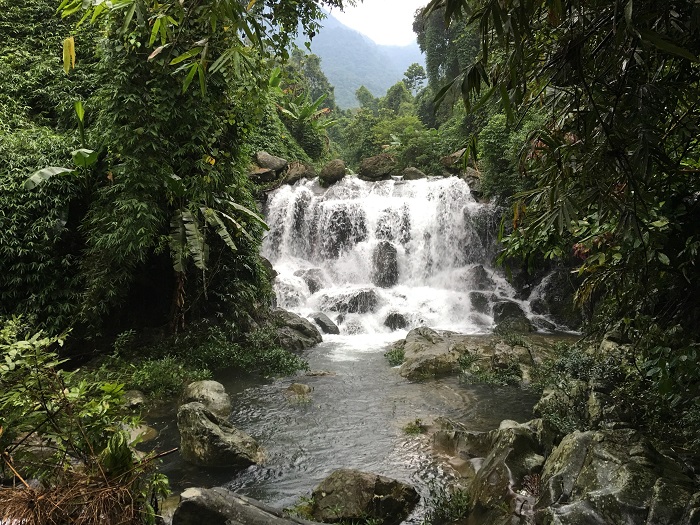
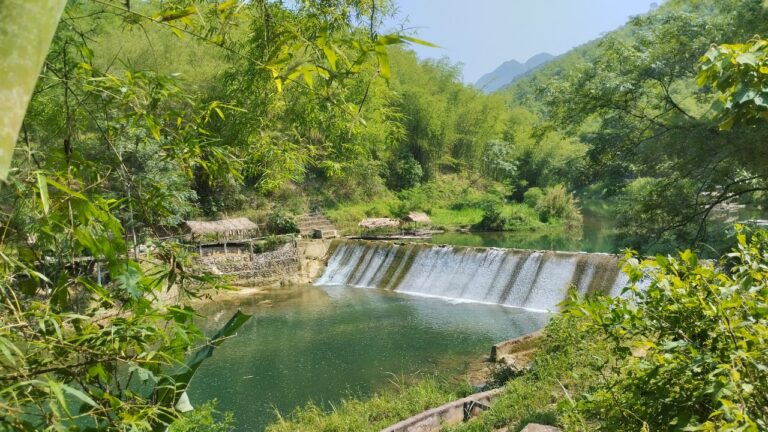
Natural mountain streams and waterfalls located at Thien Son Suoi Nga near the park base.
How to Get to Ba Vi National Park from Hanoi?
Reaching Ba Vi National Park from Hanoi is straightforward, with a travel distance of roughly 60 kilometers that takes between 1.5 and 2 hours depending on departure time and chosen transport mode. Travelers can choose from several convenient travel options.
Traveling by Private Car or Taxi
Booking a private vehicle with an experienced driver is the safest, most comfortable method for foreign visitors. The drive proceeds smoothly along Thang Long Boulevard directly toward Son Tay and the national park access road.
Having a private driver guarantees reliable transport up the steep 12-kilometer mountain access road directly to Point 1,100m, eliminating the stress of negotiating sharp curves. You can easily book our dedicated car rental to Ba Vi national park with fixed, transparent pricing.
Visiting by Motorbike
Many local students and independent riders travel by motorbike via National Highway 32 or Thang Long Boulevard. While riding offers an open-air experience, the mountain road inside the park features steep 10% to 15% gradients and tight blind turns.
Only experienced riders with valid international licenses should attempt this route on geared motorbikes or strong semi-automatic bikes. Scooters with weak brakes or automatic transmissions are not recommended on the downhill descent.
Joining a Guided Day Tour from Hanoi
Booking a structured Ba Vi mountain trekking tour with a professional travel agency provides hotel pickup, entrance tickets, a private vehicle, and an English-speaking guide.
A private tour allows you to learn detailed historical facts about the French ruins and local mountain folklore while leaving all logistical details to local travel professionals.
Common Mistakes & Our Helpful Tips for Visiting Ba Vi National Park
To make the most of your excursion and avoid common travel setbacks, our travel experts have compiled these practical observations based on years of organizing mountain day trips from Hanoi.
- Wearing Inappropriate Footwear for Mountain Steps: Reaching King Peak requires climbing 1,320 stone steps that become slippery when wet. Avoid smooth-soled sandals or fashion sneakers; wear trail shoes or hiking sneakers with strong rubber traction.
- Underestimating Mountain Weather Shifts: Temperatures at Point 1,100m are consistently lower than in central Hanoi, and sudden mountain fog or light rain can develop quickly. Carry a lightweight windbreaker, rain poncho, and a spare dry shirt in your daypack.
- Neglecting Modest Clothing for Sacred Temples: Uncle Ho Temple and Thuong Temple are active places of worship. Ensure your shoulders and knees are covered when entering temple grounds; avoid sleeveless tops and short skirts.
- Visiting on Crowded Domestic Holiday Weekends: Ba Vi is a popular weekend getaway for local families. To enjoy quiet hiking trails and clear photo opportunities, schedule your visit on a weekday (Monday through Thursday).
- Relying on Weak Automatic Scooters on Mountain Inclines: The 12-kilometer mountain road rises steeply. Using low-powered automatic scooters can cause brake overheating during downhill runs. We recommend private cars or sturdy manual vehicles with professional drivers.
- Arriving Too Late in the Afternoon: Forest trails become dark rapidly after 4:30 PM under thick canopy cover. Plan your departure from Hanoi between 7:30 AM and 8:00 AM to allow ample time for summit hikes and return before sunset.
Frequently Asked Questions (FAQs) About Ba Vi National Park
1. How far is Ba Vi National Park from central Hanoi?
Ba Vi National Park is located roughly 60 kilometers west of Hanoi Old Quarter. The drive takes 1.5 to 2 hours by private car via Thang Long Boulevard.
2. What is the entrance fee for Ba Vi National Park?
The standard adult entrance ticket is 60,000 VND per person. The Cactus Greenhouse charges an additional 10,000 VND, and vehicle parking ranges from 20,000 to 50,000 VND.
3. Can I visit Ba Vi National Park in one day from Hanoi?
Yes, a day trip is convenient. Departing Hanoi at 8:00 AM allows you to explore the French ruins, climb King Peak, visit the Cactus Garden, and return by 5:30 PM.
4. How difficult is the hike to King Peak and Uncle Ho Temple?
The hike involves climbing 1,320 stone steps from Point 1,100m. It requires moderate physical fitness and takes about 35 to 50 minutes each way.
5. Are there dining options inside Ba Vi National Park?
Basic restaurants operate at Point 400m and Point 1,100m serving local Vietnamese dishes like hill chicken and bamboo rice. Many travelers also bring light picnic lunches.
6. Is Ba Vi National Park suitable for families with children?
Yes, children enjoy the Cactus Garden, pine forest walks, and French ruins. For younger children, skip the steep King Peak steps and relax around Point 400m.

Fully Licensed Local Agency
Private Tailor-Made Vietnam Holiday Packages
Combine your Ba Vi national park day trip with cultural Hanoi excursions, Halong Bay cruises, and Sapa mountain treks. Our travel specialists design customized itineraries around your exact schedule.
Final Thoughts on Top Things to Do In Ba Vi Mountain & Arrange Your Trip with Our Travel Experts
Organizing a Ba Vi national park day trip adds a rewarding outdoor dimension to your Northern Vietnam Tours. For personal itinerary assistance, private vehicle booking, or licensed trekking guides, contact our team directly via WhatsApp +84.988451530 or email [email protected]. We will prepare your customized mountain plan within 24 hours.
Note: The travel tips and recommendations shared in this guide have been carefully prepared by the local travel experts at Golden Holiday Travel. While every traveler is different, our team is always happy to provide personalized itinerary planning, destination advice, and one-on-one support to help you create the perfect Vietnam journey.

Meet Our Experts

Suggested




Featured article










Related Articles


Write Comment